Live facial recognition leads to 28 arrests

 PA Media
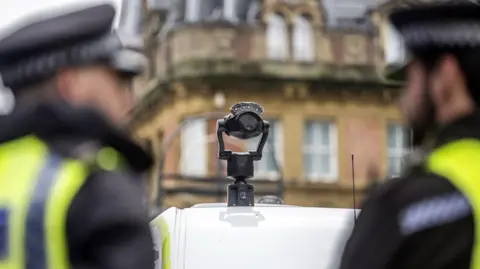
The use of live facial recognition (LFR) technology has resulted in the arrest of 28 people in Bradford since February, police have said.
West Yorkshire Police said those arrested at locations across the city centre including one man held for child sexual assault and others detained in connection with assault, drug-related crime, domestic abuse and theft.
LFR works by comparing faces captured on a live camera feed and comparing them against an authorised watchlist.
The technology has been criticised by some civil liberty groups but a challenge against the Metropolitan Police's use of it was dismissed at the High Court in April.
Following the ruling, Policing Minister Sarah Jones said law-abiding citizens had "nothing to fear" as the technology "only locates specifically wanted people".
Facial recognition is a form of technology whereby a computer scans a person's face in order to identify them.
It works by measuring key features, such as the width of a nose, the distance between the eyes, and the shape of a person's cheek bones.
Those features are then compared with the faces of persons of interest stored on a police watchlist.
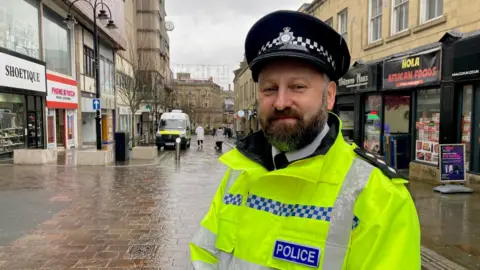
West Yorkshire Police said several of those arrested in Bradford were wanted for recall to prison, wanted for failing to attend court, and individuals considered to pose a risk to the public.
Ch Insp Dan Tillett, LFR specialist at the force, said since launching the systems "great care" had been taken to use the technology where intelligence identified it was most beneficial, and has previously said it would only be used "in a very proportionate way".
"As a force, we're accountable for the use of LFR and are clear that we are not using it for mass surveillance or indiscriminate monitoring, but rather as a targeted tool designed to support frontline officers," he said.
The force said it would continue to use its two liveried LFR vans at carefully selected locations across West Yorkshire, including events where there is an identified policing need.
Bradford Business Improvement District (BID) said it welcomed all options to help with the "continued safety and security" of the city centre.
Jonny Noble, Bradford BID's chief executive said the technology provided "opportunities not seen before".
"We believe that these innovations, combined with ongoing traditional partnership working, will continue to ensure Bradford city centre is a safe, welcoming and vibrant place to work, visit and live."
Listen to highlights from West Yorkshire on BBC Sounds, catch up with the latest episode of Look North.
