Thames Path 30th anniversary relay starts at source

 BBC
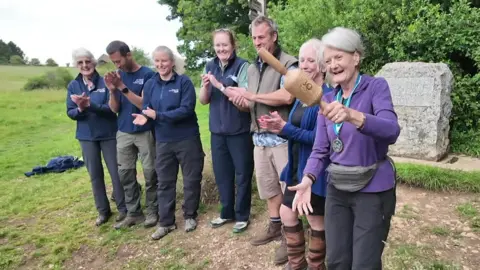
BBCA walking relay to celebrate the 30th anniversary of the Thames Path is underway, after it kicked off at the source of the iconic waterway.
Over 24 days this month, hundreds of ramblers, community and river-user groups will trek along the route - finishing in Woolwich on 28 June.
The 185 mile (298km) path - beginning at the river's source near Kemble, Gloucestershire - follows the waterway through seven counties, including Oxfordshire and Berkshire, before heading into the capital.
Kicking off the trek on Friday, Claire Jarrett - from National Trails - explained that each of the 24 walks would be led by experienced community groups.
"It's going to be a celebration of each different community and what they bring to the trail," she said.
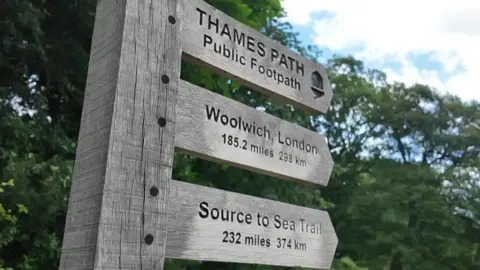
The relay is part of a range of events planned to mark the anniversary of the path, which runs alongside the river until just past London's Thames Barrier.
The path first opened in 1996, and is the only National Trails route to follow a river from its source to the sea.
Claire Jarrett, who is the Thames Path engagement officer at National Trails, explained that funding for the trail and its upkeep was "always difficult".
"We beg, borrow and steal from what we can really and a lot of it is done on those volunteer hours," she said.
"We're very lucky that we have such a group of dedicated people really."
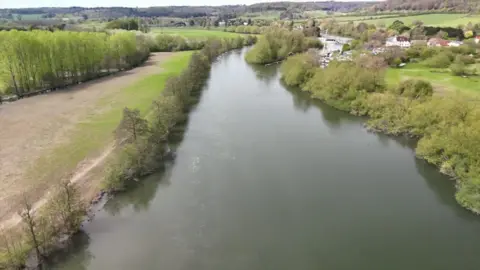
Joining the first leg of the relay, High Sheriff of Gloucestershire, Dame Fiona Reynolds, said the path's three decades had coincided with an "amazing awakening of interest and concern for the environment".
"I've always been in the environmental movement and back in the 80s when I first started, you know, were seen as outsiders trying desperately to get our issues on the agenda," she said.
"Now we all know what the issues are, we know what the problems are but are we actually any closer to solving them?"
One of the main concerns around the river is pollution, and sewage discharges into the river by water companies.
With every step the relay makes further away from the river's source, the water in the Thames often gets less and less pure.
Campaigner Paul Flynn, from the non-profit organisation Blue Human Project, said: "We all know there are lots of things that can be done about that, but what's going into it at the moment isn't great."
"We just keep swimming and campaigning and signing petitions," he added.
