Thames Water issues hosepipe ban for 10m customers

 Getty Images
A hosepipe ban affecting 10.1 million Thames Water customers has come into force.
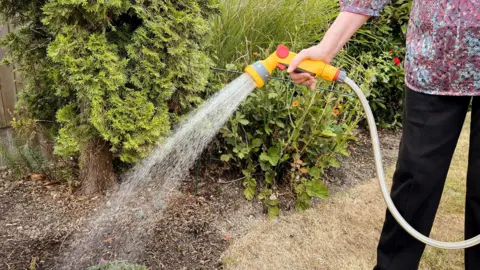
The restrictions mean hosepipes should not be used for watering gardens, cleaning cars, filling paddling pools or swimming pools, or cleaning windows.
The water company said its region had seen 40% of the usual average rainfall at this time of year, and most days at or above 34C since records began.
Nevil Muncaster, director of strategic water resources, said a lack of rainfall coupled with higher customer demand means the utility provider must protect water for essential use.
He added: "We need to protect what we've got because we are seeing high pressure coming in for the late autumn, which means we can't guarantee any rain for the foreseeable."
The ban applies to all customers that Thames Water supplies with drinking water but Muncaster said at the moment they are not taking the "severe step" of putting any bans on businesses.
The CEO of campaign group River Action James Wallace was critical of the ban and called it "outrageous".
He said the water firm had failed to respond to "decades of warnings about the threats of climate change".
Wallace added: "Thames Water's crumbling infrastructure loses a staggering 570 million litres of treated drinking water every day through leaks, exposing years of chronic underinvestment and poor maintenance."
In response, Muncaster said they are "investing heavily" in infrastructure including a £20bn investment over a five year period to "reduce leaks".
"We are out there every day fixing leaks. We're fixing around 750 a week at the moment," he said.
"I can't predict when it will rain and recover but as soon as it does we will lift the ban. It's not something that we want on, but it's something that we think is the right thing to do at this time."
He said Thames Water will not be patrolling to enforce the ban but will put its trust in customers to use water responsibly.
Thames Water has confirmed that compensation or bill reductions do not apply for hosepipe bans.
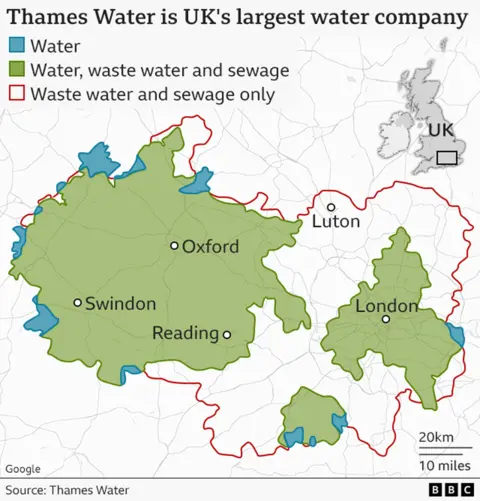
Thames Water supplies drinking water to customers across parts of Gloucestershire, Wiltshire, Surrey, the Thames Valley, Greater London, and neighbouring areas. In total, it provides water and wastewater services to around 16 million people.
The company said demand is currently running well above average, with water use 10% higher than normal in the Thames Valley and Home Counties and 7% higher in London - equivalent to an additional 100 million litres being used each day.
Thames Water is also grappling with debts of about £20bn, and a recent government decision ruled out a proposed rescue package.
The BBC understands the company's principal lenders are preparing a legal challenge should the new Andy Burnham-led government seek to bring the utility into public ownership.
Garden care tips
 Getty Images
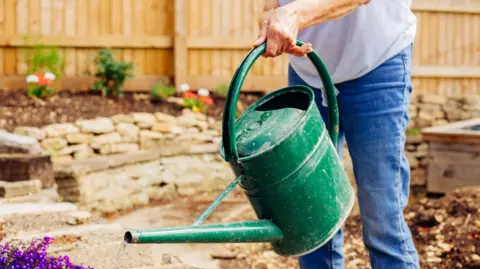
Plants and gardens can be watered with a watering can said James Alexander Sinclair, an Oxfordshire based garden designer.
He reassured water consumers that the gardens will come back when the rain returns and "we will just have to grin and bear it".
He advised gardeners to pick their most precious plants and put a lot of water at the root and then covering it in compost so that the water does not escape.
He said bath water is safe to use on plants, provided there are not too many chemicals like bath bombs in the water.
"If you've got anything in a pot, that's the thing that needs to be protected more because that's the thing that's going to die fast," he said.
Rules and exemptions
Hosepipes and pressure washers should not be used to:
- water gardens, lawns, or allotments (this includes the use of sprinklers)
- fill paddling pools, swimming pools, or hot tubs
- clean vehicles, patios, paths, driveways, walls, windows, or any outdoor areas
Some exemptions may include:
- Wastewater only customers
- Health and safety needs
- Animal welfare, including pets, livestock, and fish
- Watering food crops and certain newly planted trees
- Customers who cannot reasonably adjust their water use because of a disability or medical condition
Source: Thames Water
