'Hideous revelation each day' as attacks hearings end

 PA Media
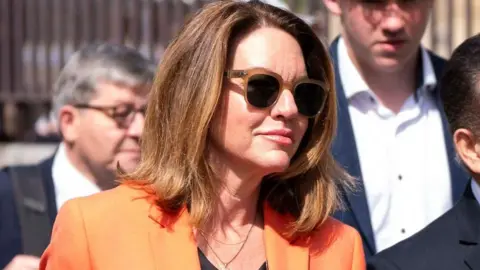
The mother of a student who was stabbed to death during the Nottingham attacks has said there has been a "hideous revelation" each day during the public inquiry into Valdo Calocane's killings.
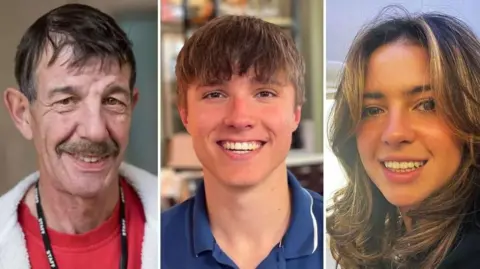
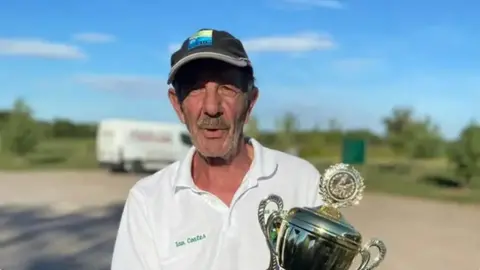
Calocane, who was diagnosed with paranoid schizophrenia in 2020, stabbed to death Barnaby Webber, Grace O'Malley-Kumar and Ian Coates, and tried to kill three others in Nottingham on 13 June 2023.
Barnaby's mum Emma Webber told BBC Breakfast the inquiry, which is hearing its last day of evidence on Friday, had left her feeling "mentally exhausted".
The Nottingham Inquiry has heard from 164 witnesses over 14 weeks, as the lead-up to the attacks and the aftermath were examined.
 Supplied
Webber said: "I'm really mentally exhausted because it's been a really hard and intense nearly five months, and it feels a bit weird that we're actually at the last day today.
"But it's certainly not the end. There's so much that's going to happen on the back of this."
Webber said she thought she was aware of the majority of failures by public bodies that interacted with her son's killer before the hearings started.
"But I don't think there's been a single day of evidence from anyone who was involved in Calocane... where there hasn't been some new hideous revelation, and something that we had never found out before," Webber added.
During her evidence at the inquiry, Webber said a WhatsApp message sent by a Nottinghamshire Police officer referencing her son's wounds was "disgusting and grotesque".
The inquiry heard the officer described the teenage victim as "properly butchered".
The Independent Office for Police Conduct (IOPC) launched multiple investigations into the actions of officers from Nottinghamshire Police and Leicestershire Police.
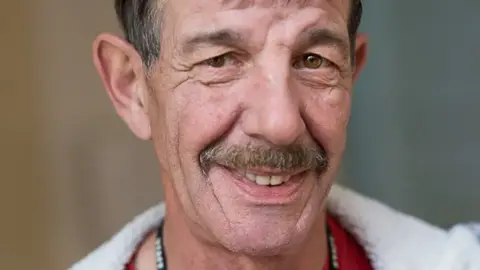
Elaine Newton, whose long-term partner Ian Coates was killed by Calocane on his way to work, said hearing the extent of systemic failings during the inquiry into Calocane's attacks had been "horrifying".
The inquiry has previously heard it took 91 minutes from when the first call was made to Nottinghamshire Police about the attack on Grace and Barnaby, at about 04:00 BST, until Calocane was found and arrested, by which time he had attacked Coates.
Rob Griffin, Nottinghamshire Police's assistant chief constable at the time of the attacks, told the inquiry the co-ordination of the search for Calocane during the attacks "should have been better".
Coates's body was kept at the crime scene for nearly 15 hours while police were investigating, the inquiry heard, and he was covered in blankets for two hours until a forensic tent became available.
During her evidence to the inquiry in March, Newton said it felt like he had been killed twice because she was told he had died in a car crash before being informed more than four hours later he had actually been stabbed.
In a statement on Friday, she said it "was not just Valdo Calocane who killed Ian", adding that the individuals and agencies behind the failings "share that burden of responsibility".
"After listening to the evidence over the last three months, I have lost all trust in the NHS and the police," she said.
"Fundamental issues were ignored or covered up. Powerful people in positions of trust have lied.
"To hear the full extent of the systemic failings has been horrifying, and without the inquiry I don't think we would have ever known just how deep the culture of negligence really is."
 Lake Snakes Angling Club
Calocane had been sectioned four times while under the care of Nottinghamshire Healthcare NHS Foundation Trust, before he was discharged to his GP in 2022.
The inquiry heard he was discharged by the trust's Early Intervention in Psychosis service because he failed to turn up for appointments and the team had "lost" him.
Newton said the attacks "all could have been avoided had the NHS done its duty".
"Three cruel and unnecessary deaths are the results of their negligence and poor care for the mentally ill," she said.
"The system is broken, and it can only change if these organisations are properly monitored and truly held to account.
"Those people who concealed the truth and or did not fulfil their duty, I hope they understand and take responsibility for the irrevocable damage they have caused so many lives."
Nicola Ryan-Donnelly, of Fletchers Solicitors, which represents Newton, said: "Elaine has shown remarkable strength throughout this inquiry, in the face of some unimaginably difficult evidence.
"The catalogue of failings, moral shortcomings and deceit have left her feeling deflated and forgotten.
"We support her calls for those responsible to face full accountability and look forward to the chair's report. Elaine must now be given the privacy she needs to recover."
'Emotional and taxing inquiry'
On the final day of oral evidence to the inquiry, the Victims' Commissioner for England and Wales, Claire Waxman OBE, said the surviving victims of the attacks were not given their "basic rights".
Waxman was appointed in January to be an independent voice for victims of crimes.
She said the victims needed to needed to be treated with dignity and respect.
The Victims' Code sets out a standard that organisations must provide to the victims of crime.
However, Waxman said the code "lacked teeth and accountability".
In addition to the three killed, Calocane drove a van into pedestrians Wayne Birkett, Sharon Miller and Marcin Gawronski, all of whom were left with life-changing injuries.
The inquiry heard Wayne was left with a brain injury that inevitably required adjustments in communication, when it came to the progress of the investigation and subsequent court case.
Sharon was unable to leave her house at the time of the first court hearing, and had expressed she did not want to see Calocane's face.
However, the inquiry heard it was never explained to her that she could have joined the court hearing, held in January 2024, remotely via a link.
Waxman said: "This is their basic rights not being delivered. And again, the frustration with this Victims' Code that comes back to me time and time again from speaking to victims, is it feels quite meaningless."
Waxman added the criminal justice system was difficult for victims to navigate while communication from the police and the Crown Prosecution Service (CPS) was often not good enough.
Addressing the hearing room as evidence concluded, the chair to the proceedings, retired senior judge Deborah Taylor KC, thanked those involved in the organisation of what she called an "emotional and taxing inquiry".
Now oral evidence has concluded, the core participants of the inquiry will share closing statements at hearings in September, before Taylor is expected to release a report with her recommendations next year.
Additional reporting by PA Media
Listen to BBC Radio Nottingham on Sounds and follow BBC Nottingham on Facebook, on X, or on Instagram. Send your story ideas to eastmidsnews@bbc.co.uk or via WhatsApp on 0808 100 2210.
