10 years on: 'What Brexit changed for us'

 Getty Images
It is now 10 years since the UK decided to leave the European Union (EU).
With a vote of 52% to 48%, the Leave campaign won on the promise of a country freed from the shackles of bureaucracy, and taking back control.
But what impact did the decision to leave have on people across the south?
The fisherman
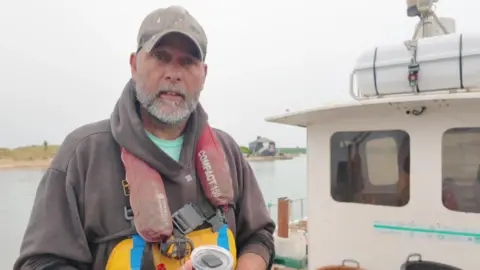
Peter Dadds is a full time fisherman from Mudeford, near Christchurch, in Dorset, and he voted Leave in the referendum.
But he says "fishing was definitely better [then] than what it is now".
"We were getting a lot of problems with foreign boats pre-Brexit, and I think a lot of Brexit was based around the fishermen wanting to get control back of our waters to some degree," he explains.
"It was just being able to say who can fish and who can't. Obviously the people in general were sold a lemon.
"I couldn't really see it working with the fact that the government at the time, they didn't expect the British people to vote the way they did, and obviously when the vote did go through, you basically had a Remain government trying to deal with it.
"It was never going to happen because at the end of the day they were trying to implement something they were firmly against. So we knew it was going to be a long, dragged out process."
He describes the current situation, in terms of what boat can fish where, as "random".
"English boats are leaving port and passing the foreign boats that are steaming in because they're allowed to fish up to the six-mile limit [from the coast], and to me that's just a totally ludicrous situation".
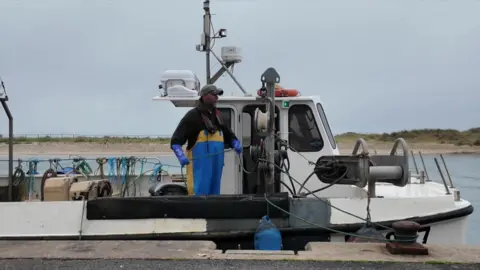
Dadds claims the amount of foreign vessels in UK waters has increased, and that he has to deal with more paperwork too.
"To now export fish, or even sell on the market, we have to fill forms in for every single species of fish," he says.
"Say we go fishing and we have 10 different species of fish, every single day we have to have 10 different boxes with each species of fish in, the weight of it, where it was caught, the date it was caught, the vessel, and all my details."
He says the boxes start to pile up on consecutive fishing days.
"That causes us an awful lot of logistic issues because we have to keep all our fish separate, and also it causes the market problems, and also the transportation of the fish.
"It has increased our costs quite significantly because of the extra manpower needed."
Dadds believes these issues are also a deterrent to attracting new blood.
"We're not getting any youth coming through because the job is just so difficult and to be honest, a lot of fishermen, we're struggling to see a future in it at the moment with everything that's going on," he warns.
"At the moment, for most of us, it's perseverance. I think we keep hoping that it's going to get better.
"It doesn't help that the government has increased the EU's time in fishing our waters for another 12 years, that was done last year… that was a big kick in the teeth to all the British fishermen around the coast.
The farmer
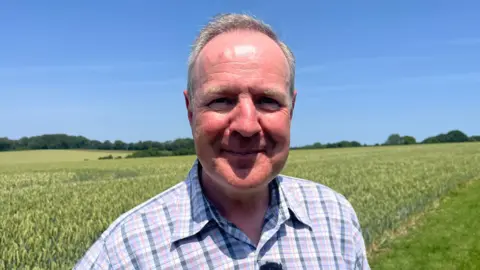
Julian Gibbons, who runs his family farm near Alresford, in Hampshire, was "firmly in the Remain camp" 10 years ago.
"My chief concern was agricultural policy would come back to the whim of national governments and as we've seen governments change, prime ministers come and go more regularly than country buses now, and that means changes in how policy is implemented," he says.
"Farming - we're here for the long term, we're planning for where we'll be in five or 10 years, so my concern was we will have constant changes in policy, and strangely enough, by and large, that's what we've seen."
Gibbons, who exports malted grain for the craft brewing industry among other businesses, concedes some things are running well, with plant breeders "already ahead of the game" when it comes to producing gene-edited food, and better pesticide regulation.
He describes the EU as "very quick to get rid of products, very slow to approve new products".
"They work on a basic basis of hazard, so 'if something's hazardous, we'll ban it'. Whereas we've always worked on 'what's the risk'."
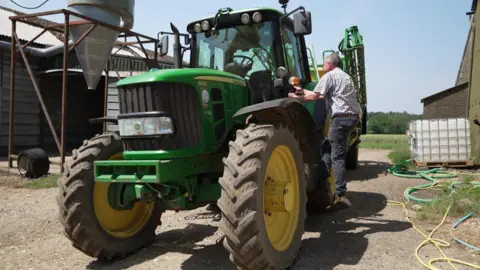
But overall, Brexit has brought a "lot more uncertainty", he says.
"If we were going to join the EU now would I vote to go back in? I'd have to see the devil in the detail… the danger of having a new deal when you're half in but have no say on things, that's the worst of everything.
"We all need optimism, and we have good times and we have bad times and we just happen to be going through a time that's a bit tough at the moment.
"It would just be nice to know a bit more planning and certainty. But really the only certain thing is things are uncertain, if that doesn't sound daft."
The steel manufacturer
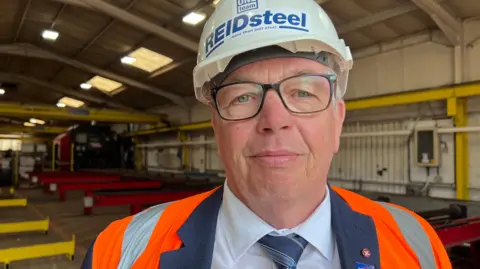
Simon Boyd, managing director of REIDsteel in Christchurch in Dorset, campaigned for Brexit, but says he is "quite disappointed" with how things have developed since.
"We didn't get the regulatory reform that we were all hoping for and that's resulted in us having to still go through the grind of paperwork that ticks boxes when we needed regulatory reform in the interests of British businesses," he suggests.
"Our government tended to gold plate these things that came out of Brussels and that hampered business and it really stifled our opportunities to grow.
"So post-Brexit, we saw lots of opportunity. We started our investment plans off. We've invested millions in the business since 2016, but we didn't really get Brexit till 2020, and that was quite a struggle."
Boyd says the "real big impacts" were "political unrest post the 2016 referendum to 2020, and then Covid, followed on by two wars and more political unrest".
"It puts so much doubt into investors minds that they don't make the investments. Who would invest in the UK today when they don't know the direction of travel of the country?"
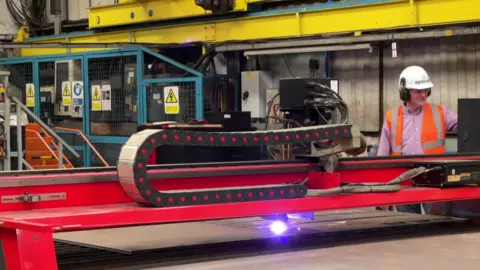
He continues: "Our export market has improved outside the EU, it hasn't improved in the EU.
"It was difficult while we were members and it remains difficult outside, and I do feel for businesses that have had to put up with more friction in their trade with the EU, but that's been done by the EU as a bit of a punishment for us daring to vote to leave.
"But outside the EU, we see lots of growth in the Far East, South America, Africa. These are growing places.
"If we were to think about getting too close or rejoining, it'd be akin to getting back on the Titanic on the conditions that you hand over your life vest first."
Boyd adds that the UK has "great resilience".
"We can do just about anything when we put our minds to it... we've got to go forwards, embrace Brexit, embrace the opportunities that are there, and make the regulatory reform that we were all promised back in 2016."
The musician
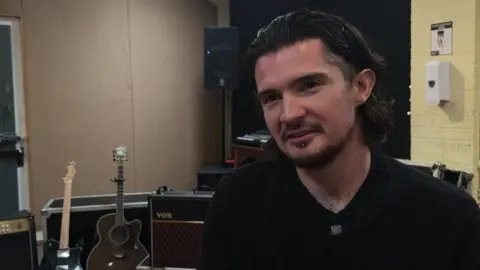
James Bettis is the frontman and guitarist in Oxford alternative rock band Kanadia.
The four piece, who have previously toured the UK, embarked on their first European tour in March as a support act, and will tour the continent again in November as headliners.
Bettis describes the first tour as a "great experience" but a "learning curve".
"What we were hit with straight away was having to get a document called a Carnet… to get out into the EU zone," he explains.
"It cost us hundreds and hundreds of pounds and it's basically this inventory list of all of our equipment to prove that we're going to bring it all back and not sell it in the EU.
"We had to get all of the serial numbers on every single bit of equipment, all the amplifiers, the guitars.
"With things like pedal boards the pedals all had to be ripped off, everything had to be deconstructed to find the serial numbers and input them into the system."
Bettis says the resulting document is required at every border, as well as further paperwork registering them as as self-employed to avoid tax.
"We had to itemise all of our merchandise if it was worth over £1,000, and then you had to basically put money up front," he explains.
"Then you get it back and then they deduce how much you've sold, the tax off of it and everything. So it was a lot."
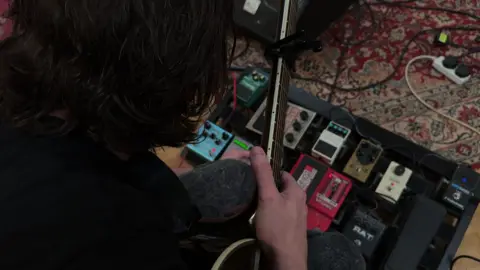
Bettis says the band were frequently held up at customs.
"A lot of these customer officials can't really see eye to eye on how the paperwork works, so the person in the UK will sign it one way, then you'll get to France and then they'll have a discrepancy, and then you're having to go through all this when you're just trying to get to the soundcheck."
The impact hasn't just affected the bands tours, but the cost of sending merchandise to fans.
"We're paying similar rates to ship to German fans as what we would to the US now," Bettis says.
"We're having vinyls returned to us, we're having the fans hit with costs because they have to pay importation fees and stuff like that that didn't exist before Brexit, which then upsets fans, because they're going to hold the band responsible for that… but it's out of our hands."
He adds: "Touring in Europe is an incredible experience and something that we're not going to stop doing, and I think it's something every band should do because it's more lucrative than the UK… so it's really a necessity if you're going to take it to the next level.
"But there's a lot of things you have to be aware of these days. Just do your homework before you head out."
