I was a remainer, but wouldn't vote to rejoin the EU

 Ben Schofield/BBC
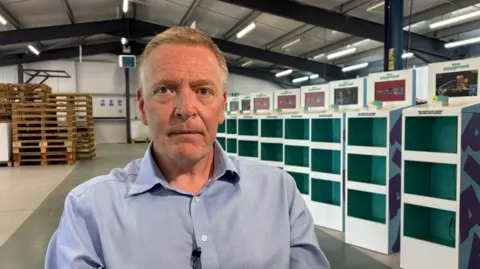
Andrew Moss describes himself as "the biggest Remainer you would find".
But a decade after voting in the 2016 referendum to stay in the European Union, and despite spending more than £1m overcoming related business challenges, the company boss wouldn't back a move to rejoin the EU.
He is among the importers and exporters who have had to adapt to a new trading relationship with the UK's closest neighbours.
UK goods exports to the EU are lower than pre-Brexit levels, but the government says it is building a "closer" relationship with Europe, while ruling out a return to free movement, the single market and the customs union.
 Andy Meeson/BBC
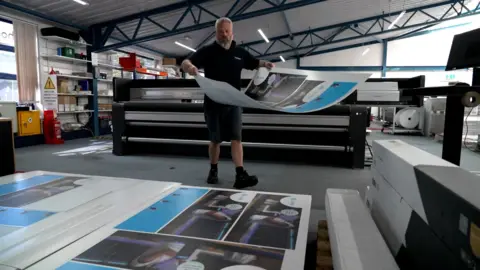
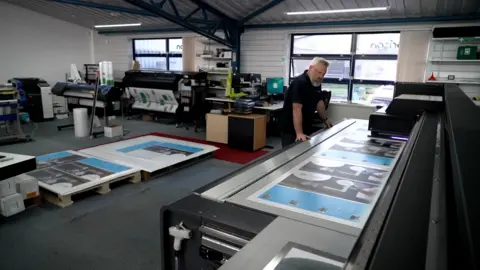
Moss, 56, is the founder and managing director of Horizon, based in Ely, Cambridgeshire, which makes displays for shops selling electrical goods.
He says his European customers started reacting to the vote to leave the EU shortly after the votes were counted.
"We had adverts on the TV telling us to prepare for Brexit – well, the EU had exactly the same," he says.
"So all of our brands would turn on the TV and they were told to prepare for Brexit – and that's exactly what they did."
He recalls how, after the referendum, "over a period of three or four years" exports to the EU "saw a massive decline" from about 70% of the company's sales to about 30%.
As the UK's exit from the EU approached, Moss says he and his colleagues "weren't particularly worried" after being "promised frictionless trade".
"We thought that we could just carry on trading, but it went from bad to worse," he says.
 Andy Meeson/BBC
After January 2021, when new trading rules were introduced, the company had "something like £700,000 worth of work-in-progress that we couldn't ship", which affected its cash flow.
"Things were very, very desperate. We were worried, really, about whether we could continue to trade."
Since then, Horizon has created a Dutch subsidiary and opened a warehouse near Schiphol, which took "a massive investment of time and money".
The firm employs about 65 full-time staff in Cambridgeshire and three in the Netherlands.
'We've got to respect the voters'
Moss says "the minute we got that registered business in Holland, our problems melted away", largely because the subsidiary could handle VAT payments and import fees.
A dedicated lorry now takes stock from Ely to Schiphol twice a week "at great cost".
Moss says the set-up has cost "well over £1m, maybe £1.5m".
So would Moss vote to rejoin the EU?
"Not right now – no, absolutely not," he says.
"I don't think the country's ready for it. We voted to leave. We've got to respect the voters.
"But also, we've got a solution, we've got a competitive advantage."
After spending "well over £1m, maybe £1.5m", Moss adds he "wouldn't want to see that investment lost".
For many Leave supporters, the decision was about more than economics.
Could Moss put a price on sovereignty, on "taking back control"?
"We've been searching for Brexit benefits for the last five or six years and we haven't found any," he says.
"I can't put a value to something that I can't see."
 Andy Meeson/BBC
According to the House of Commons Library, UK exports to the EU were £384bn in 2025, making up 41% of all UK exports.
That year, the UK's exports of goods to the EU were 14% below their 2019 level "in real terms", after accounting for inflation.
The report said that while "there are no tariffs on trade in goods with the EU" if certain conditions were met, "other barriers to trade are now higher", since the UK left the EU's single market and customs union.
But the picture is complicated as traders have faced other headwinds besides Brexit, including the Covid-19 pandemic, global inflation and the war in Ukraine.
UK trade in services with the EU fared better, growing by 28% above its 2019 level in real terms.
Research commissioned by the Federation of Small Businesses found about a third of small and medium-sized businesses expected to "reduce or stop EU trade" if current rules did not change.
In its survey of 645 small businesses conducted in October, 45% said they would "maintain current levels of trade", while 6% expected they would increase trade with the EU.
 Ben Schofield/BBC
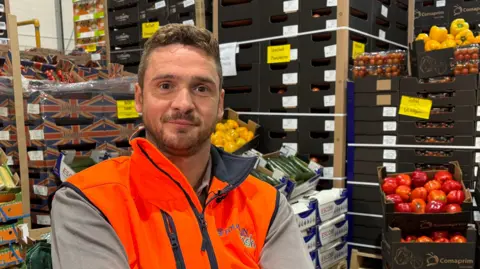
Jack Hanson, managing director of Fountain Fresh, based just outside Wisbech, Cambridgeshire, also voted Remain in 2016.
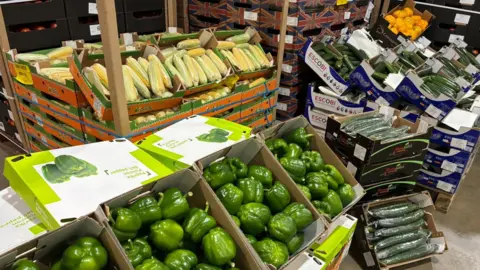
At peak times, his company imports more than 1,000 tonnes – between 40 to 50 lorryloads – of fresh produce a week.
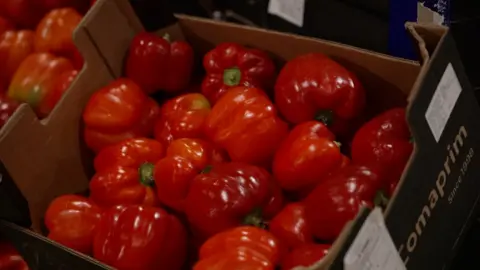
Sitting in front of cucumbers and courgettes from Spain, peppers from Belgium, and corn from Senegal, he says he feared Brexit would "add nothing but bureaucracy and cost".
Fountain Fresh has a team dedicated to filling out customs declarations.
"From day one – as soon as the declarations were necessary – we were ready to go," says Hanson.
 Shaun Peel/BBC
Hanson, 38, estimates that had the company used external customs agents, it would have cost £300,000 in the first year.
The UK's relationship with the EU could form part of the contest to replace Sir Keir Starmer as Labour leader and prime minister.
Hanson would like "free movement of produce from mainland Europe to the UK as it used to be".
"There's a lot of hidden costs and delays and potential quality issues that [consumers] are having to suffer but don't really realise," he says.
"It is a significant cost that is stomached by the consumer for bureaucracy that nobody can really see or understand."
 Andy Meeson/BBC
A UK-EU summit is due on 22 July, which could see the conclusion of talks on smoothing agri-food trade between the UK and EU.
The Cabinet Office says the so-called UK-EU Sanitary and Phytosanitary (SPS) zone could add up to £5.1bn a year to the economy, "slashing costly red tape and helping drive down supermarket prices".
A government spokesperson said: "We are building a closer relationship with Europe that works for the British people, securing deals that will strengthen our economy, boost trade, and enhance security.
"Our red lines are clear: no return to the EU, the single market, freedom of movement, or the customs union."
Do you have a story suggestion for Cambridgeshire? Contact us below.
Follow Cambridgeshire news on BBC Sounds, Facebook, Instagram and X.
