In Britain's Brexit capital, people remain 'grumpy' 10 years on

 BBC
BBCIt is the town widely known as Britain's Brexit capital. Boston recorded the highest vote in favour of leaving the European Union in the referendum held on 23 June 2016.
A decade on, it is evident that many people voted leave because of the impact of immigration on the town. So how do they feel now?
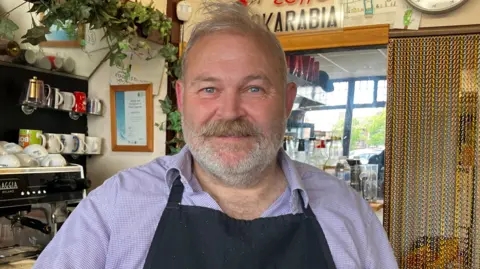
Café owner Michael Wood, who has been in business in Boston for nearly 20 years, does not regret voting leave.
But he admits he is disappointed with what has been delivered.
"I would say Brexit hasn't gone fast enough or far enough," he explains. "I want closed borders."
Wood points to pressures on local services.
"We knew the floodgates were going to be open, but we never built infrastructure," he adds. "We never built more hospitals, more schools, or got more GPs."
More than three quarters (75.6%) of voters in Boston chose to cut ties with Brussels, compared with 51.9% nationally.
But the outcome is still hotly debated in this part of Lincolnshire.
In the years leading up to the referendum, large numbers of EU citizens came to live and work in the area, many attracted by jobs in food production.
Farmers and growers argued migrant labour was essential to fill vacancies due to a lack of British-born workers.
But the changing face of the town led to concern from some about increased pressure on public services and in 2017, Boston was given extra government funding.
However, many of those who arrived from overseas say they have worked hard to integrate and argue they have put money back into the local economy.
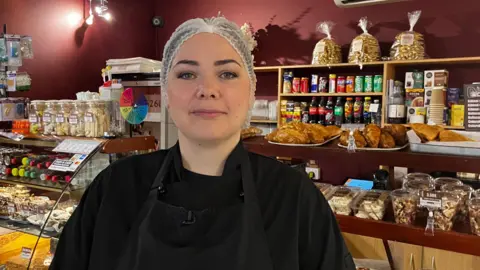
Daiva Razguniene, who came to Lincolnshire from Lithuania, originally worked in a factory and made birthday cakes in her spare time.
By the time of the referendum, she was running her own bakery business, which is still going today.
"Our feelings were a little bit scared because we did not know what will happen", she says.
"It's not a secret there are lots of foreign people in Boston and local people don't like that. I wouldn't like it if someone came to my small village in Lithuania and said that it's theirs".
She says her family was "very thankful to England", but insists: "We pay our taxes, we pay our bills and don't owe them anything."
Between 2001 and 2011, the proportion of EU citizens living in Boston Borough who were born outside the UK grew from 474 (0.7% of the local population) to 7,865 (12.2%), according to census data from Nomis. By 2021, the figure stood at 14,099 (20%).
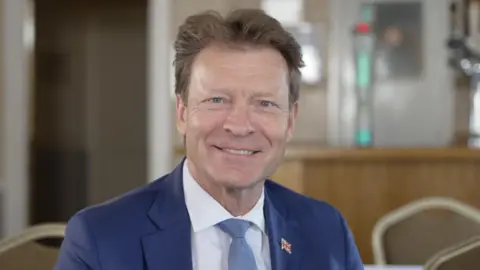
Reform UK's Richard Tice, the MP for Boston and Skegness, has suggested the result of the referendum would be repeated if held again today.
"Boston would vote with me, but I don't think there's an appetite for another referendum," Tice says.
Asked whether leaving the EU is seen as a success by the people of the town, Reform's deputy leader adds: "It hasn't worked out as this constituency wanted in the same way it hasn't worked out for all Brexiteers, because it hasn't been delivered in the way that it should have been and could have been – and still can be.
"People are just grumpy now. I'm grumpy that it hasn't been taken advantage of. It hasn't been done properly."
'A gamble'
Matt Warman was Conservative MP for the town between 2015 and 2024, before being defeated by Tice at the general election.
He supported the case for holding a referendum, but voted to remain.
"A big part of the case I made was that it was a gamble," Warman says. "We didn't know what would happen.
"We have seen a lot of difficult, protracted negotiations and a lot of people feeling that what they voted for hasn't yet been delivered, and may never be delivered."
He adds: "I think locally Brexit was about immigration and sovereignty. Both are addressed by leaving the European Union.
"But I worry that it isn't the only response and it isn't necessarily the response that delivered everything people wished for."
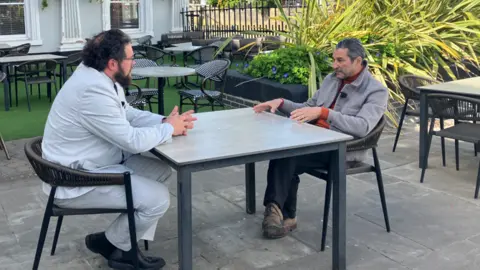
Anton Dani, a Moroccan-born businessman and local councillor, describes himself as one of the main campaigners for Brexit in Boston and was the town's mayor when the UK left the EU in 2020,
Today he describes Brexit as a "mirage".
"What have we achieved? Our migration has increased, illegal migration still going on," he says. "The government is in turmoil. I think we look like a circus. We had six prime ministers in ten years. That's a failure.
"Who is going to bring us the policies for stability? The country is not performing economically."
Daniel Elkington, a financial planner who voted to remain, would like to see closer trading ties between the UK and EU.
He believes poor and middle-income families have become worse off since Brexit.
"But I think the real issue is that it's kind of cheapened public debate a little bit," he adds. "It's almost like public debate has been reduced to this kind of reductive polarity of A versus B and everybody has to pick a side."
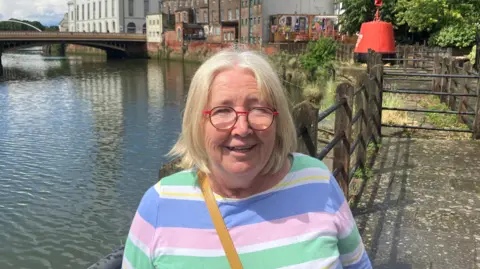
Boston may have made headlines for being Britain's most "Eurosceptic" town, but it is a description some are keen to avoid.
Writer and tour guide Jane Keightley welcomes people to the town from across the globe, many curious about its rich history and connections with its US namesake.
Some visitors ask about Boston's role in the EU referendum, but for her it is more of a curse than a blessing.
"I get really cross and grumpy when people think that Boston is the Brexit capital of the world.
"I love it when people come here and they don't even realise our Brexit position and they are here because of history."
Whether local residents like it, or not, Boston will forever have a place in the history books for its role in a vote that divided the nation.
Watch Britain's Brexit Capital - Ten Years On, a Politics North special, on BBC iPlayer.
Additional reporting by Jessica Lane.
Download the BBC News app from the App Storefor iPhone and iPad orGoogle Play for Android devices
