One of the world's most remote nations opens up

 BIG
BIGBhutan has long limited how the world visits. Now, a new airport and ambitious city could reshape travel to the Himalayan kingdom.
On a warm morning earlier this year, the King of Bhutan, Jigme Khesar Namgyel Wangchuck, stood in a sun-lit clearing hacked from the jungle in the southern lowland town of Gelephu near the Indian border. Alongside 12,000 volunteers, he cut palm trees and raked brush to help clear the way for a new airport that is poised to change how travellers visit this far-flung kingdom.
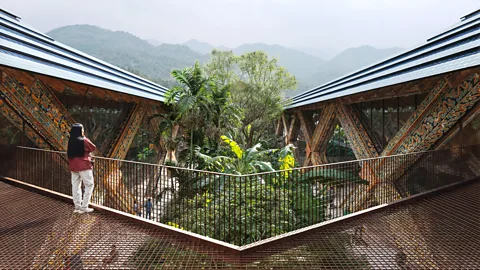
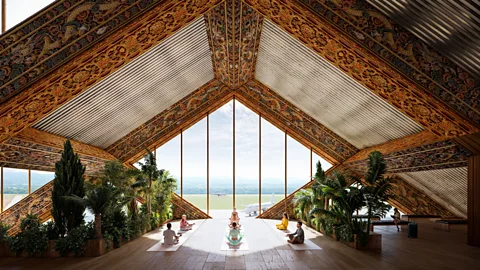
Slated to open in 2029, the Gelephu International Airport has already nabbed the Future Project of the Year award at the 2025 World Architecture Festival. Its latticed timber terminal is carved from Bhutanese wood, designed to naturally regulate humidity and evoke the mountain landscapes it sits beneath. There will be spaces for gong baths, yoga and meditation. But with a planned capacity of 123 flights a day, its real goal is to serve as a gateway to the ambitious new Gelephu Mindfulness City (GMC) that is poised to transform the nation, and make one of the world's hardest-to-reach destinations far more accessible to international travellers.
An elusive, exclusive kingdom
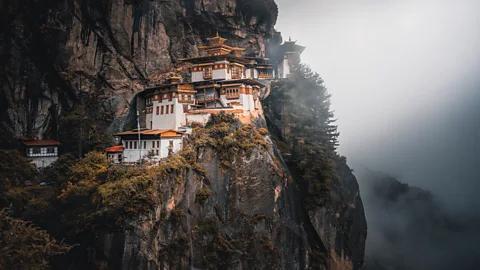
Tucked into the mountainous folds of the tallest mountain range on Earth, the world's last Buddhist kingdom spent much of its history as something of a hermit nation. It largely closed itself off from the outside world for centuries and only began allowing tourists to enter in 1974 when it adopted a "High Value, Low Volume" policy to protect its cultural heritage and shield it from overtourism.
Until the pandemic, most international visitors were required to book through a licensed Bhutanese tour operator and pay a Minimum Daily Package Rate of US$200-250 (£148-185) per day, which bundled accommodation, meals, a guide, internal transport and the country's sustainable development fee. Since 2022, the all-inclusive tariff has been replaced by a $100 (£74) Sustainable Development Fee, charged per adult per night, with travel costs arranged separately. Despite the new airport, Bhutan is determined to maintain its unique model of high-value controlled tourism.
 Getty Images
As a result, Bhutan has historically felt like something of an elusive, exclusive destination – and reaching it has been part of its mystique.
Paro, in western Bhutan, has been Bhutan's lone international airport, but because it's served by just two airlines (Drukair and Bhutan Airlines) and usually welcomes about eight flights a day, travellers from North America and Europe typically spend multiple days in transit with layovers in places like Bangkok, Kathmandu and Delhi to reach it. Fares aren't cheap – round-trip flights from connecting hubs can cost upwards of £890 ($1,200) – and arriving in Paro offers its own drama.
Located at 2,243m altitude with 5,500m mountains rippling around it, Paro is considered one of the most challenging airports in the world. Because it sits in a narrow, winding mountainous valley and landing and takeoff require multiple sharp turns, pilots must navigate its tricky approach entirely by sight with no radar or computer assistance. In fact, fewer than 50 pilots are qualified to land there, and the airport welcomed just 88,546 visitors in 2025.
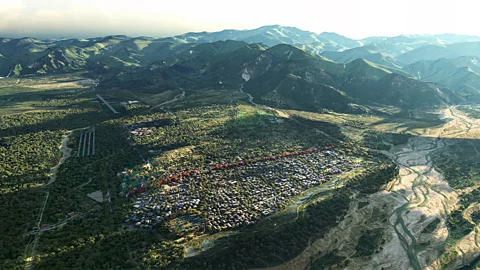
Most tourists who touch down in Paro follow a well-worn itinerary to Thimphu, Punakha Valley, Phobjikha Valley and Bumthang – each crowned with five-star luxury properties. Those flying in rarely venture to Bhutan's biodiverse southern fringes. The new airport will open up the country's wilder, lesser visited south to a new wave of travellers and spiritual seekers, and also serve GMC, a special administrative region that King Wangchuck hopes will eventually house 1,000,000 Bhutanese and foreign residents by 2060. Gelephu is also set to get a 69km rail connection to Assam, India that will help form the country's first-ever railway.
 BIG
BIGA new way to see Bhutan
The idea to build a major travel and economic hub in Gelephu was conceived by King Wangchuck more than a decade ago, but Covid was the catalyst. During the pandemic, the nation essentially shut down until September 2022, tanking its tourism industry and exacerbating a youth exodus that was already underway. By developing an independent city within the kingdom that blends business-friendly incentives for international companies while prioritising sustainability and spirituality, the nation that famously measures Gross National Happiness is hoping that GMC won't just create jobs and lure investors; it will also draw travellers beyond the familiar western circuit into its lesser-visited south.
"GMC will create a lot of job and investment opportunities," Dr Lotay Tshering, who served as Bhutan's prime minister during the pandemic and is now GMC's Governor, told BBC Travel. "[But] we must have flights coming in… we must have passengers." When it's completed, the new airport is expected to become the country's primary aviation hub.
"We envision [Gelephu] as a stopover [for international visitors]," added Tshering Dolkar, the region's tourism director. "Instead of flying through Hong Kong or Bangkok, travellers will opt to fly through Gelephu and spend some days on a jungle safari or in meditation."
Wildlife, hiking trails and homestays
The Bhutan that visitors will see in Gelephu is a far cry from the monastery-crowned cliffsides or prayer flags flapping in the wind that the kingdom is famous for. It's lush, fragrant and subtropical – think: cardamom and orange groves, and farmland threaded with rivers and palms and hot springs that have drawn Bhutanese for generations.
 Alamy
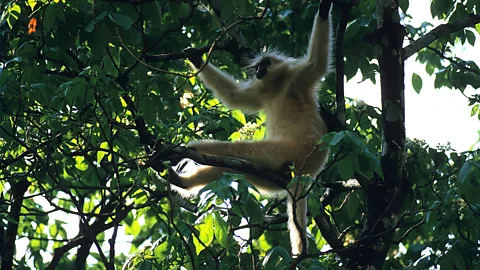
AlamyTwo national parks flank Gelephu, including the country's first, Royal Manas National Park, where travellers will soon come face to face with elephants, tigers, rhinos, clouded leopards, golden langurs and more than 360 species of birds. Among them is the critically endangered white-bellied Heron, half of whose entire world population resides in Bhutan.
"Southern Bhutan, where mountains give way to jungle, is a hidden sanctuary for the natural world," said Matthew DeSantis, founder of the luxury travel outfitter MyBhutan, based in Thimphu. "The south has become a haven for endangered species. [It's] one of the wildest places on our planet."
Like so much in Bhutan, the nation is developing Gelephu's tourism infrastructure with spirituality in mind. Buddhist masters are being invited to submit proposals for retreat centres and temples to be built in GMC. Meanwhile, Bhutan's Central Monastic Body has proposed a dzong (a monastic and administrative fortress) with guest accommodations and spaces for dance and sacred Buddhist study.
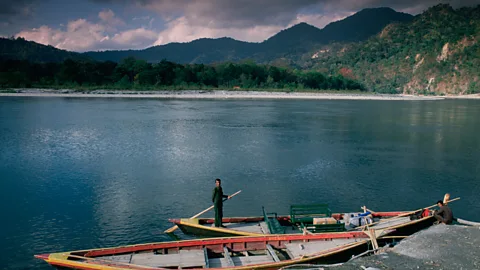
Officials are hoping the new airport will lure hikers too. The newly announced 168km Lotus-Born Trail (opening in 2028) near Gelephu connects Bhutan's subtropical south to its spiritual heartland. Beginning in the lowland forests where golden langurs and one-horned rhinos live, the eight-day journey climbs nearly 3,500m through rhododendron forests to alpine ridgelines in central Bhutan, and follows the footsteps of Guru Rinpoche, who brought Buddhism to Bhutan.
 Getty Images
Elsewhere, instead of the high-altitude mountain treks often associated with Bhutan, there is rafting, birding experiences and a newly opened tiger trail within Royal Manas National Park. Instead of luxury lodges, there are homestays and eco-camps. And in 2024, Bhutan's first high-end fly fishing lodge also opened in Manas.
More like this:
According to Dolkar, a revitalisation of Gelephu's Old Town is also underway, with a planned culinary project inspired by southern Bhutan's diverse cultures. Here, she says travellers can expect thali platters and dal from the southern-dwelling Lhotshampa people, alongside fiery dishes like ema datshi (the country's iconic chilli-and-cheese stew). Nearby, art-filled streets will feature Bhutanese murals by artist collective VAST, while a Heritage Village will highlight the country's 13 traditional arts and crafts, from basket weaving to thangka painting.
Southern Bhutan was not always easy terrain for outsiders, or even for Bhutanese settlement. Malaria, monsoons, wild elephants and tigers kept the country's residents concentrated in its middle belt of valleys and highlands. When the British attempted to control the area in the 1860s, they were repelled by a five-month battle against the Bhutanese known as the Duar War that ended their ambitions. As a result, the south stayed wild.
"There aren't too many raw jungles left in the world," said Tshering. "[This area is home to] raw jungle with natural [untamed] tigers. That is the jewel we have."
 BIG
BIGBack in Gelephu, construction on the nation's new airport and King Wangchuck's futuristic new city is carrying on. When it's finally unveiled, it won't just transform how the world experiences Bhutan, but Bhutan itself.
"We have an opportunity to try new things," King Wangchuck told BBC Travel. "[I hope this] work will generate merit for generations to come."
--
If you liked this story, sign up for The Essential List newsletter – a handpicked selection of features, videos and can't-miss news, delivered to your inbox twice a week.
