Coastguard officer fears pay cuts will risk lives

 Shaun Whitmore/BBC
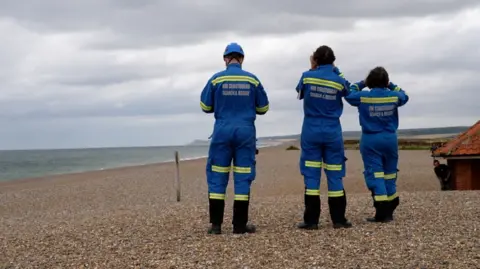
A volunteer coastguard officer has broken strict policies against speaking to the media to warn that expected cuts to pay for callouts could hamper responses to emergencies and risk lives.
The Maritime and Coastguard Agency (MCA) says it needs to "change how the service operates" after a court upheld a judgement classing responders as "workers" while they carry out their duties.
The Norfolk-based officer spoke anonymously to the BBC, saying he had "lost trust" in the service, and about half of his colleagues had signalled they would leave their roles due to the changes.
The MCA said the Coastguard Rescue Service would "continue to maintain a robust, effective search and rescue response".
Currently, coastguard volunteers can claim about £11 an hour for each callout or training exercise, but this is due to stop.
The coastguard rescue officer (CRO) said: "We do a very high pressure job and undertake advanced training but now we are not going to get paid. It is just not right.
"We do not do it for the money, but the money allows us to do it.
"We may get a call halfway through a family barbecue or a call at two in the morning. You can justify these sacrifices knowing you will get something back.
"I am not saying that it makes it worthwhile but it shows some appreciation."
 HM Coastguard Gorleston
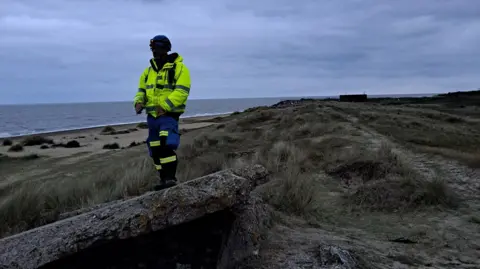
CROs are part of the volunteer arm of HM Coastguard and are often the first responders to incidents along the UK's coast.
There are more than 3,500 stationed around the country who are called upon to rescue people from dangerous situations and look for missing people.
In Norfolk, there are stations at Bacton, Cromer, Gorleston, Hunstanton, Sheringham, Wells and Winterton.
The officer said the role took an emotional toll and required teams to respond to situations where people have died or suffered serious injuries.
"It does affect us, we all carry a backpack and within it is all these things, we remember the good times and bad times," the officer said.
 HM Coastguard
'Eyes on the ground'
The Humber coastguard station is the closest operational centre to Norfolk and covers the region's coastline.
Local CROs are often the first to incidents and are vital in providing on-the-ground information to lifeboat crews, according to Mandy Humphreys, a senior volunteer RNLI lifeboat crew member at Wells.
She pointed to a recent incident at Blakeney Harbour, when five casualties were cut off by the tide. Lifeboat crews were able to rescue them thanks to CROs helping direct them through the network of creeks.
She said: "They act as our eyes on the scene, which really helps us.
"Sometimes we will get scant information from Humber, which receives 999 calls.
"CROs can help locate casualties and also help guide us in to rescue them."
Why are payments being removed?
CROs are officially classed as volunteers but can claim about £11 an hour for responding to callouts or undertaking training.
They are provided a minimum payment of about £33 for each callout.
However, the MCA is to remove this payment later in the year following an employment tribunal court ruling.
 Cromer Coastguard Rescue Team
The judgement, upheld at the Court of Appeal in January, found that while CROs were described as "volunteers", a contract came into existence whenever they attended callouts or training sessions for which they had a right to claim payment.
An MCA spokesperson said: "After careful consideration, we are moving the Coastguard Rescue Service to a revised volunteer model, to best protect the future of the service.
"This new model protects choice, flexibility and the ability for people to volunteer alongside their primary employment."
Staffing fears
The CRO told the BBC he was worried that about half of his colleagues would leave the service or restrict the times they were available if payments are cut.
He said it could affect the ability for the coastguard service to respond to incidents, with those continuing to work put under "extreme pressure".
Agencies such as the police and ambulance did not have the specific equipment or training to respond to certain incidents on the coast, and they relied on CRO expertise, he added.
 UK Parliament
James Wild, Conservative MP for North West Norfolk, said CROs had told him the changes would affect morale.
He said: "A large number of local volunteers have contacted me about what this could mean for them, for morale and for safety along our coast, including whether they will still be able to commit to the role if payments are removed.
"I've urged the agency to pause these changes and work with rescue officers to ensure this vital service continues to operate effectively."
The MCA said the Coastguard Rescue Service would "continue to maintain a robust, effective search and rescue response, ensuring the highest quality of service and levels of safety".
Do you have a story suggestion for Norfolk? Contact us below.
Follow Norfolk news on BBC Sounds, Facebook, Instagram and X.
