Coastguard volunteers no longer paid for callouts

 Getty Images
Volunteer coastguards will no longer be paid for responding to emergency callouts following a court ruling.
Coastguard Rescue Officers (CROs) are given hourly remuneration for attending incidents and training exercises.
However the Maritime and Coastguard Agency (MCA) said it needed to "change how the service operates" after the Court of Appeal upheld a judgement classing responders as "workers" while they were carrying out their duties.
BBC Scotland News understands six coastguard teams in Orkney were made aware of the changes this week.
CROs make up the bulk of the Coastguard Rescue Service (CRS), the volunteer arm of HM Coastguard.
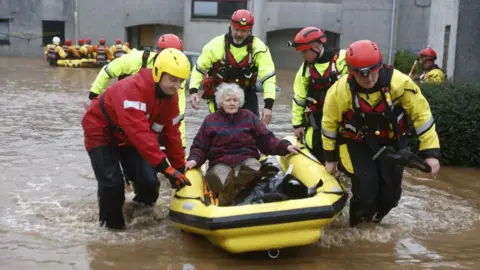
They carry out rescues around the UK's coast, including those stuck in mud, water and on cliffs, as well as assisting in searches for missing people.
They are officially classed as volunteers, but can claim about £11 per hour for responding to callouts or undertaking training exercises.
A minimum payment equivalent to three hours – about £33 – can be claimed even if in an incident is resolved before that.
However, the MCA is to remove that payment from later in the year.
The change centres on a case involving former CRO Martin Groom, who took the MCA to an employment appeal tribunal over the status of volunteers.
A 2022 employment tribunal initially found in favour of the MCA.
In 2024, Groom took his case to the employment appeal tribunal, who overturned the original decision.
They decided CROs were legally classed as workers when undertaking duties for which they were entitled to claim the hourly pay.
That judgement was upheld at the Court of Appeal in January 2026.
Appeal judges found that, while CROs were described as "volunteers," a contract came into existence whenever they attended callouts or training sessions for which they had a right to claim payment.
 Getty Images
In response, the MCA announced its intention to move to a "revised volunteer model".
It said volunteers would still be able to claim some compensation for certain activities and would receive "training, equipment and operational support as well as uniforms and PPE".
But they added the changes would "maintain the choice and flexibility" which allowed volunteers to carry out duties alongside their main jobs.
An MCA spokesperson said: "This decision follows a legal judgment, which means we need to change how the service operates.
"This new model protects choice, flexibility and the ability for people to volunteer alongside their primary employment.
"We deeply value and recognise the significant service CROs provide along our coastline, and we will be supporting them during this transition."
They added: "The CRS will continue to maintain a robust, effective search and rescue response, ensuring the highest quality of service and levels of safety."
Orkney and Shetland MP, Alistair Carmichael, said he had written to the MCA's chief executive, Virginia McVea, to demand a meeting over the proposals.
He said the changes had caused "deep concern" for many in the Northern Isles and risked "damaging" the reliability of the service.
Carmichael added: "No one volunteers with the coastguard for the sake of the remuneration involved but those payments matter, both as recognition of the dangerous and important work that volunteers do, and as a way to make such volunteering financially viable.
"Cutting such remuneration is likely to undermine morale amongst local crews, harm future recruitment of volunteers, and could even risk causing active resignations from the service."
