Everything you need to know about the hosepipe ban
Water restrictions have come into force for 1.4 million people after a water company introduced its first hosepipe ban in 50 years.
Wessex Water, which supplies water to people in Bath, parts of Somerset, Dorset and Wiltshire, has taken the decision after the region was formally declared as being in drought.
It comes after several water companies across the country, including Thames Water and South West Water, introduced bans.
Bristol Water and Severn Trent Water have yet to announce restrictions.
But what does a hosepipe ban entail and what can you do to reduce your water use? We have you covered.
What does the hosepipe ban mean practically?
Temporarily, the ban means households are no longer permitted to use a hosepipe.
This includes for activities such as watering gardens, washing cars, patios, paths and driveways, cleaning windows and filling swimming and paddling pools.
The ban is in effect across Bath and parts of Somerset, Dorset and Wiltshire, as well as Berkeley, Sharpness and Wotton-under-Edge in Gloucestershire.
Why did Wessex Water put the ban in place?
The ban marks the first time in 50 years that Wessex Water has introduced restrictions on water use, the last time being the famous drought of 1976.
The nation recorded its driest July since records began in 1836.
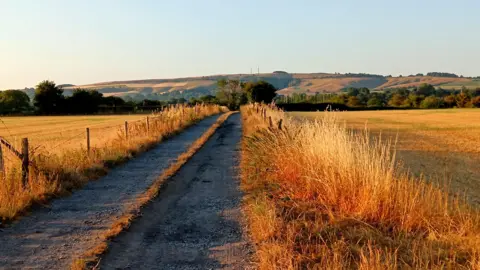
Wessex Water chief executive Ruth Jefferson said the decision to put a ban in place comes from a higher demand for water during the exceptionally hot and dry summer.

 Chully/Weather Watchers
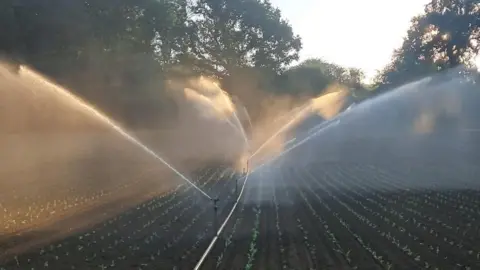
Jefferson said: "The prolonged and extreme dry weather has meant demand across our region has consistently remained at more than 400 million litres per day, 30% above average for this time of year and the equivalent of almost half a million hosepipes running for a full hour every day.
"While we're not running out of water for essential use, our challenge has been moving water through the network quickly enough to meet these record levels of demand," she added.
 Duncan Palmer
Are there exemptions?
There are a few exceptions to the rule, to protect vulnerable people.
These include:
- physical impairments or restricted hand movement
- stairlift, hoist or electric bed users
- respiratory conditions that require the use of a ventilator
- other chronic or serious illnesses such as Parkinsons, MS, MND, cancer, stroke, organ failure or severe arthritis
Is it against the law to break the ban?
Yes, the ban is a legal restriction on water use set out in the Water Industry Act.
Water companies can legally enforce these rules during periods of drought or severe water shortage to protect public water supplies.
Breaking the ban is a criminal offence and can carry a fine of up to £1,000.
What can you do to reduce your water usage?
There are a few things households can do to further reduce the use of water, including:
- Letting the lawn go brown – it will recover when the rain comes
- Using a watering can to water plants
- Reusing washing up water for patio pots and moving pots into the shade so they dry out less
- Filling up paddling pools using buckets or watering cans and covering them when not in use to prevent evaporation
- Keeping showers short and not leaving taps running while brushing teeth or doing the dishes
- Not washing the car, just keep the windscreen and number plate clean.
Jefferson said: "We know so many of our customers have already been taking steps to save water and we're incredibly grateful for their support so far this summer. It makes such a difference."
Follow BBC Somerset on Facebook and X. Send your story ideas to us on email or via WhatsApp on 0800 313 4630.
