Tudor lodge famed for Catholic symbolism reopens

 National Trust Images/Kate Scott
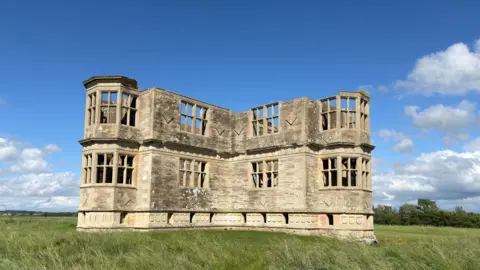
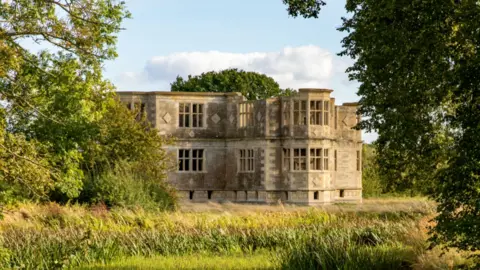
An Elizabethan lodge renowned for its Roman Catholic symbolism has reopened after essential conservation work.
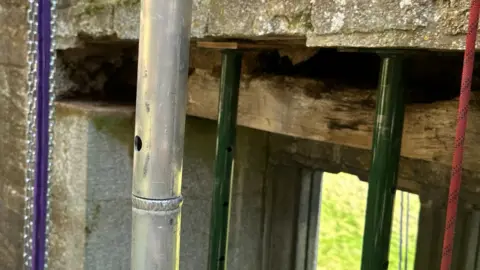
Specialist teams have repaired damaged oak, restored stonework and repointed walls at the National Trust-owned Lyveden Lodge, near Oundle, Northamptonshire.
It was built by Sir Thomas Tresham in the late 16th Century, although it was never finished. It also sits within one of England's oldest surviving gardens.
"We're very excited to open Lyveden Lodge after 18 months and welcome visitors back inside this remarkable building," said Matthew Glasgow, senior building surveyor.
"While further conservation work will be needed in the coming years, the completed repairs mean visitors can once again enjoy this extraordinary unfinished vision of Sir Thomas Tresham."
 National Trust Images
The work was deemed necessary after surveys in 2024 identified significant decay in the lodge's timber lintels.
As a result, the lodge was closed to the public for 18 months, although the wider National Trust site remained open.
Glasgow said: "Throughout the project, we worked closely with ecologists to protect bat habitats and with specialist heritage contractors to ensure the repairs were carried out sensitively and sustainably."
 National Trust Images/Mike Selby
Sir Thomas was a wealthy landowner who was regularly imprisoned and fined because as a staunch Catholic, he refused to attend Protestant Church of England services.
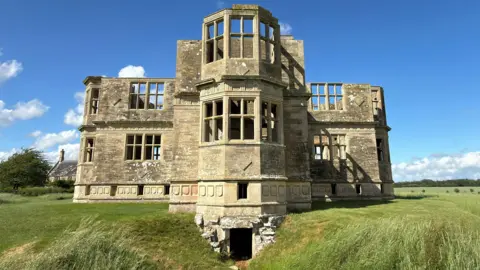
The architecture of the lodge deploys Christian numerology and is built in the shape of a Greek cross.
For example, the number seven was used to symbolise the seven instruments of the Passion (crucifixion) of Christ and a carved frieze between the ground and first floor shows seven emblems of the Passion.
 National Trust Images/Mike Selby
Sir Thomas' garden plans were inspired by European gardens and included canals, raised terraces, viewing mounts and orchards.
He would also go on to create another building replete with Christian and Roman Catholic symbolism on his estates - the Triangular Lodge, which references the Holy Trinity.
However, he died in 1605 leaving Lyveden incomplete and it has remained largely untouched ever since.
Sir Thomas' son, Francis, inherited the estate, but was almost immediately embroiled in the Gunpowder Plot and died awaiting trial in the Tower of London.
Do you have a story suggestion for Northamptonshire? Contact us below.
Follow Northamptonshire news on BBC Sounds, Facebook, Instagram and X.
