'We'd rather live in a tent than a homeless hostel'

 BBC
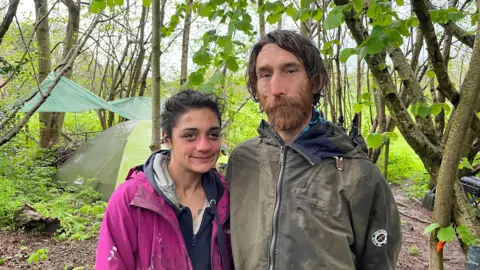
BBCA homeless couple say the support system is "very, very broken" and they feel living in a tent is preferable to entering a hostel.
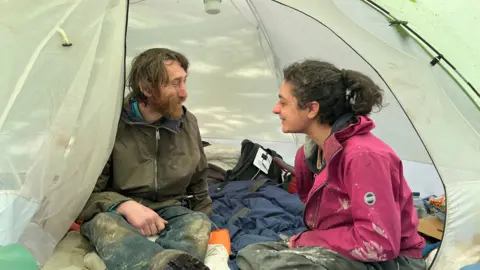
Alan Cook, 39, and Hannah Ali, 32, have camped at a park in Derby since November, having overcome their heroin addictions, which followed significant trauma.
The pair left Derby in 2014 but said they were shocked to see the same people living in the homeless hostels on their return.
Derby Homes, the city council's arms-length housing management company, said its focus was on "helping people access accommodation, maintain recovery, and move forward into longer-term housing".
However, Alan disputed this and said the people he saw in hostels had been "trapped in that same position for 12 years".
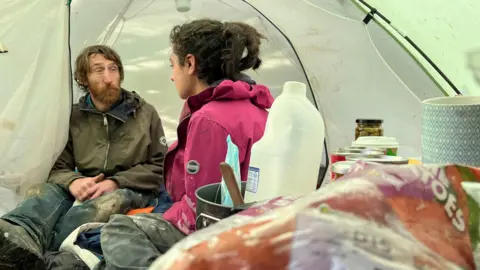
In 2012, Alan lost a baby at birth and separated from his then-partner, which he said left him "bereft and everything fell apart", turning to heroin to ease the pain.
"I started taking drugs and ruined every friendship I had, completely burned every bridge, just destroyed my life," said the trained horticulturist.
He met his wife, Hannah, some years later, and both decided they would get clean for each other to build a future.
This rehabilitation process took about two years and included monthly subutex injections as medication-assisted treatment.
They settled in their home city of Derby having been rejected by the other councils they approached.
"All they would ever do is say, 'we've got no duty of care, you've got to go back to Derby'. So, Derby it is," said Alan.
The couple tried the city's recommended homeless hostels, but found them to be "a reminder of their past lives" where active drug users appeared to be making little progress.
"I ended up having a severe breakdown due to the people that were living there and my past catching up with me," said Hannah.
Derby Homes said there was a range of accommodation and support options available to people like the couple.
"We recognise that a hostel environment may not suit everyone, and we continue to work with partners to provide safe and appropriate alternatives," a spokesperson said.
In November 2025, the pair found their own alternative - deciding to camp in Derby.
Under UK law, the park is common land, meaning people usually have the right to roam on it, but cannot do certain activities there, such as camping, without the land owner's permission.
The couple have faced eviction from the park by Derby City Council since early April and are due in court again in early June, by which time they hope to have found mainstream accommodation.
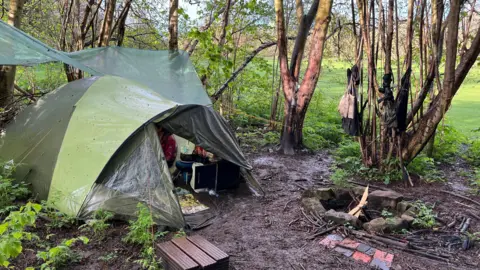
"We actually love it when people do come through and say 'hello', it makes our day," said Hannah, who has offered cups of tea to interested passers-by.
"People are very shocked that somebody in our position had offered them a cup of tea but it's just basic human kindness," said Alan.
Alan also criticised homeless hostels for requesting money he had legitimately earned, but since moving to the park he has been able to save all his earnings.
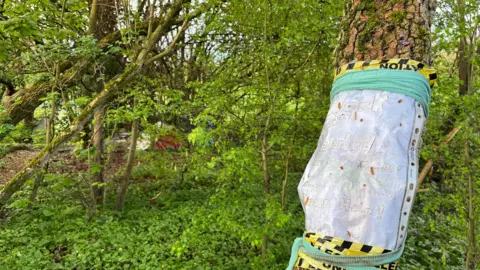
He taped a sign to a tree near their tent advertising his gardening services.
The pair have now saved enough to buy a mobile phone and have ambitions of investing in a van.
Derby Homes said for working hostel tenants, contributions towards accommodation costs were a standard feature of the system and reflected the wider housing model.
"These contributions help sustain services and ensure continued support to those who need it, while allowing people to manage their finances and move towards independent living," Derby Homes said.
"We work with people to ensure costs are reasonable and do not hinder their progress."
After being told by the council they have to leave the park, the couple told the BBC they had saved up enough money to get a flat with a small deposit, but said it had been "very, very hard" dealing with estate agents and finding a landlord willing to accept them without references.
"They could come and look at the care that we take in our camp. If we can live in a camp like this, then we can live in a house and we could live so much better in a house. We just need to be given an opportunity," he said.
Alan added he wished that Derby City Council would "look at the homeless provision that they're providing and do something that actually helps people".
Derby Homes said it valued the perspective of those who had experienced homelessness and acknowledged their concerns.
"We would encourage anyone who is sleeping rough to engage with local services so we can understand their circumstances and offer appropriate support," a spokesperson said.
"Outreach teams are available to assist those sleeping rough and we would encourage anyone that needs support to get in touch so we can explore options that meet their needs."
A total of 631 people spent at least one night sleeping rough in Derby in 2025, according to figures released by Derby Homes to the BBC under the Freedom of Information Act.
That compares to 473 rough sleepers in 2024 and 290 in 2023.
Listen to BBC Radio Derby on Sounds and follow BBC Derby on Facebook, on X, or on Instagram. Send your story ideas to eastmidsnews@bbc.co.uk or via WhatsApp on 0808 100 2210.
