Terror sentencing for activists unfair, lawyer says

 BBC
BBCA judge's decision to consider sentencing five Palestine Action activists as terrorists after causing damage to a bank is "unfair", a senior civil liberties lawyer has argued.
The activists were convicted of criminal damage after covering a Barclay's Bank in Burnley, Lancashire, with red paint and splintering windows in August 2024.
Laura O'Brien said Judge Philip Parry's post-verdict request for prosecution and defence submissions as to whether the case had a "terrorist connection" was not a suggestion made to the jury and "particularly unfair".
Jonathan Hall KC, the government's independent advisor on terrorism legislation, said judges were entitled to make such decisions in English cases.
At the time of the offences, which caused more than £200,000 worth of damage, Palestine Action had not yet been proscribed as a terrorist organisation and it was not illegal to be a member of or support the pressure group.
The group claimed it had targeted Barclays over the bank's links to a company called Elbit, which it said had sold military components to Israel which were used in the conflict in Gaza.
Brendon O'Hagan, 28, Amanda Kelly, 31, Hmeera Atiqnisar, 31, Mohammed Malik, 28, and Alma Yaniv, 70, said they had no idea their case could be treated as terrorism until after they were found guilty.
If the judge decides the offences were aggravated by terrorism, the defendants could face significantly longer sentences.
They are due to be sentenced on 4 September at Preston Crown Court.
 Handout
O'Brien, head of the public order and protest team at Hodge, Jones & Allen solicitors, said what was "particularly unfair in this case is that none of the defendants had been prosecuted on the basis that the prosecution were suggesting there was a terrorist connection".
"This is something that has arisen post-trial, so not dealt with through the preparation of the case," she said.
"The trial was not dealt with by a judge who would be sufficiently qualified to deal with a terrorist case, but instead come up as what appears to be an afterthought raised by the judge of his own volition, rather than, as I understand it anyway, pursued by the prosecution."
O'Brien said the judge's decision appears to have followed on from a decision by Mr Justice Johnson in another case involving Palestine Action protesters targeting an Elbit factory in Bristol.
Johnson ruled that their offending was aggravated by a "terrorist connection", a suggestion that had not been made to the jury.
"When such sentencing practise takes place, it unfortunately seems to bolster other judges to do the same," O'Brien said.
"The concern here is that this is an example of the knock-on effect of the way that other cases have been dealt with and the way that this judge and other judges may interpret that."
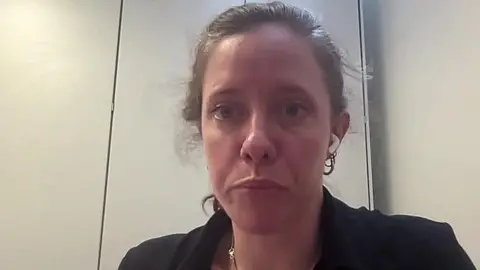
One of the defendants, Mohammed Malik, said in a statement that the Johnson ruling "set a dangerous precedent".
"At no point during our trial did the prosecution seek to pursue anything to do with terrorism and the jury were kept completely in the dark and were not told that if convicted, we could be sentenced as terrorists," he said.
"Despite this, after the trial concluded, the judge and the CPS (Crown Prosecution Service) are now seeking to sentence us as terrorists for red paint and a few splintered windows.
"This goes far beyond the charges before the court and raises serious concerns about the increasing use of counter terrorism legislation to persecute political dissent."
However Hall, an experienced barrister and government advisor on terrorism legislation since 2014, said that although under Scottish law, a jury must decide whether an offence is aggravated by terrorism, in England it was "quite normal" for a judge to make that decision.
"I think that maybe unusually here, you're not talking about murder or manslaughter, you're talking about criminal damage," he said.
"But actually, in principle, it is fairly standard stuff.
"Judges decide, for example, whether or not someone has committed a racially aggravated offence at the point of sentencing, so I think you can see what their complaint is, but in fact, it is just the way in criminal process works in England and Wales."
Hall said the judge would have to come to a conclusion based on the specific facts of the case.
Listen to the best of BBC Radio Lancashire on Sounds and follow BBC Lancashire on Facebook, X and Instagram. You can also send story ideas via Whatsapp to 0808 100 2230.
