Eugene Reavey to receive compensation from police and MoD over murder of three brothers
 BBC
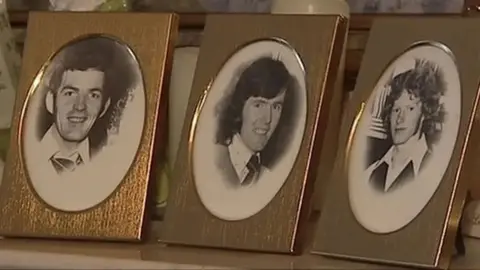
BBCMore than 50 years after the murder of three brothers at their home, the Police Service of Northern Ireland (PSNI) and Ministry of Defence (MoD) have agreed to compensate a surviving brother for negligence and the trauma caused to him in the aftermath of their deaths.
A Ulster Volunteer Force (UVF) unit known as the Glenanne gang murdered the three Reavey brothers at the family home at Whitecross in County Armagh on 4 January 1976.
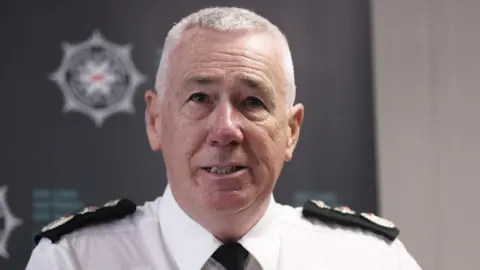
PSNI Chief Constable, Jon Boutcher, apologised for the inadequacies and failures of the investigation into the murders and acknowledged that these failures added to the distress experienced by the family.
Boutcher also accepted neither the family of the three brothers or the brothers themselves had any involvement in paramilitary or terrorist activities.
He also acknowledged that members of the Royal Ulster Constabulary (RUC) may have contributed to the murder of the brothers and for that he apologised unreservedly.
The gunmen shot the brothers who were at home watching TV - John Martin, 24, Brian, 22, and Anthony, 17.
The youngest victim died days afterwards, while the others were killed outright.
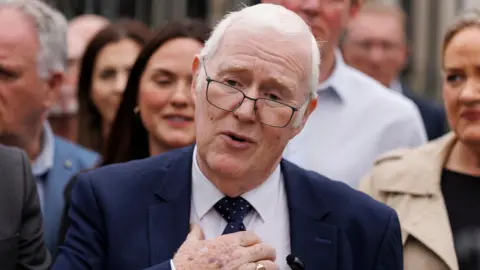
A brother of the three murdered men, Eugene Reavey, brought the case seeking damages from both the PSNI and the MoD.
 PA Media
He sued the parties for negligence, misfeasance in public office and trauma from his alleged treatment in the aftermath of the attack.
In Northern Ireland's civil law misfeasance in public office allows a person to seek compensation if a public official deliberately or recklessly abuses their power, that results in harm or financial loss.
Today the court heard that the PSNI agreed to pay £175,000 to Reavey.
The MoD will also pay him £225,000 in damages.
There was no admission of liability.
Both parties will also cover court costs.
'Long journey'
 PA Media
Speaking outside court on Thursday, Reavey said it had been a "long journey" and he was "beginning to think it was never going to happen".
"This is the day where I have to remember my mother and father and all the struggles they went through over the deaths of John Martin, Brian and Anthony," he said.
"For decades we had to put up with all this nonsense from the security forces.
"It was encouraging that the chief constable apologised to us and noted that Brian, Anthony and John Martin were innocent victims and there was no paramilitary involvement by anyone in our house, including myself."
Reavey said he "never got any peace" when he was growing up, and that two days before his father died he made a promise that he would get justice for his brothers.
"The word 'closure' is not a word I recognise because tomorrow I still haven't got my brothers… they're not there and they should have been there."
Who were the Glenanne gang?
The Glenanne gang were members of the loyalist paramilitary group the UVF.
Members operated from a farm in Glenanne, County Armagh, in the 1970s, and have been linked with multiple murders.
Its activities were examined by Operation Kenova, who reviewed 98 incidents resulting in 127 deaths.
In a report published in 2025, it stated "an easily defined discrete Glenanne Gang did not exist."
It said the term had evolved to group together "a broader network" of UVF paramilitaries, who acted with "corrupt" members of the police and army.
Update 22 June 2026: This article was updated for accuracy, reflecting what the Operation Kenova investigation has said about Glenanne Gang.
