Who won the local elections in Islington?

 Getty Images
What happened in Islington in the 2026 council election, and who won?
Labour retained control of Islington Borough Council in the 7 May 2026 elections.
The results were:
Labour: 32 seats (-16)
Green: 19 seats (+16)
When were the 2026 local elections in London?
More than six million Londoners were eligible to vote in the council elections on Thursday 7 May 2026.
All 32 London boroughs were up for election.
There are also elections for the mayor in five boroughs: Croydon, Hackney, Lewisham, Newham and Tower Hamlets.
 Getty Images
Where is Islington and who lives there?
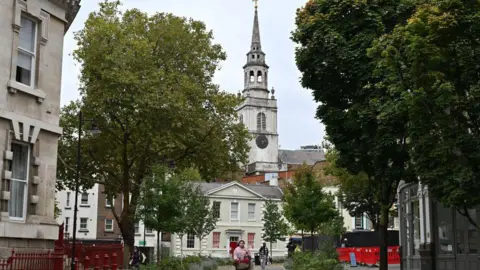
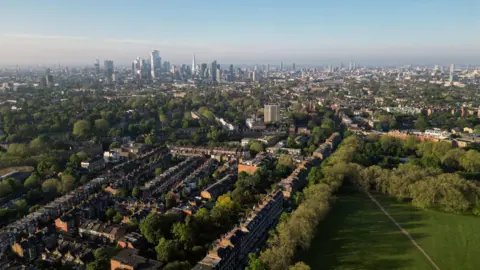
The London Borough of Islington is located in north London and is part of Inner London. It is bordered by Haringey to the north, Hackney to the east, the City of London to the south, and Camden to the west.
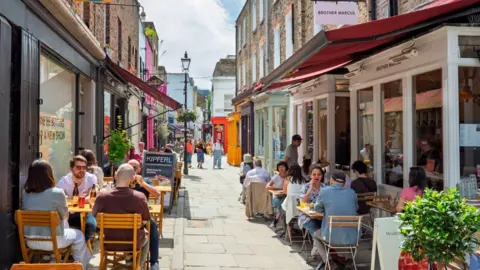
What's it like? Islington is a densely populated inner-city borough characterised by a mixture of residential Georgian squares and commercial urban centres.
It serves as a major transport and cultural hub for north London, containing significant retail, theatre, and professional sporting infrastructure.
Neighbourhoods: Angel, Islington, Highbury, Holloway, Finsbury Park, Archway, Tufnell Park, Barnsbury, Canonbury, and Clerkenwell.
Places of interest: The borough is home to Arsenal FC's Emirates Stadium and several major performing arts venues including Sadler's Wells Theatre, the Almeida Theatre, and the Union Chapel.
Historical and educational sites include the London Canal Museum, the Garden Museum, and the Estorick Collection of Modern Italian Art.
Pub quiz fact: Islington was the home of the first Gainsborough Studios, where Alfred Hitchcock directed several of his early films.
Population: In 2024 the population was estimated to be223,024.
Demographics (ONS): According to the 2021 census, 62.2% of the population identify as white, 13.3% as black, 9.9% as Asian, 7.5% as mixed race, and 7.1% as another ethnic group.
Average property price: According to the Office for National Statistics (ONS), the average house price in Islington in December 2025 was £700,000.
Average monthly rent: The ONS reported that the average monthly rent in January 2026 in Islington was £2,713.
Council tax: Band D council tax in the borough for 2026/27 is £2,022.29.
Transport: Islington is served by 14 Underground and Overground stations, including major interchanges at Highbury & Islington and Farringdon (providing access to the Elizabeth Line and Thameslink).
The borough contains approximately 350 bus stops.
 Getty Images
What is Islington's local history?
Originally a Saxon settlement called Giseldone, Islington grew as a vital agricultural link and water source for the City of London via the New River, completed in 1613. By the 18th Century, it was a premier leisure destination famed for its "spas" and the Sadler's Wells theatre.
The borough was a major hub for the livestock trade. The Royal Agricultural Hall, opened in 1862, hosted national cattle shows and survives today as the Business Design Centre. Islington is also synonymous with the arts and radical politics, having housed figures from George Orwell to modern political leaders.
While the area suffered significant damage during the Blitz, the late 20th Century saw a dramatic restoration of its Georgian terraces. It is also the home of Arsenal Football Club, which moved to Highbury in 1913 before opening the Emirates Stadium in 2006.
Listen to the best of BBC Radio London on Sounds and follow BBC London on Facebook, X and Instagram. Send your story ideas to hello.bbclondon@bbc.co.uk
