Anglian Water hosepipe ban for UK's driest region

 EPA/Shutterstock
Anglian Water has introduced its first hosepipe ban in a decade due to "unrelenting" hot and dry conditions across the East of England.
The restrictions officially begin at 01:00 BST on Saturday, but customers are being asked to limit their water use immediately to "help protect water supplies".
On Thursday, Cambridge Water also announced its first hosepipe ban for 30 years, while Affinity Water brought in its restrictions on 10 July across much of Hertfordshire and the surrounding counties.
Anglian Water said it had been "a very difficult decision" to bring in the temporary ban, but that it was necessary to protect customer supplies as well as "our region's precious environment".
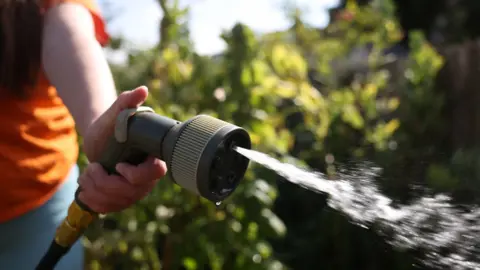
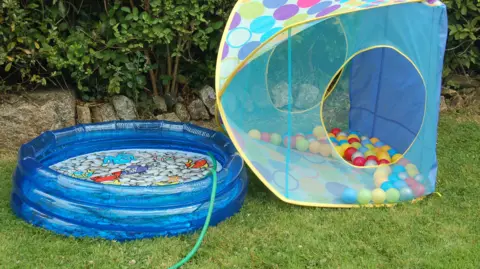
Officially called a "temporary use ban", it only applies to domestic use of hosepipes for actions like filling paddling pools and hot tubs, washing cars and windows, and watering the garden.
Anglian Water said people could still water fruit, vegetables and gardens using a watering can.
The company also urged non-domestic customers to "use water wisely" by not washing commercial vehicles.
 Met Office
The company supplies drinking and wastewater services to parts of Bedfordshire, Buckinghamshire, Cambridgeshire, Norfolk, Suffolk, Essex, Lincolnshire, and Northamptonshire.
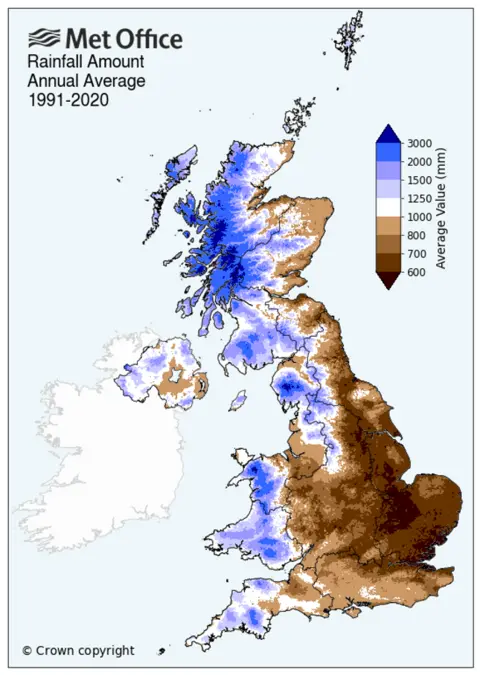
East Anglia is the driest region in the country, and the East of England has seen the second driest spring on record, with only 39% of expected rainfall.
Anglian Water said the dry spring had combined with record-breaking temperatures to create "exceptionally high demand for water".
The company said many of the region's rivers were "at notably or exceptionally low levels" and its reservoirs were also less full than usual.
 Janine Machin/BBC
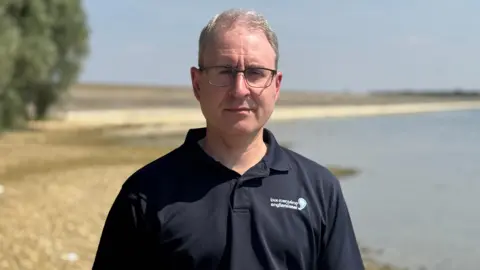
Its head of strategic asset planning, Dr Geoff Darch, said its teams were "working 24/7 to keep taps flowing".
"Understandably, customers have wanted to stay cool and have fun in the sun, but the unrelenting conditions are placing the environment and water supplies under increasing strain," he said.
"We are now at the point where we need to ask customers to help by hanging up the hosepipe, letting lawns go brown, cars go dirty and using water even more wisely," he added.
Anglian Water has joined other organisations in a campaign to promote water-saving ideas.
He said the company had prepared for periods of prolonged dry weather and invested hundreds of millions each year "to build our region's resilience".
 Laurence Coss/BBC
The Environment Agency said parts of East Anglia were now in "prolonged dry weather status" after only moving out of drought recovery in March.
"Farmers have reported issues with spring crops and have had to start irrigating earlier because of the dry soils," a spokesperson said.
They said water resources were "under tremendous strain" due to climate change.
"Dry weather depletes our water, and hot weather means we use more of it," they added.
"These short-term bans help companies to manage their supplies so that more water remains in the local environment longer, which is vital for the health of our rivers and wildlife."
Do you have a story suggestion? Contact us below.
Follow East of England news on X, Instagram and Facebook: BBC Beds, Herts & Bucks, BBC Cambridgeshire, BBC Essex, BBC Norfolk, BBC Northamptonshire or BBC Suffolk.
