Robot begins tests to combat killer weeds

 Dorset Council
A smart robot developed to combat a plant that can kill horses and livestock is set to begin final tests on Dorset farmland.
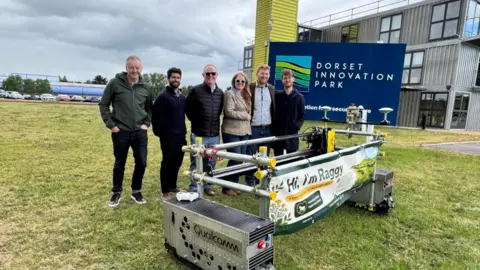
The autonomous farm robot, which is developed to detect and remove ragwort while reducing chemical use is being put through its paces at Dorset Innovation Park at Wool near Wareham.
Ragwort is a poisonous weed that threatens livestock health and damages grazing land. It is usually pulled by hand, which is labour intensive, costly and can pose risks to people and the environment.
The electrically powered platform, named Raggy by its creators, will carry out field trials at a range of farms and land across Dorset throughout the summer.
The Royal Horticultural Society says while ragwort is rarely a problem in gardens, its poisonous nature makes it a "serious weed of paddocks and pastures".
It plays an important role in supporting wildlife, including pollinators such as bees and butterflies.
Control is therefore targeted, with plants removed in areas where there is a risk to grazing animals.
Raggy has been developed by Cornish firm Robotriks in partnership with Dorset Council and long-time collaborators Telint.
Jake Shaw-Sutton, director of Robotriks, said the Robotic Traction Unit (RTU) was "built for real-life farm conditions".
Nick Ireland, leader of Dorset Council, said: "We are delighted this autonomous and environmentally sensitive solution is being tested, evaluated and developed on our land here in Dorset."
Dave Happy, CEO of Telint said: "This is yet another practical example of Dorset embracing innovative tech solutions to improve the quality of life for livestock and humans alike.
"Dorset's unique advantages, in particular in relation to access to spectrum, make it the ideal place to test and develop this kind if innovative solution."
