Why Titanic artefacts are still selling for millions

 BBC
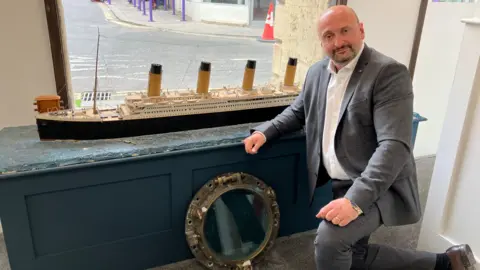
BBCIn a quiet Wiltshire town, an auction house has become a global leader in selling some of the most sought-after Titanic artefacts - with tens of millions of pounds' worth of items passing through its doors.
Henry Aldridge & Son, based in Devizes, holds the world record for every major Titanic item ever sold at auction, with prices continuing to climb more than a century after the ship sank.
Managing director Andrew Aldridge says selling the pieces feels extraordinary: "It's fascinating and you become emotionally involved in the stories."
Aldridge believes that interest goes beyond the individual objects and puts this enduring fascination down to the individual stories of crew and passengers.
Record-breaking prices
He compares the experience of selling major items to "a footballer scoring the winning goal in the Champions League".
Demand for Titanic artefacts shows no sign of slowing.
At a sale in April 2026, a lifejacket believed to be from a survivor sold for £670,000.
Months earlier, a gold pocket watch recovered from the body of first-class passenger Isidor Straus fetched a record £1.78m.
Why Titanic still fascinates
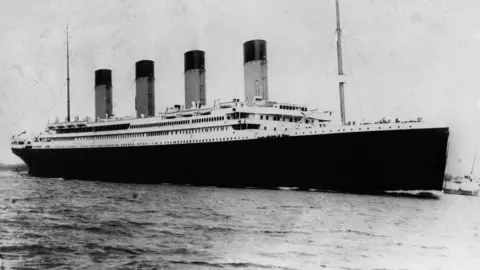
About 1,500 people died when the Titanic hit an iceberg on the night of 14 April 1912, on her maiden voyage to the US from Southampton.
She sank at 02.20 local time on 15 April in the North Atlantic Ocean.
About 700 people survived, although the exact number was never confirmed.
The tragedy remains one of the best‑documented maritime disasters in history.
"Titanic is one of the most talked about and studied historical tragedies," said David Scott-Beddard, chair of the British Titanic Society.
He highlighted the continued teaching of Titanic in schools as helping maintain its popularity.
"And of course with the 1997 movie that James Cameron made, it's formed a whole new generation of people who are fascinated by the subject," he added.
 PA Media
From £10,000 to world records
The Aldridge family's link to Titanic artefacts dates back to 1990, when Andrew's father Alan identified their potential at a valuation day for the Salvation Army.
He was shown dinner menus from the White Star Line - Titanic's parent company - and sold them for £10,000, far exceeding the previous £2,500 record.
"That in turn generated another consignment of Titanic items, which also did very well to the point that now in 2026 we are the world leaders in the sale of this subject," said Aldridge.
Over the years, the auction house has handled some of the most iconic items linked to the ship
In October 2013, the violin that was apparently played to calm passengers as it sank was sold in Devizes for £900,000.
Aldridge said that item is so unique it could now be worth three or four times that price.
Proving what is real
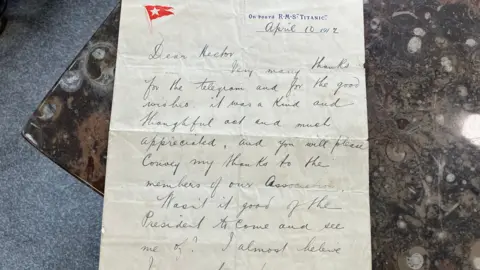
With such high values, authenticity is critical.
"Due diligence is absolutely vital, provenance is the byword with these objects," said Aldridge.
"I've handled literally tens of millions of pounds worth of material from Titanic over the years so we are uniquely placed in the experience of handling objects, but it's far more than that."
His team researches items meticulously, tracing ownership and matching it to historical records and photographs.
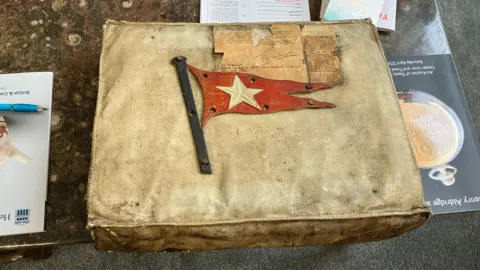
A fender from Titanic lifeboat 2, which sold at the April 2026 sale for just under £400,000, was matched to a 1912 photograph taken as the lifeboat was hauled on board the rescue ship, The Carpathia.
"There are certain things that jump out at you; the look, the feel, the smell, the aesthetics," said Aldridge.
"These are things that people can't fake, but most importantly, it's the provenance. I can tell you where this item has been, anywhere between 1912 and present day.
"So that timeline is what guarantees its authenticity."
He added that while fake items exist, they rarely make it to his auction house.
"People fake menus, letters, watches, there's all manner of things they try to fake, but generally speaking they don't bring those to us because they know we'll spot them a mile away," he added.
For Aldridge, the job is about more than record-breaking sales.
"I'm lucky enough to handle these pieces of history and it's a huge honour," he said.
Follow BBC Wiltshire on Facebook, X and Instagram. Send your story ideas to us on email or via WhatsApp on 0800 313 4630.
