Osprey chick record rises at nature reserve

 Cumbria Wildlife Trust
An already record number of osprey chicks hatched at a nature reserve has turned out to be higher than previously thought.
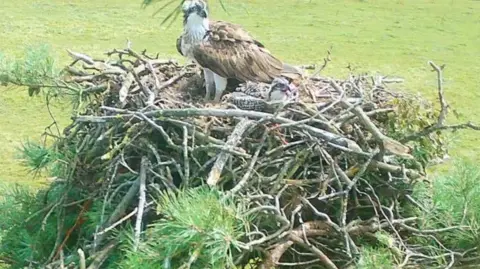
Cumbria Wildlife Trust, which previously said five chicks had been born across two nests at Foulshaw Moss Nature Reserve, has discovered two new nests and one more chick - pushing new-born numbers to six.
Nature reserves officer Paul Waterhouse said: "It's absolutely amazing, I never contemplated there might be a third or a fourth nest."
Ospreys went extinct across Britain in the early 20th Century but populations have slowly recovered in recent decades.
For more than 10 years Foulshaw Moss only had one long-standing breeding pair of the birds, which Waterhouse said felt like a "real privilege" in itself.
Two years ago another pair of ospreys came to stay, giving birth to a first chick last year.
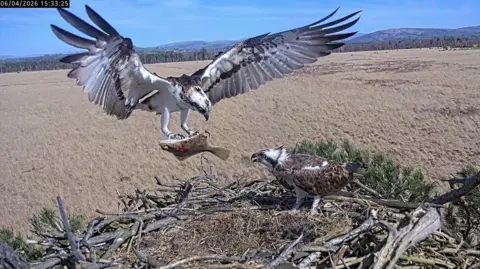
Both pairs had two chicks this year.
 Flynn Murnan
Waterhouse said an osprey had been spotted carrying sticks last year, leading staff to speculate there could be a third nest somewhere.
"As it happens we found that nest this year, really far away and where people rarely go, and they've successfully had one chick," he said.
"But if that wasn't enough, a fourth pair are building a nest and we hope they'll be there to breed next year."
 Cumbria Wildlife Trust
Waterhouse said it was common for breeding pairs to only have one chick in their first year at a nest, then have up to about three chicks as they became "more experienced".
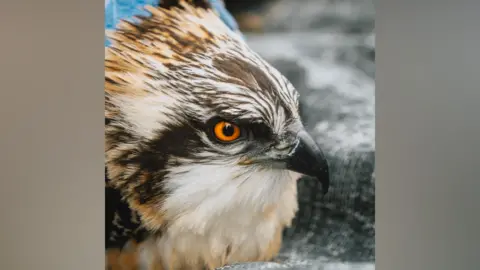
He said the fledged chicks were "all flying around the lakes at the moment and teaching themselves to fish whilst building up the strength in their wings".
However, they faced the big challenge of their first "huge migration" in the coming weeks as they seek warmer conditions as far away as Senegal and Gambia.
"Sadly a lot of birds don't survive that first migration," he said, "but hopefully we may see the ones that do back in Cumbria."
Follow BBC Cumbria on X, Facebook, Nextdoor and Instagram and listen to Radio Cumbria on BBC Sounds.
