Why are gritting lorries out in a heatwave?

 BCP Council
If you have spotted gritting lorries out on the roads during the heatwave, don't worry, you're not imagining things.
Councils across the South of England have been sending out gritters, usually associated with wintry conditions, to combat melting roads.
According to Hampshire County Council, the extreme temperatures can cause road surfaces to reach between 50C and 60C (122-140F), causing bitumen to soften and become sticky, making it vulnerable to damage.
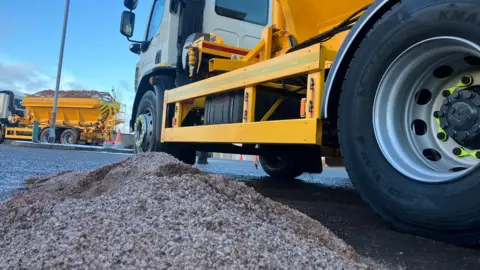
West Berkshire Council said its gritters were spreading sand or dust over the road surface as a form of "sunscreen" to absorb the softened bitumen and prevent it sticking to tyres.
In a Facebook post, West Berkshire Council explained why some road surfaces might appear to be melting.
"While this may seem unusual, it's a natural response to extreme conditions," it said.
 Hampshire County Council
"This happens because dark road surfaces absorb heat.
"Bitumen, which is the binding glue in asphalt for road construction, can soften, making roads feel sticky and more vulnerable to damage from traffic, particularly heavier vehicles.
"Our highways teams are working with our contractor Volker Highways to monitor the network closely and will respond where needed to keep roads safe and minimise disruption.
"In some locations, this may include gritting the roads, which involves spreading sand or dust over the road surface.
"Think of it as a form of sunscreen for the road – it absorbs the softened bitumen and helps prevent it from sticking to vehicle tyres."
The council thanked those carrying out the repairs in "very challenging conditions".
"Working outdoors in high temperatures while wearing full PPE is no easy task, so if you see them on site, please give them plenty of space, patience, and a cold drink if safe to do so - a bit of kindness never goes amiss," it said.
Oxford City Council's contractor, ODS, said it was carrying out "precautionary gritting" on roads that had recently been surface dressed.
It said the heat could also cause road chippings to become loose and damage passing vehicles.
A spokesperson said: "These measures are temporary and form part of standard highway maintenance practices during periods of extreme heat.
"We will continue to monitor conditions and carry out any necessary follow-up treatments, including sweeping excess material when appropriate."
 BCP Council
In Dorset, Bournemouth Christchurch and Poole (BCP) Council has deployed Sir David Attenbrrr, one of its fleet of gritting lorries named by members of the public.
The authority said the conurbation was experiencing its hottest temperatures since 1957, adding: "Despite the frosty-themed names, a gritter isn't just for Christmas."
Dorset Council said its gritters were also being used to stabilise road surfaces and limit damage.
"In some cases, short-term road closures may be needed while conditions improve," it said.
Drivers are urged to take extra care and report any issues to their local highways department.
