Sophie's double life-saving gift to a stranger and science

 BBC
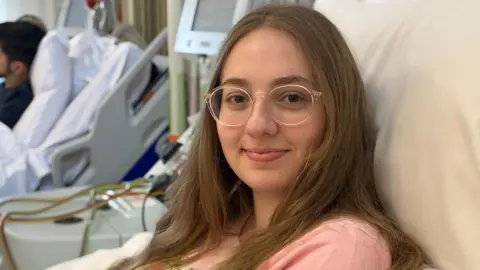
BBCWhen Sophie signed up to a UK stem cell donor register, she never expected to be called so quickly to help save a life.
Just months later, the 21-year-old discovered she was a match for a stranger in need of a stem cell transplant to treat a blood cancer or blood disorder.
"I was so happy," she said. "It's such an honour to get the call and be able to help someone."
During a donation session lasting several hours, millions of stem cells were collected from her blood at the Anthony Nolan Cell Collection Centre (ANCCC) in Nottingham.
It is the charity's first dedicated facility of its kind in England and began welcoming donors last year.
But Sophie's potentially lifesaving contribution did not stop there. Alongside donating stem cells, she also agreed to provide an additional blood sample to researchers studying how stem cell transplants can be made safer and more successful for future patients.
 Anthony Nolan
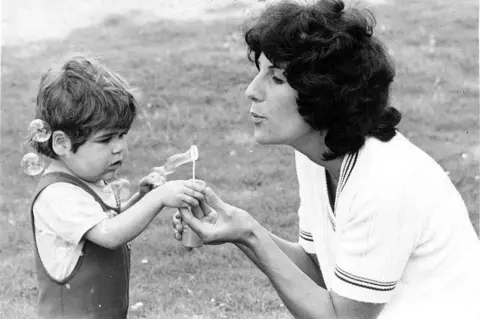
When the charity Anthony Nolan was founded in 1974, the outlook for many patients was much bleaker. No suitable transplant match could be found for Anthony Nolan, who had the rare genetic condition Wiskott-Aldrich syndrome.
His mother, Shirley Nolan, was determined to do everything to save him. Back then there was no register of potential stem cell donors, which made her search for a stranger that could save him so difficult.
He died aged seven in 1979. Shirley set up the world's first stem cell register in his name.
Today, the charity estimates a patient like Anthony would have a 93% chance of finding a suitable donor match. Since it was founded, the Anthony Nolan charity has facilitated more than 30,100 stem cell transplants.
Anthony Nolan stresses that while stem cell transplants offer some patients their best chance of survival, only about half of those who receive a transplant for blood cancer are still alive five years later, underlining the need for further research.
These transplants have been made possible through the charity's work signing up potential donors and because of other aligned registers. There are more than 940,000 people signed up to the Anthony Nolan register.
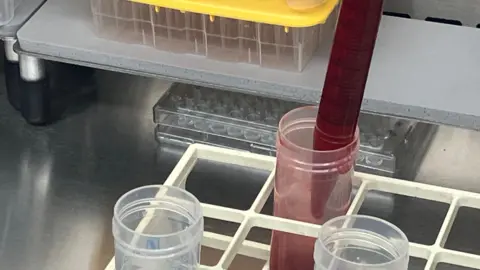
The research programme Sophie joined studies blood samples from donors and transplant recipients to better understand what makes a transplant successful. It is based at the Anthony Nolan Research Institute (ANRI) located at London's Royal Free Hospital in Hampstead, which is celebrating 30 years of innovative research.
Since it opened in 1996, it has contributed to improving donor matching, increasing survival rates and reducing complications following transplantation.
The institute has made a series of key discoveries, from improving donor matching and demonstrating the survival benefits of younger donors to highlighting ethnic inequalities in transplant outcomes. One study found Black and Asian patients were 1.5 times more likely than white patients to die within five years of a donor transplant.
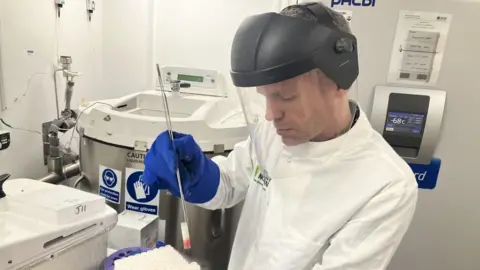
Dr Thomas Turner, the lead immunogenetic scientist at ANRI, said researchers analysed blood samples from paired donors and recipients to improve transplant matching.
"Stem cell research is a fast-moving field and the technology is advancing rapidly. The level of detail we're now able to study in the genetics of donors and patients is staggering compared with even five or ten years ago."
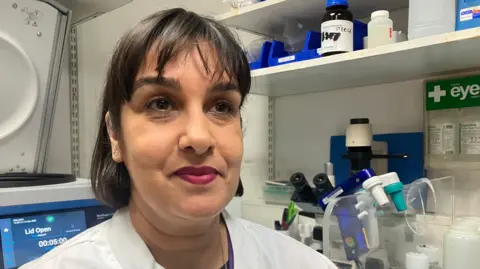
Dr Neema Mayor, director of immunogenetics and research services at ANRI, said: "We understand much more about what happens during the transplant process and, crucially, how to match donors and patients more effectively."
Despite three decades of progress, Anthony Nolan has said too many patients still die following a stem cell transplant and many others suffer serious complications.
One of the most challenging is graft-versus-host disease, where donated cells attack a patient's healthy tissue. Future research will help explore improving this.
Dr Robert Danby, chief medical and scientific officer at Anthony Nolan, said: "We've helped transform the outlook for thousands of patients with blood cancer and serious blood disorders, helping more people than ever before live longer and better after a transplant. But we mustn't stop here.
"The 30th anniversary of the research institute is both a celebration and a turning point. It highlights how far research has taken us and how much further it can, and must, go.
"The next 30 years hold the potential to transform survival rates, reduce inequities and ensure every patient has the best possible chance not just to survive, but to thrive."
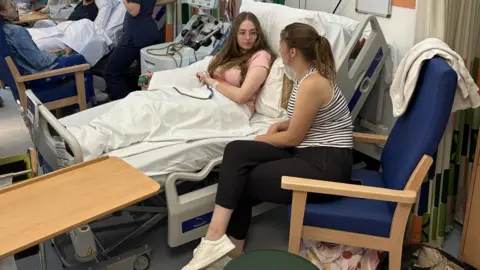
For Sophie, taking part in the research programme was an easy decision alongside donating stem cells.
After a few hours, millions of stem cells had been collected from her blood.
The cells are typically transported and transplanted into the anonymous recipient within 72 hours of collection.
When it came to the blood sample she gave for research purposes, she said: "The nurses explained the whole process. They said it could help identify new donors in the future. I thought it was such a great thing. It doesn't do anything for me, it's just taking a bit more blood."
Sophie travelled from her home in Woking, Surrey, to the Nottingham centre.
Between September 2025 and July 2026, 237 donors there provided stem cells for patients with blood cancers and blood disorders, while 88 donors also opted into the research programme which analyses donors and matches transplant recipients' blood.
Watching the donation unfold was an emotional experience for Sophie's sister Emily.
"We're immensely proud and it's such a wonderful privilege to watch Sophie go through all this," she said. "To help someone is such an incredible thing to watch and be part of."
The charity stipulates that donors need to be 16 to 30 years old and stay on the register until they are 61.
Most people signed up never come up as a match. But those who do could be lifesavers.
For Sophie, it started with a chance match with a stranger.
Her stem cells could help save a life today. The blood sample she provided for research may help save lives tomorrow.
Listen to BBC Radio Nottingham on Sounds and follow BBC Nottingham on Facebook, on X, or on Instagram. Send your story ideas to eastmidsnews@bbc.co.uk or via WhatsApp on 0808 100 2210.
