High Court to review wife killer release decision

 PA Media
The decision to release a man who killed his wife and never revealed the location of her body has been referred to the High Court.
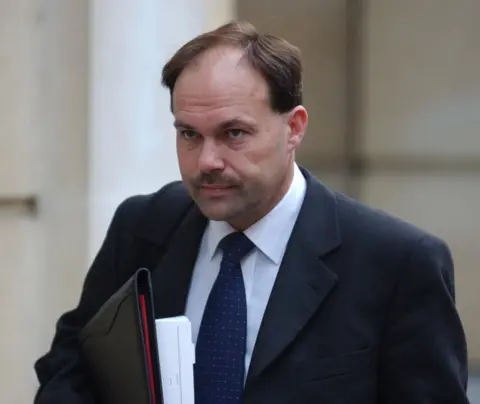
Glyn Razzell, from Crewkerne, Somerset, was jailed for life in November 2003 for the murder of his estranged wife Linda who vanished on her way to work in Swindon in 2002.
Last month, the Parole Board approved Razzell's release despite Helen's Law requiring them to consider a prisoner's refusal to reveal the victim's remains when assessing suitability for parole.
The Secretary of State for Justice will use a new power to direct the Parole Board to refer its decision to the High Court on the basis that releasing Razzell may undermine public confidence in the system.
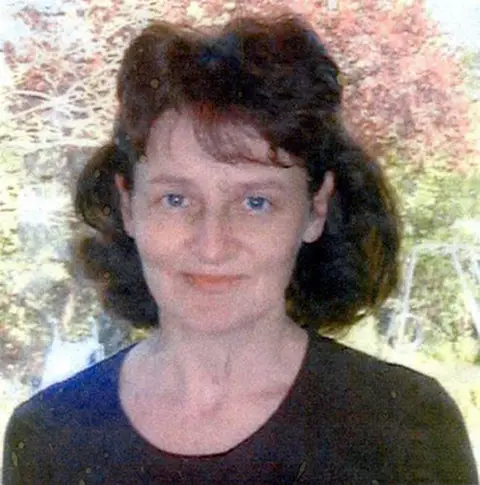
Linda, 41, was last seen parking her car in Alvescot Road in Swindon in March 2002.
Despite initially appearing in news programmes appealing for his wife's return, Razzell was later arrested and charged with her murder.
A trial heard that he and Linda were in the middle of divorce proceedings and that she had visited a local bank with a court order to freeze his bank accounts the week before she vanished.
Despite never finding her body, police were able to find and present forensic evidence, including traces of her blood, found in the boot of a car Razzell had used.
He was sentenced to a minimum of 16 years in prison.
 Wiltshire Police
Razzell had appealed several times for his release, including in 2021 when he became the first prisoner to be turned down for parole under Helen's Law.
Named after Helen McCourt, who was murdered in 1988 and whose killer never revealed where her body was, Helen's Law makes it a legal requirement for the Parole Board to consider the refusal of an offender to disclose the location of the victim's remains.
But after a hearing in January this year, the Parole Board approved Mr Razzell's release.
"After considering the circumstances of his offending, including... his conduct while in custody and all the evidence presented at the hearing and in the dossier, the panel was satisfied that imprisonment was no longer necessary for the protection of the public," it said.
The board acknowledged the family's concerns and Helen's Law but said: "Denial [to reveal the victim's body's whereabouts] cannot be a bar to release".
'A horrific crime'
However, that decision will now be reviewed by the High Court for a second judicial check, after the Secretary of State for Justice used the new parole referral power, established in December last year.
It is a discretionary power that can only be used if it is believed that release would undermine public confidence in the Parole Board and if the High Court might not be satisfied that it is no longer necessary for the protection of the public that the offender remain in prison.
This is the first reportable case of its use.
In a statement, a spokesperson for the Ministry of Justice said: "Linda Razzell's murder was a horrific crime and our thoughts remain with her friends and family.
"Public protection Is our top priority which is why we have directed the Parole Board to refer their decision to release Glyn Razzell to the High Court."
Razzell will remain in prison until the High Court decides whether he can be released.
Follow BBC Wiltshire on Facebook, X and Instagram. Send your story ideas to us on email or via WhatsApp on 0800 313 4630.
