Why are thousands of new cameras being installed at rail stations?

 BBC
More than 4,000 CCTV cameras have been installed at railway stations in the West Midlands as part of a £7.3m security upgrade.
The new cameras are designed to tackle anti-social behaviour, help staff and police respond more quickly to incidents and provide better evidence in investigations.
West Midlands Railway said 160 CCTV files have already been shared with police in a single month to support ongoing cases.
But what difference will passengers notice, and who is watching the footage?
 Getty Images
What is changing?
A total of 4,421 cameras have been installed across 155 stations and depots operated by West Midlands Railway (WMR) and its sister company, London Northwestern Railway (LNR).
The upgrade provides sharper images and allows staff to access live footage rather than relying on recordings.
Who can see the camera footage?
Transport for West Midlands (TfWM) can access the cameras around the clock from its Birmingham HQ. TfWM operates a 24-hour CCTV monitoring centre where staff can review footage from stations across the region.
Monitoring officers can then communicate with British Transport Police and railway staff when needed, and the footage can be used in police investigations.
Will it reduce crime?
The installation of the cameras follows a period of increased crime on public transport in the West Midlands. Train-related offences increased by 32.4% in the year to September, compared with two years ago, according to the Safer Travel Partnership.
Richard Parker, the West Midlands mayor, said the cameras would allow the monitoring centre to "keep an even closer eye on the network and help make journeys safer for passengers".
Shaun Keeling, WMR's head of security and emergency response, said the improvements would also provide better quality evidence to support prosecutions, "acting as an effective deterrent and ensuring those who do offend are brought to justice".
WMR is also installing "intelligent" cameras at the ends of platforms to detect people walking on the tracks. When someone is spotted walking onto the tracks the system triggers an announcement, warning them they are trespassing, and alerts CCTV monitoring officers.
The technology was trialled at Cannock station, where 128 trespassers were spotted in six months. WMR said the announcements prompted nearly half to reconsider and return to the platform.
Cameras are not the only way WMR is tackling crime. The operator has recruited an additional 20 rail security officers over the past year, bringing its total to 30.
The West Midlands Police and Crime Commissioner's accountability and governance board will meet on Tuesday to discuss the force's performance in dealing with crime on public transport.
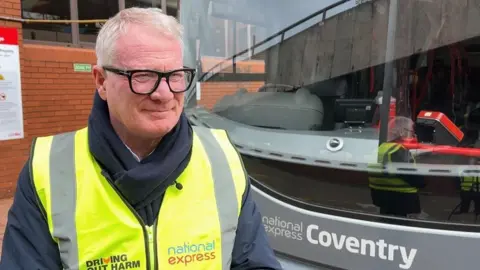 BBC/ Simon Gilbert
Which stations are covered?
New CCTV cameras have been installed at all of WMR and LNR's 155 stations and depots.
These include large stations such as Birmingham New Street, Wolverhampton, Coventry, Worcester Foregate Street and Shrewsbury, as well as Hereford, Stoke-on-Trent, Stafford and Leamington Spa.

This news was gathered by the Local Democracy Reporting Service which covers councils and other public service organisations.
Follow BBC Birmingham on BBC Sounds, Facebook, X and Instagram.
