High-risk brain surgery saved 17-year-old's life

 Handout
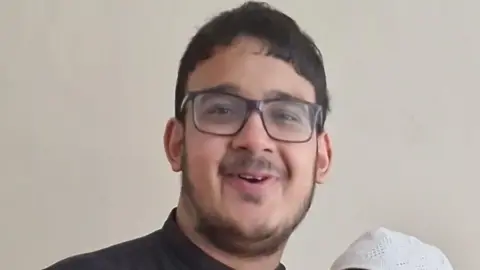
A teenage boy with an extremely rare blood disorder has said he "wouldn't be here today" without a team that carried out a ground-breaking operation to remove a brain tumour.
Ahmed Khan, 17, from Sheffield, has Bernard-Soulier syndrome which reduces the blood's ability to clot and means any surgery carries "enormous risks".
After being diagnosed with the life-threatening tumour in 2023, Khan had to undergo a 13-hour operation involving a range of specialists and blood from more than 100 donors.
Now studying T-levels in mechanical engineering, he said the surgeons and team at Sheffield Children's Hospital "gave me a chance to continue my life and look forward to the future".
"I wouldn't be here today without [their] skill and dedication," he said.
He was diagnosed with Bernard-Soulier syndrome as a newborn after blood tests showed dangerously low levels of platelets, which aid clotting and prevent excess bleeding after an injury.
His mother, Maryam Bilal, said: "We have always had to be careful. From the start we were told that surgery could carry a risk of death because his blood might not clot properly."
After he complained of double vision when he came home from school, he was diagnosed with a pineal brain tumour.
'The only option'
"You never think you are going to be told that your teenage son has cancer," Bilal said.
"The whole world just came crashing down around us."
It continued to grow despite chemotherapy, and there was a further complication as Khan had developed antibodies from previous platelet transfusions, rendering standard blood transfusions ineffective.
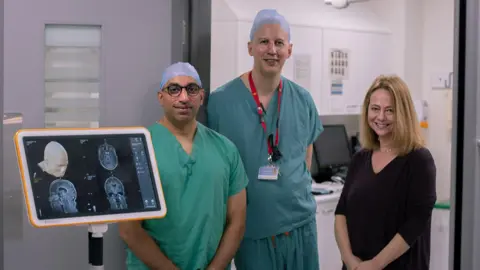
Consultant neurosurgeon Veejay Bagga, who led the surgery, said: "If we did nothing, the tumour would have been fatal.
"Surgery carried enormous risks because of Ahmed's blood condition, but it was the only option that could give him a chance."
Sheffield Children's NHS Foundation Trust said collaboration between specialists from different disciplines including NHS Blood and Transplant (NHSBT) was key to the operation's success.
 PA Media
Khan had plasma exchange treatment before the procedure to reduce antibodies that could cause problems, and received specially matched platelets during the operation.
NHSBT said it provided 113 units personally matched for Khan, including 10 for the operation and 24 for the recovery.
Consultant haematologist Jeanette Payne, who coordinated the complex blood management plan, said: "I have looked after Ahmed since diagnosing his condition when he was a baby.
"When he developed a brain tumour as a teenager it was incredibly worrying because treating cancer in someone with a severe bleeding disorder is extremely challenging.
"I am so pleased that he has done so well."
Listen to highlights from South Yorkshire on BBC Sounds, catch up with the latest episode of Look North
