Chornobyl disaster evacuee 'forever grateful' to Welsh family who took him in

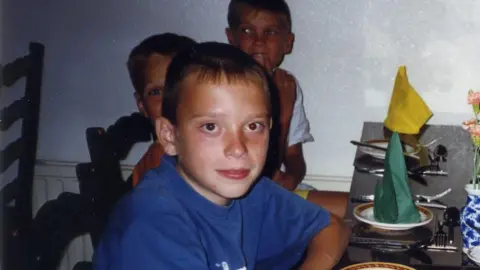 Anton Honchanka
In the summer of 1999, 11-year-old Anton Honchanka was looking to escape his contaminated hometown following history's worst nuclear disaster.
His journey would take him from Gomel, Belarus, to a United Kingdom that was experiencing a historic total solar eclipse, a major political reshuffle by Prime Minister Tony Blair, and a music chart dominated by singles such as Livin' La Vida Loca.
Anton was one of the children evacuated from Belarus following the 1986 Chornobyl disaster in neighbouring Ukraine, after a reactor at the plant exploded and spewed out radioactive material that would spread across swathes of Europe.
Due to radiation, parents in Eastern Europe saw the Chernobyl Children's Lifeline program (CCPL) as vital for their children's health with more than 56,000 coming to the UK for medical aid and humanitarian support.
Thirteen years on since the incident, and with the radiation still hanging in the air, Anton had set off on what he saw then as a "new adventure" thanks to the programme, albeit one "not easy" for his mum to see him leave.
"My mum was really happy that I had the opportunity to go on the trip," said Anton, now 38.
"But it wasn't easy for her not having me at home."
Anton travelled by bus to Minsk, the capital of Belarus, and from there he flew to the UK.
His first clear memory upon arriving in the UK was meeting his first host family.
"That's where my experience in Wales really began," he said.
"My first impression was how peaceful and welcoming everything felt. It had such a cosy atmosphere that I felt comfortable almost straight away."
Anton said the architecture was "different" from what he was used to in Belarus, with clean streets and a "warm and cosy atmosphere".
His trip came at a time when Belarusian people were living in an increasingly authoritarian state, according to the UN Refugee Agency, in a period marked by severe political crackdowns and economic stagnation.
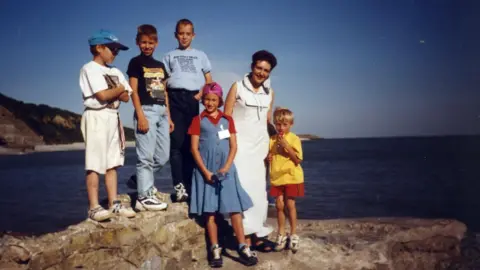 Anton Honchanka
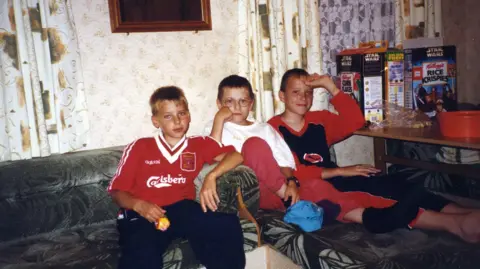
Anton and another boy called Dmitry spent the first two weeks with Angela Davies and her sons. Despite the language barrier, he said they all understood each other "perfectly".
They were then taken to Llanharry, Rhondda Cynon Taf, to live with Peter and Linda Amoss.
They welcomed the boys into their home with "incredible warmth", said Anton, finding ways to "spoil" and "surprise" them.
"They often took us shopping because they wanted to treat us," he said.
"They were always thinking about how they could make us smile."
Anton said he naturally became great friends with their kids Gethin and Charlotte spending their time playing outside, riding bikes and enjoying their time together.
"Those are memories I'll always treasure," he added.
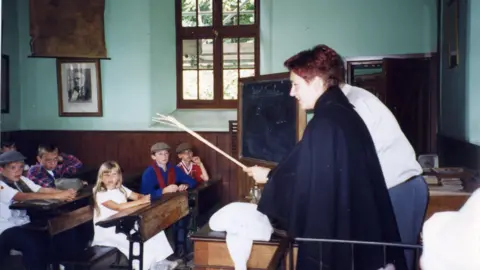 Anton Honchanka
For Anton, returning home meant going "back to normal life" and he was surprised to find that "nothing had really changed".
He and Dmitry gradually lost touch as they lived in different cities.
"When we arrived in Minsk, I got on a bus to Gomel, and he wasn't on it," he added.
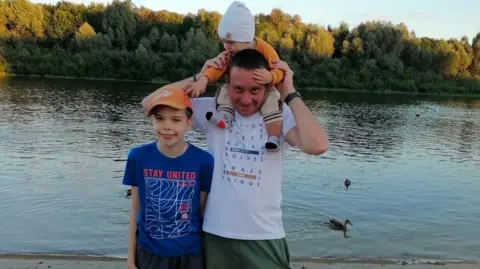
Now with two sons of his own, Honchanka said Wales and its people have "stayed in my heart forever".
"I would really love to see my host families again if I have the opportunity."
"During that time, they became very close and dear to me."
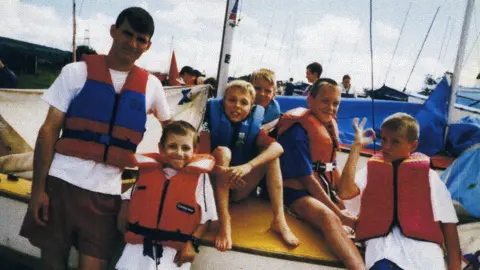 Anton Honchanka
This year marked 40 years since the Chornobyl nuclear disaster which caused a reactor to start spewing out radioactive material that would spread across swathes of Europe.
Children from Belarus and Ukraine stayed with host families for four-week recuperative breaks. The clean air, untainted food and clean water helped to lower the levels of caesium and other radiation stored in the children's bodies.
Gerrie Bayley, 74, from Prestatyn, first joined the CPPL in 2004 taking in two girls from Belarus.
She enjoyed the experience so much, it has since "become her life" and she now serves as the chair of the charity's north Wales branch.
 Anton Honchanka
Gerrie said the few weeks in the UK made a remarkable difference to their health.
"They would sleep all the time. They had these big black circles under their eyes.
"By the end of the month, they had energy and were eating well. I cannot say how much difference it made."
The communities rallied around the program providing second-hand clothing, free dentist appointments and eye tests for the children.
"They all had treatment they needed. So many stores helped out." she said.
 Anton Honchanka
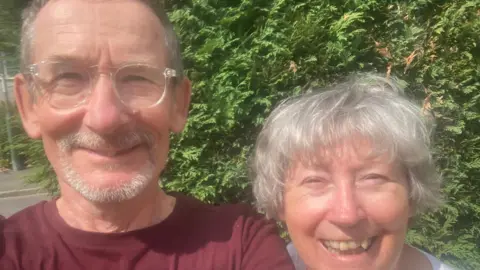
Linda Amoss, 71, said the family were vetted to make sure they had a spare bedroom with enough capacity to house Anton and Dmitry
"As far as they were concerned we were a second family.
"They had already been in the country for a couple of weeks and we were the second family for the latter two weeks of their stay."
Linda said she was told that any time spent outside of Belarus would "benefit their health".
"There were children with incredibly high rates of cancer in certain areas," she added.
 Anton Honchanka
Like Anton, she said the language was something they had to overcome, but it ultimately proved no issue as the boys "just clicked in".
"Food was sometimes a bit of an issue, but my cooking isn't the best anyway," she added.
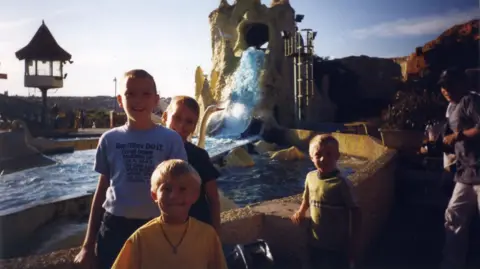
Anton joined the family on trips to local landmarks such as St Fagans, Oakwood Theme Park and Garth Hill.
"I don't remember them being particularly homesick because everything was sort of just so new and bright for them," said Linda.
 Linda Amoss
As the four weeks drew to a close, Linda said she understood that the chance of the boys being able to return to the UK was "very slim" due to the demand for places in Ukraine and Belarus.
Until now, she had not heard from Anton or Dmitry, but said it would be "extremely brilliant" if they could meet in person again.
She also takes great pride in Wales' role in the Chernobyl Children's Lifeline programme.
"Wales is incredibly hospitable, and I really do love that about our country," she added.
