What does a hosepipe ban mean for the UK's driest region?

 Getty Images
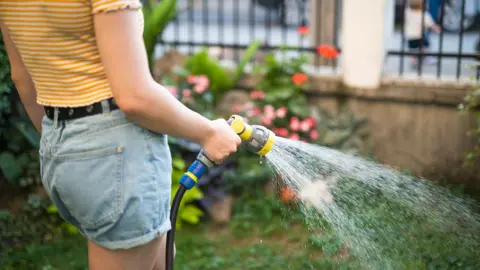
Gardeners hoping to keep their lawns nourished and their flowerbeds blooming now face an extra challenge in the extreme heat – hosepipe bans.
Cambridge Water, Anglian Water and Affinity Water, which all supply to much of the East of England, have implemented "temporary use bans" citing warm temperatures, low rainfall and a 30% increase in water use.
Anyone breaking the rules could be fined up to £1,000.
According to the Met Office, the region was the UK's driest between 1991 and 2020.
Who will be affected by the hosepipe bans?
 Getty Images
Anglian Water supplies drinking water and wastewater services to about seven million customers in parts of Bedfordshire, Buckinghamshire, Cambridgeshire, Essex, Lincolnshire, Norfolk, Northamptonshire and Suffolk.
It serves many large towns and cities, including Northampton, Milton Keynes, Lowestoft, Great Yarmouth and Peterborough.
The hosepipe ban is with immediate effect, with restrictions becoming enforceable by law from 01:00 BST on Saturday.
The company also serves the Hartlepool area, but the ban will not apply there.
Anglian Water's head of strategic asset planning, Dr Geoff Darch said: "Understandably customers have wanted to stay cool and have fun in the sun, and our teams are working 24/7 to keep taps flowing across the region, but the unrelenting conditions are placing the environment and water supplies under increasing strain."
More on hosepipe bans
Cambridge Water supplies drinking water to about 350,000 customers across Cambridgeshire and parts of Hertfordshire, including Cambridge, Ramsey, Gamlingay, Balsham, Melbourn, Royston and Baldock.
Its ban, announced on Thursday, will be enforceable from 01:00 BST on 17 July.
Managing director Elena Karpathakis said: "This is not a decision we have taken lightly – it is the first time in more than 30 years, since the UK drought of 1995, that we have had to introduce a temporary hosepipe ban."
Speaking on BBC Radio Cambridgeshire, the company's director of water quality and environment, Natalie Ackroyd, said it was committed to removing the ban "as soon as possible".
"That will depend upon demand reducing to more normal levels and our water resources being in a more healthy position," she added.
Affinity Water announced its hosepipe ban on Friday, with restrictions applied from 00:01 BST on 17 July.
It said the ban would cover most of Hertfordshire, and parts of Bedfordshire, Berkshire, Buckinghamshire, Essex and Surrey. It also has customers affected in north and west London.
A spokesperson said: "By not using your hosepipe, you're helping protect the environment and support people with urgent water needs in your community."
What can't I do during a hosepipe ban?
 Getty Images
Cambridge Water said prohibited uses included using a hosepipe, sprinklers, dripper hoses, automatic irrigation systems and similar devices.
Activities not allowed include:
- Watering a garden or plants on a domestic or other non-commercial sites
- Cleaning a private motor vehicle or a private leisure boat
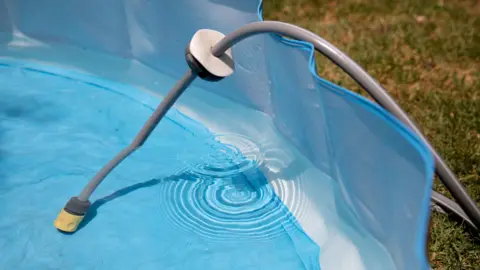
- Filling or maintaining a domestic swimming, paddling pool or pond
- Cleaning walls, or windows, of domestic premises or cleaning paths or patios
People are free to still do these if they use mains water from a bucket or watering can, or use water not sourced from the mains.
Cambridge Water said the temporary ban would "help protect local water resources and the region's internationally important chalk streams".
Who will be exempt from the hosepipe bans?
 Getty Images
A temporary use ban can only be applied to domestic, rather than commercial, customers.
Anglian Water said it still urged non-domestic customers to be "mindful of the warm weather and to use water wisely, for example, by not washing commercial vehicles".
Exemptions include:
- People who are registered disabled, blue badge holders or on a water company's priority services register
- Businesses where hosepipe use is part of their purpose – for example, garden centres and car washes
- Ponds, if hosepipe use is needed for the welfare of fish or aquatic animals
- Pools required for medical treatment
- Ornamental fountains that are used for religious purposes
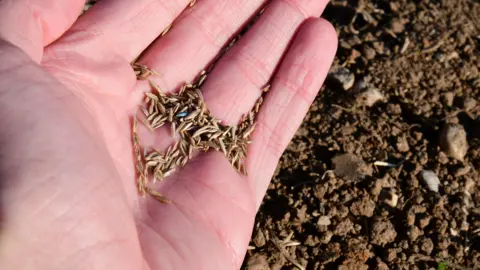
- If you have recently laid turf or planted grass seeds you can water it using a hosepipe for 28 days
- You can use a hosepipe to fill a trough for animals
- There are exemptions for agricultural land, including land used to grow crops, fruit, vegetables or plants as part of a business
What are the penalties for using a hosepipe?
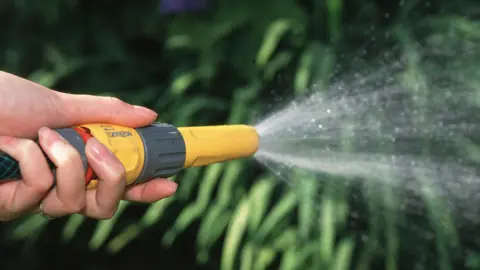
In the UK, hosepipe bans are enforced by water companies.
People who fail to comply, which is a criminal offence under the Water Industry Act 1991, could be fined up to £1,000 in the magistrates' courts.
Cambridge Water said enforcement may follow for repeated or serious breaches. It urged people not to call 999 if they see someone using a hosepipe.
Do you have a story suggestion? Contact us below.
Follow East of England news on X, Instagram and Facebook: BBC Beds, Herts & Bucks, BBC Cambridgeshire, BBC Essex, BBC Norfolk, BBC Northamptonshire or BBC Suffolk.
