Wild orchids being relocated to nature reserve

 Ben Andrew
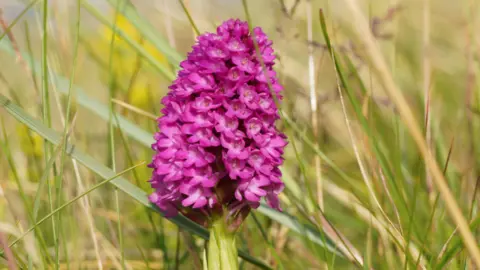
About 200 dormant orchids are being relocated to a new nature reserve to safeguard their future.
The orchids at Greenabella Marsh, near the Tees estuary, are to be transported and replanted at specially selected locations within the RSPB Saltholme nature reserve in Stockton-on-Tees and Seaton Common National Nature Reserve, Hartlepool.
The marsh is set to become an intertidal habitat as part of the Environment Agency's plan for flood alleviation in the area.
Senior manager at RSPB Saltholme, Chris Francis, said every single orchid would be "carefully moved by hand" in a "remarkably delicate conservation operation".
He said: "There are never any guarantees when moving wild plants, but we've selected habitats where they have the very best chance of thriving.
"If visitors are able to enjoy these orchids flowering here for many years to come, it will be a wonderful conservation success."
Each orchid will be dug up by hand and their underground tubers will be carefully cleaned and transported to their new homes the same day.
Seeds will also be collected and sowed at the receptor sites, helping to safeguard the colourful native plants for the enjoyment of generations to come.
 RSPB
RSPBAs the orchids are currently dormant beneath the ground, there will be no immediate signs of success.
Conservationists will return next summer in the hope of seeing leaves and flowers emerge.
British Orchids specialist Suzanne Noble said Britain is home to some "truly extraordinary" wild orchids.
"They may not be as exotic as the orchids people associate with tropical rainforests, but our native species are every bit as fascinating, beautiful and special," she said.
Biodiversity technical officer at the Environment Agency, Josh Havlin, said numerous orchids were found in Greenabella Marsh.
He said: "As this area will become intertidal, we need to translocate 200 orchids out of the marsh to safeguard the genetic diversity of the local orchid populations."
Follow BBC Tees on X,Facebook, Nextdoor and Instagram and listen to Radio Tees on BBC Sounds.
