170 Years Later: Flowers return after lawn abandoned for film shoot

 National Trust
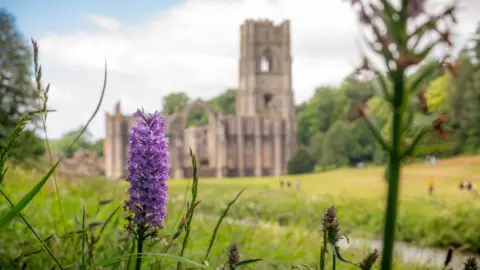
Two years ago, National Trust staff received an unusual request - to leave an area of grassland "unmown" to make it appear abandoned.
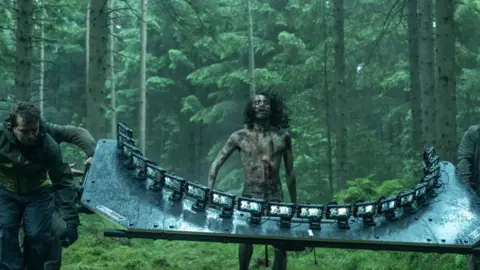
Gardeners at Fountains Abbey, near Ripon in North Yorkshire, were proud that the site had been chosen as a filming location for the third instalment of the zombie apocalypse franchise 28 Days Later.
The Danny Boyle-directed project, 28 Years Later, told the story of a small group of survivors of a virus that had wiped out most of the British population, who were living in a desolate wilderness.
After the shoot wrapped in 2024 and the film's release last year, staff found a surprise waiting for them when the grounds used by the cast and crew suddenly became home to hundreds of orchids.
There had been no record of the flowers on the abbey site since the 1850s and the orchids had not been seen in living memory. 170 Years Later, nobody knows where they have come from or why they have germinated once again.
Mark Newman, an archaeologist at the National Trust, said: "This is the mystery, how have the orchids survived over time to suddenly come back to life now?"
 Miya Mizuno / Sony Pictures
He added: "We've got no records for the type of flora that was seen in the abbey from hundreds of years ago.
"At that point in time, things like early purple orchids were probably so common that they didn't probably make that kind of rare and unusual plant list."
The orchids are concentrated in particular areas of the ruins rather than being spread evenly across the site and are not contained within any specific garden borders.
Despite their initial surprise appearance at the abbey, staff intend to let the orchids grow in the future while also maintaining the land. They believe the unmown areas left to grow wild provided perfect conditions for the orchids' return.
"We undoubtedly will adjust how we care for the site in a way that optimises circumstances for the orchids," said Newman.
"They are tricky little devils and picky about what it is that they like and they don't like, so hopefully we will take the best advice and do the right things by them.
"It's just such fun that those bits join together, that it's a zombie film that has suddenly allowed this nature."
Newman pointed out that orchids would have thrived "before the age of the lawnmower", when grasslands were more diverse.
He added: "The mowing really wasn't giving the orchids any form of opportunity and just this little bit of different treatment has brought them on."
After Fountains Abbey was dissolved, its land was sold off and the surrounding estate became the landscaped Studley Royal Park and water gardens in the 18th Century.
Listen to highlights from North Yorkshire on BBC Sounds, catch up with the latest episode of Look North.
