Barrister strike 'caused additional trauma' to victims as 2,500 cases delayed

 Bloomberg via Getty Images
Almost 2,500 cases were impacted during the six-month-long barristers' strike, figures obtained by BBC News NI reveal.
Victim Support NI said the delays to cases caused "additional trauma" to victims.
Barristers were on strike from 5 January to 18 June, meaning most Crown Court cases involving people who require legal aid could not proceed while the dispute continued.
Criminal barristers in Northern Ireland are now due to return to covering legal aid funded Crown Court cases after coming to an agreement in their dispute over fees earlier this month.
Data from the Department of Justice indicates that 2,457 cases were affected during the withdrawal of barristers' services. The cases break down into:
- 415 trials
- 1,563 arraignments
- 479 plea and sentencing hearings
Barristers have said that following the end of the strike, they will work to "advance" cases that have been delayed.
'Sleepless nights, panic attacks'
 Victim support NI
Nichola Green, deputy chief executive of Victim Support Northern Ireland, said victims and witnesses experienced additional trauma as a result of the ongoing strike.
"Those supported by Victim Support NI have told us that these delays have caused considerable distress and, in some instances, additional trauma," she said.
"When cases are postponed, sometimes repeatedly, victims are forced to relive the process over and over again.
"We regularly hear from victims who describe sleepless nights in the weeks leading up to a trial. They experience heightened anxiety, panic attacks, intrusive memories, and difficulty concentrating in general.
"Many have to take time off work. They have to arrange childcare, inform employers, prepare themselves psychologically, and in some cases, spend months building up the courage simply to walk into a courtroom."
She said that when a trial is suddenly adjourned because legal representation is unavailable "everything they have mentally prepared for disappears overnight. Instead of reaching the end of one chapter, they're told they must begin preparing all over again".
"That's unfair. It shouldn't happen.
"They shouldn't be collateral damage in this," she said.
 PA Media
The barristers' strike was over pay - the chair of the Bar Council of Northern Ireland, Donal Lunny KC, said Crown Court legal aid fees had not risen in 20 years.
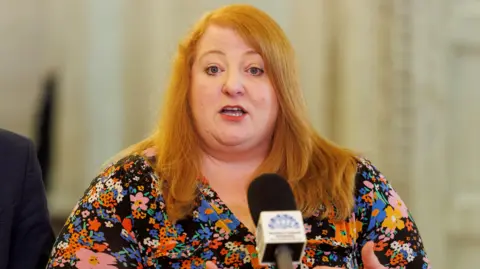
Justice Minister Naomi Long agreed at the start of June to accept recommendations made in a review of criminal legal aid, including an additional 8.66% increase to all criminal legal aid fees.
In a vote taken on 18 June 2026, 66% of the members of the Criminal Bar Association voted to return to full service.
In a statement the CBA said: "The escalated withdrawal of services was taken by the CBA as a last resort and in response to a deepening access to justice crisis throughout the criminal justice system.
"Over the course of the action, and in all of its engagement with stakeholders and those affected by its withdrawal of services, the CBA remained united and steadfast, repeatedly stating that it wanted to urgently find a resolution that would enable all barristers to return to work in all Crown Court cases."
"The CBA welcomes the fact that sufficient progress has now been made to enable full service to resume and appreciates all of the effort and engagement that has contributed to this outcome.
"The Criminal Bar Association is committed to working with criminal justice partners to advance those cases that had been impacted by the withdrawal of services," it added.
Justice Minister Naomi Long told the BBC that the victims and witnesses affected would "remain the focus as we work to repair the system".
"Recovery plans published by the Lady Chief Justice rightly prioritise cases involving the most vulnerable and seek to ensure cases ready to proceed are dealt with at the earliest opportunity in the interests of those who have been waiting too long for justice," she said.
In a statement the Department of Justice called the end of the strike a "positive development" and said it hoped it would "result in a full return to services by all members".
'Backlog of cases'
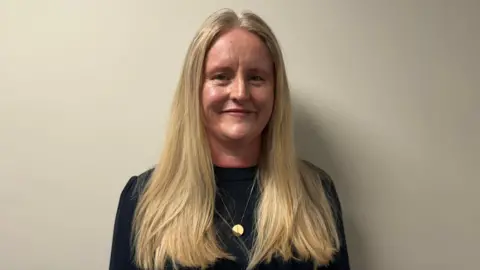
In a statement on X, Victims Commissioner Geraldine Hanna said: "This announcement will come as a great relief to those victims of crime who have been living with the uncertainty of when their case is likely to be heard.
"I look forward to hearing more on what actions will now be taken to address the increased backlog of cases and get the courts fully up and running again."
She said that while the news of the return is "undoubtedly positive" she said she remained "concerned that this dispute was able to ground serious criminal cases to a halt for such a prolonged period".
"It is simply not acceptable that a public service which affects some of our most vulnerable citizens was effectively on indefinite hiatus," she added.
What is legal aid?
Legal aid is financial assistance from the government that helps people get representation in the court system if they would not otherwise be able to afford it.
These cases usually take place in the magistrates' courts or Crown Court.
The CBA previously stated that legal aid rates for lawyers, when adjusted for inflation, have plummeted between 47% and 58% since 2005.
