Russia's secret 'language of thieves' was invented in Stalin's Gulags. Now it's being used by cybercriminals

 Alamy
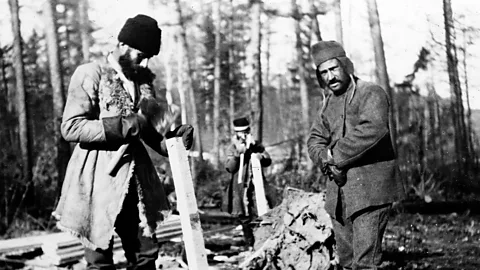
AlamyThe tricks of the jail jargon Fenya were once used to bewilder guards in Stalin's Gulags. Now they are being used by Russian cyber-criminals.
When would you hide in a raspberry? Why don't you want to be a sixer? And what does it mean to go to the akademiya?
Russian often takes slang to complex levels, such as through Mat, its linguistic system for obscenities. But even a "matershchinnik" (a well-practiced master of swearing) might find the above phrases nonsensical – unless, of course, they are familiar with Fenya, the language of Russia's colossal prison system.
This language of criminals has been deployed by underworld figures for centuries to puzzle and evade. But during the 20th Century, its curious mixture of double entendre and loan words ballooned in Soviet prisons.
With German, Greek and Yiddish influences, Fenya is brimming with confusing hidden meanings. In Russian, "babki" literally means "grandmas", but in Fenya, it also means "money". "Varezhka" means a "mitten" but also a "mouth, while "khalyava", derived from the Hebrew for "milk", is a "freebie" or "giveaway".
A single word in Fenya can contain hidden codes known only to speakers of the slang. And just as it once bewildered prison camp guards, its language tricks are now being being used online, obscuring the intent of cyber-criminals and confusing authorities.
For instance, while the Russian words мусор or musor normally translate to "trash", its Fenya equivalent today means a cop who may have infiltrated the dark-web forums where cyber-attacks are organised.
With Russian cyber-crime booming, investigators must now familiarise themselves with this jargon if they want to get the drop on perpetrators. Even with advances in artificial intelligence, though, machines can struggle to pick up Fenya's constantly evolving nuances.
So how did we get here? While Fenya was muttered on the streets of Tsarist Russia for centuries, it was a series of decisions taken by the Soviet justice system that resulted in its explosion into the mainstream – and ultimately onto the internet too.
Clandestine beginnings
Broadly speaking, Fenya is a type of cryptolect – a camouflaged language often used to confuse others. Today, it has burrowed into broader Russian culture to the degree that some may be unaware of words' original ties to the underworld.
Fenya's origins are shrouded in mystery. One intriguing (though disputed) theory suggests it began with nomadic salesmen called Ofeni who travelled on foot across Russia selling religious knick-knacks. A 17th-Century church schism, the theory goes, declared their wares items heretical, so wayfaring merchants adopted their own unique modes of speech.
 Fuel Russian Criminal Tattoo Archive
More is known about how Fenya spread. The vocabulary is thought to have started expanding in the 19th Century, writes Mark Galeotti, an expert in modern Russia, intelligence consultant and honorary professor at University College London, in his 2018 book The Vory: Russia's Super Mafia. It was then, he says, that street urchins and criminals started to place "fe" and "nye" sounds in the middle of words.
These particular tics, redolent of an underworld pig-Latin, were eventually dropped, writes Galeotti. But not before gangs of pickpockets and street scammers adopted Fenya. Initiations into their crews counted on a basic understanding of it. Words and phrases were documented at length in an 1863 dictionary of living Russian,which attempted to categorise Russian as it was lived and spoken.
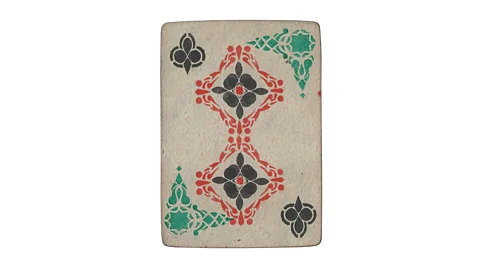
In Fenya, hierarchies are expressed through card-game jargon, with suits and clubs symbolising bona fide thieves. Animals take on secret double-lives as objects, so speakers know that a monkey is a mirror and a fox is a folding-knife. Altogether, Fenya's vocabulary is thought to comprise between 10,000 and 27,000 words.
Among the intelligentsia of the late Tsarist period, the tantalising suggestion of a shadow criminal society fascinated literary figures and inspired so-called vagabond music – where performers sang in Fenya and romanticised slum life.
But it was the enormous social upheaval of wars and revolution to come that really cemented Fenya's rise.
Fenya's explosion
After winning the Russian civil war and creating the USSR in 1922, the Bolsheviks experimented with expanding the country's prison camps. In these forerunners to the notorious Gulag system, all sorts of people would mix with petty criminals – giving everyone from peasants to the intelligentsia a first-hand taste of Fenya.
 Alamy
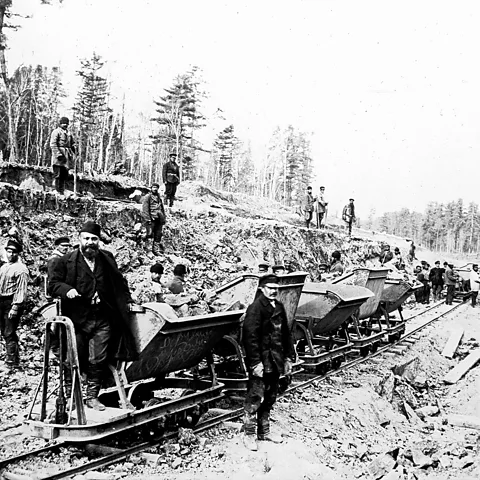
AlamyWhen Stalin took power, millions more were incarcerated, leading the enigmatic vocabulary to spread among even more prisoners and become standardised among criminals, eventually evolving into a kind of prison-camp vocabulary with whole new terms.
"Language became a kind of communicative survival tool," says Martin Puchner, professor of English and comparative literature at Harvard University in the US, and author of The Language of Thieves: The Story of Rotwelsch and One Family's Secret History.
In the prisons, professional criminals formalised Fenya into the "vorovskoy zakon", or thieves' code, a Mafioso-style set of laws that signalled status: those familiar with its rules, and the commoners or "muzhik" (peasants) who would only ever be their marks.
Meanwhile, Stalin attempted to crush criminality, along with anything he associated with it – like Fenya. As early as 1930, official Soviet magazines decried "thieves songs" as a dangerous affront to proletarian culture.
Popular artists reinvented themselves in more ideologically acceptable directions. The famous Soviet estrada singer Leonid Utesov – whose jaunty thieves' song From The Odessa Gaol was once a crowd-pleaser – began performing for the military instead, converting his style into what one historian called a "Soviet product cleansed of decadence".
Leaving the prisons
The days following Stalin's death in 1953 brought another twist to the tale of Fenya.
A mass amnesty of more than a million prisoners meant petty criminals left the Gulags in droves. They returned home, bringing Fenya with them. "Blatnaya pesnya" – thieves' songs – broke out in taverns across the country.
"[At this time] there was a sense that criminal culture was a folk culture, suppressed by the official party," says Svetlana Stephenson, professor of sociology at London Metropolitan University and author of Gangs of Russia: From the Streets to the Corridors of Power. "There was a flirtation with this world among the intelligentsia."
Cryptolects
Many other communities around the world have developed secret languages, or "cryptolects". Examples include:
• The Kali-worshipping Thuggees of India talked in Ramaseeana from the 1700s
• London's 1800s "demimonde" chittered in Flash, famously spoken by the Artful Dodger when he utters: "Hullo, my covey! What's the row?"
• In the 1900s, US carnival workers talked in Ciazarn, the secret language of "carnies", with some words still used in professional wrestling today
• During Brazil's military dictatorship, the travesti (a distinct LGBTQ community) created the Pajubá language, adopting Yoruba words into Portuguese, as protection from government persecution
• Before the UK decriminalised homosexuality in 1967, some gay men would use Polari to communicate in secret
• Some twins invent entirely new languages – spoken only by two
Attempts to suppress thieves' songs only boosted their popularity. As the USSR intensified its censorship, enterprising citizens bootlegged music, cutting cheap X-ray sheets into disc shapes with scissors and printing sounds on them using home-made lathes. Known as "jazz on bones", these were playable on gramophones. The burgeoning black market in these sheets allowed people to trade music from denounced Russian émigrés as well as record their own songs, which was otherwise impossible.
Home recordings of thieves' songs circulated widely. Later, with the advent of the cassette tape, the rowdy sounds of underground artists like Arkady Severny and emigrant singer Dina Vierny – with their bawdy tales of sex, robberies, violence and gulags – thundered through the USSR.
By the time the Soviet Union disintegrated in 1991, Fenya's folkloric status was cemented, despite the best efforts of the state. Yet speaking Fenya in polite society was still unthinkable.
At the turn of the millennium, however, it entered a surprising new era of acceptability. Russian political elites including Vladimir Putin began to use Fenya in their official communiques, says Larissa Ryazanova-Clarke, professor of Russian and sociolinguistics at the University of Edinburgh in the UK. This "period of linguistic turmoil" was due to the "landslide of the norm", she says, reflecting the dramatic changes of the time.
Officials probably used this language to lend them a populist appeal, says Stephenson, who has described the trend as "Kremlovskaya Fenya" – Kremlin Fenya. "I think it expresses the culture of violence, which has penetrated to the very top of Russian society," she says. Paradoxically, officials banned speaking Fenya in Russian prisons but continued to speak it themselves.
Obfuscating the web
As Fenya burrowed into everyday language at the turn of the 21st Century, it also began to evolve in a new arena: the digital revolution.
In 1999 on the early Russian internet (or "RuNet"), a user on the FidoNet bulletin board published a "Manifesto of Anti-Literacy", writes academic Larisa Morkoborodova. This railed against "the so-called spelling correctness on the Net" and urged "all masters of the Russian word" to "challenge the killing of our live language by soulless automatons!".
 Check Point Research
Their deliberate misspellings and punny inventions evolved into new slang known as padonki, also ironically named olbanian. Millions per month speak in padonki online, writes Morkoborodova, and it has seeped into broader society. It means many Russians are familiar with padonki – only a subset of them criminals. Still, its creative semantics can cause headaches for cyber investigators.
The lingo deliberately breaks Russian language conventions, emphasising double consonants and phonetically written words, with loanwords from English that deviate from their original meanings.
For example, Russian speakers might write "email" as "mylo" – literally "soap dish" – because at the dawn of digital culture in Russia there was simply no word for email, says Roman Sannikov, a cyber-security expert who's worked as a linguist for the FBI. The Russian word for soap dish sounded phonetically close enough. "If you're using machine translation, sometimes you'll get 'soap' instead of an 'email'," he adds.
With Cyrillic (Russian) keyboards rare at the time, some web users also deployed the numerical "4" as shorthand for a "ch" sound, because "four" is "chetyre" in Russian.
"A lot of it came from English, because the words just did not exist in Russian," Sannikov says. "A hard drive was frequently called a 'winch', because many of them were branded 'Winchester'."
'Cyber-Fenya'
"Most of the people that created cyber-slang were kids or young people," says Sannikov – rather different from the Fenya-uttering vory (thieves) of the past.
So when Fenya words do crop up, says Fyodor Yarochkin, a researcher at the cyber security company Trend Micro, they might speak to a rarer sort of cross-pollination: traditional crooks who've entered the realm of white-collar cyber-criminals, perhaps to discuss more physical kinds of lawbreaking.
More like this:
Or, having learned phrases from gangster movies, they might just be trying to impress their associates and look tough, he suggests, using Fenya as a status symbol or cultural signifier rather than evasion.
Still, when chat logs from the Russian cyber-crime gang Conti leaked in 2022, among the logistics, obscenities and general blather were words that can be traced back to Fenya.
Researchers at global cyber-security firm Check Point noted that some of the chat logs appeared impossible to understand, with machine translation failing when they said phrases to each other such as: "My soaps don't bathe. I've been warming them up for months." What the criminals were really talking about was avoiding email blacklists.
Forums for "initial access brokers" – the insider threats at organisations who open the doors to cyber-attackers – also often speak in a mixture of Fenya and Mat, helping to disguise what they're up to.
"Fenya and cyber-crime lingo are almost like a form of convergent evolution," says Sannikov – together forming an intricate semantic tapestry that's hard to unpick. You could call the jumble of online criminal lingo "cyber-Fenya", he adds.
This internet usage is just the latest example of how criminal argot continues to be diluted, changed and occasionally absorbed into Russian. And Fenya's reach today is ultimately thanks to Stalin and the Gulags, which turned it into one of the most widespread covert languages in the world.
Many of the prisoners there could have told you that a raspberry was a secret lair, a "sixer" was at the very bottom of the criminal hierarchy, and that the "akademiya", or prison, is where you never wanted to end up – though it certainly would have given you a good education in Fenya.
--
If you liked this story, sign up for The Essential List newsletter – a handpicked selection of features, videos and can't-miss news, delivered to your inbox twice a week.
