These breathing techniques could reduce your stress in minutes

 Getty Images
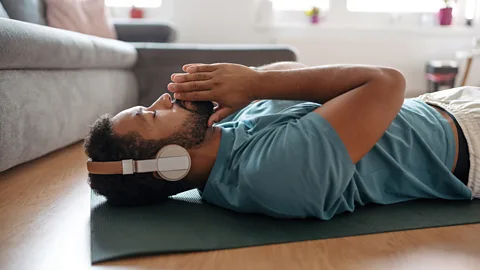
Rooted in ancient practices, the modern science of breathwork is revealing how a few minutes spent focusing on your breathing can not only bring an instant dose of stress relief, but also benefit your health in the long term.
Breathing is the first and the last thing we do in life. It's a largely subconscious activity which our body carries out many times per minute in order to keep us alive and thriving. Yet an emerging realm of science is demonstrating that sometimes our bodies benefit from a little help to do it optimally.
This is the field of breathwork, an ancient art that has been practiced by different cultures for millennia. It ranges from techniques such as Indian pranayama, which looks to connect the mind and body by methods such as breathing through one nostril at a time, to Chinese qigong.
The overriding theme is that a more mindful approach to breath control, even if carried out for just a few minutes per day, can help calm and relax the body, with both immediate and long-term benefits.
"I like to describe breathwork as an ancient practice that is resurging in the modern day as the new mindfulness hack," says Abbie Little, a researcher in theoretical psychology and medicine at Griffith University in Australia.
Pregnant women or people with respiratory illnesses such as asthma or chronic obstructive pulmonary disease, should use caution before trying breathwork and consult with a medical professional. Both these groups have been excluded from previous breathwork or breathing exercise trials. However, there are thought to be many people who can potentially benefit.
A few small changes can help lower stress hormones in healthy people, while for those living with chronic health conditions such as inflammatory bowel disease, breathwork can improve symptoms and lower inflammation. For most of us, small tweaks to the rate, rhythm and regularity of breathing can make an immediate difference.
So how can you begin to reap the benefits? The BBC takes a closer look at the fast-developing science of breathwork – and breaks down five different breathwork techniques you can try yourself.
The science of de-stressing
There is a growing body of evidence that breathwork can offer a new way of managing stress. Chronic stress is a pivotal driver of many age-related disorders, along with mental health conditions like anxiety and depression. For people who are already battling illnesses such as breast cancer as well as other cancers, levels of stress hormones such as cortisol can worsen prognosis and accelerate disease progression, while research shows that it can also accelerate the ageing process.
"We've studied cortisol levels in women with advanced breast cancer, and found that abnormal patterns of diurnal cortisol [the daily cycle of cortisol production], can predict how much longer people are going to live," says David Spiegel, professor and associate chair of psychiatry and behavioural sciences at Stanford University in the US.
But while breathwork has a long and storied past, our modern understanding of the underlying science is only just beginning. One recent paper summarising the available evidence, noted that more than half of all studies on the subject have been published in the last six years, and Little says that researchers are still trying to pin down the precise methods and aspects which are most effective.
However, scientists have already been able to draw a number of conclusions.
Slowing down
To begin with, there is an emerging school of thought that many of us are breathing too quickly. "We all tend to hyperventilate, breathing too fast and not very effectively," says Spiegel, with hyperventilation typically defined as taking more than 15 breaths per minute. Secondly, some people also predominantly breathe through their mouths, a habit which can begin in children before progressing into adulthood. (Read more about the benefits of nose breathing over mouth breathing.)
Spiegel says that one of the benefits of breathwork is akin to hypnosis, meditation and other mind-body practices, requiring you to focus inwards and disassociating you from everything else happening in your life. When it comes to hypnosis, he says that the effects of this have even be seen on MRI scans, with one study showing that it tones down neural activity in the brain's inner alarm system – a region known as the dorsal anterior cingulate cortex – which is activated by stress.
"There are different breathing patterns that are sometimes associated with some of the meditation practices," he says. "The idea is that you're being open to your body, you're not fighting it."
But breathwork's secrets are not solely linked to providing our busy brains with a time out. There is also evidence that adapting our breathing, even temporarily, can improve regulation of the nervous system.
Training the nervous system
Back in 2000, a couple of American psychiatrists proposed a new model for the link between the heart, central nervous system and our emotional state. It centred around the autonomic nervous system, a network of nerves including the vagus nerve, which links the major organ systems and handles all unconscious bodily functions, from heart rate to breathing.
The autonomic nervous system has three distinct divisions. The sympathetic nervous system activates the body's "fight or flight" response in high-arousal or dangerous situations, increasing adrenaline, blood pressure and heart rate. The parasympathetic nervous system triggers so-called "rest and digest" functions, calming the body and focusing on processes such as digestion and waste management. Finally, there is also the enteric nervous system, the several hundred million nerves embedded in the gut wall.
According to Little, the learnings that have arisen as a result of that original 2000 paper have shown that there is a two-way relationship between breathing and the autonomic nervous system, which explains why shallow mouth breathing is suboptimal for our health.
"If we breathe through our mouths at a quicker, shallower pace, we activate the sympathetic nervous system that tells us we are under stress and there's danger around," she says. "Vice versa, if we breathe slowly and deeply through our nose into our belly, we activate the safe, and at-rest, parasympathetic nervous system."
 Getty Images
1. Cyclic sighing
One example of such slower, more intentional nasal breathing is cyclic sighing, which Spiegel describes as the type of breathing we do naturally when singing. In 2023, a randomised controlled trial compared various breathwork exercises to mindfulness meditation, with the results showing that just five minutes per day of cyclic sighing in particular, elicited significant improvements in mood and anxiety over the course of a month.
Spiegel says that one of the likely reasons is because cyclic sighing involves a prolonged exhalation of breath. He points out that the typical advice we give for stress, of taking a deep breath or inhalation, isn't actually that helpful. "If you're just inhaling, that's the wrong thing to do," he says. "Because when you inhale, you're reducing blood flow and oxygen, and the heart gets a signal to pump harder. While when you're doing a nice, long, slow exhale, you're forcing air out, as well as pushing blood out into the anterior chambers of the heart, and you get a stimulus saying, 'Slow down.'"
Cyclic sighing begins with two consecutive inhales through your nose. Begin by taking a deep breath in through your nose, and then at the top, take a second, shorter inhale of air to fully expand your lungs. Then, slowly exhale all the air through your mouth over several seconds until your lungs are empty. Spiegel advises repeating this pattern for around five minutes.
The more you practice cyclic sighing, you will also strengthen your diaphragm. "That allows you to really fill your lungs, and carry out a longer, slow exhale which gives your body that period of more parasympathetic [nervous system] control," says Spiegel.
2. Box breathing
Other breathwork techniques attempt to control stress by improving regulation of the autonomic nervous system through the rhythm of your breathing. Box breathing, for example, is about striking a rhythm where you're inhaling, holding your breath, exhaling and holding your breath again, each for roughly the same amount of time. It's something which Spiegel says can promote both relaxation and focus ahead of a potentially stressful task. Studies have also suggested that box breathing can help manage chronic pain, while in a trial among women with breast cancer who had undergone mastectomies, it helped manage their stress levels.
Matching the rhythm of your breathing with other bodily functions may also be key to stress reduction. Guy Fincham, who leads a breathwork research lab at Brighton and Sussex Medical School in the UK, says that there's particularly strong evidence for the benefits of slowing down your breathing to the extent that you're taking less than 10 breath cycles per minute. "This rhythm of breathing, found widely in traditions such as yoga, qigong, prayer and mantra, is commonly referred to as coherent breathing," says Fincham.
The coherent breathing pattern is thought to synchronise breathing with the natural oscillations of the heart and blood pressure, something which is thought to have profound benefits for heart rate variability, the variations in time between each heartbeat. Fincham says that increasing heart rate variability is thought to be indicative of a better stress response and a more flexible nervous system, while it may even help reduce inflammation. (Read more about why you should be paying more attention to your heart rate variability.)
"In general, a higher heart rate variability can be deemed more beneficial, and coherent breathing helps to optimise this," says Fincham.
A preparatory technique which the Navy Seals practice before going into action, box breathing can both calm the nervous system ahead of a high-pressure situation, and also improve concentration.
It involves four steps – inhaling, holding your breath, exhaling and then holding again – carrying out each step for four seconds at a time. "It doesn't particularly trigger comfort," says Spiegel. "It's more kind of arousing. You're preparing your body to go and do something."
3. 4-7-8 breathing
This technique, which is used in clinical practice to help alleviate anxiety and support stress management, focuses on a simple pattern of inhaling, holding and then exhaling. Like cyclic sighing, it also emphasises a slow exhalation.
One study which took people who had undergone bariatric surgery and specifically trained them in the 4-7-8 breathwork technique, found that they had significantly less anxiety compared with those who merely did deep breathing.
It involves initially inhaling for four seconds, then holding your breath for seven seconds, before finally exhaling for eight seconds.
 Getty Images
4. Coherent breathing
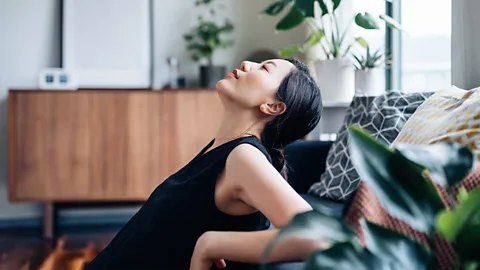
Because this is a slightly more advanced technique, Fincham recommends beginning by finding a comfortable position, either sitting upright in a chair with your feet flat on the floor or lying down on your back. Rest one hand on your belly, and one on your chest to help you monitor whether you're breathing more deeply or shallowly.
Then either close your eyes or lower your gaze and take two to three normal breaths to settle in. Start breathing through your nose and consciously direct the breath downwards to engage your diaphragm, so that the hand on your belly rises first, and slightly further than the hand on your chest.
Fincham says it's important to keep your breathing smooth, resisting the urge to gulp air at the start of the inhale or push air out forcefully at the end of the exhale. "The breath should feel continuous and wave-like, no sharp edges," he says. "Imagine your breath as a slow tide coming in and going out."
Then try to establish a rhythm. Fincham suggests using an app or soundtrack to help you inhale slowly for five seconds then exhale for five seconds with no breath holding. This pattern will ensure you're taking approximately six breath cycles per minute. If this feels too challenging, start by inhaling and exhaling for fewer seconds, and gradually build up to five seconds over several sessions.
"With increasing familiarity, it will become easier to move towards a more regular rhythm, for example by mentally counting the duration of each inhalation and exhalation," says Andrea Zaccaro, a psychology and breathwork researcher at the University of Chieti-Pescara in Italy.
5. A52 breath method
This is similar to coherent breathing, except for a slight tweak. It involves breathing in slowly for five seconds through the nose, deep into the belly, and then immediately exhaling slowly for five seconds. However, at the end of the exhale, you then gently hold your breath for two seconds before going again.
As with coherent breathing, it can take time and practice to get used to. "If you are used to unconsciously breathing quickly, it can be difficult or uncomfortable at first due to the low number of breaths per minute and unfamiliarity," says Little. "I believe the most important aspect of any breathing technique is the exhale – expel all the air first and this will open you up to be able to take in enough air."
More like this:
But whatever your breathwork method of choice, the most important thing is simply to do it consistently, even if that's just for a small amount of time each day, with studies showing that anywhere between three and five minutes can have a measurable benefit.
Even if you're not attempting to master a particular technique, Little says that we can all improve the regulation of our nervous systems simply by spending a small amount of time focusing on adjusting our everyday breathing. "Breathe gently through your nose and into the belly, it should be quiet and soft and slow," she says. "This will change your life immediately for the better, and because you breathe so often, it is a practice that will take effect quickly."
Whether you're an overthinker, prone to anxious feelings, or simply weighed down by the pressures of work or family, breathwork represents a toolkit which we can all use to handle the stresses of life more acutely.
--
For trusted insights on health and wellbeing, sign up to the Health Fix newsletter by senior health correspondent Melissa Hogenboom who also writes the Live Well For Longer and Six Steps to Calm courses.
