Magic mushrooms could help people quit smoking

 Serenity Strull/ BBC
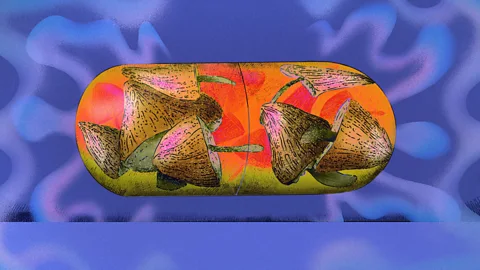
Nicotine is highly addictive, but new research is showing that psychedelics can shift people's worldview in ways to help them give up cigarettes.
Tobacco is one of the toughest drugs to quit. The nicotine it contains is as addictive as cocaine and heroin – perhaps even more so. In surveys, around 70% of adult smokers say they want to quit. Yet of those who try, less than one in ten succeed in any given year.
Evidence is growing, however, that certain psychedelic drugs might offer some people an off-ramp from smoking. In a 2017 survey, for example, 781 people said that tripping on LSD, magic mushrooms or another psychedelic had either allowed them to reduce smoking or quit altogether.
Why? The solution seems to be of the philosophical kind. Nearly all of those who managed to kick their nicotine habit reported a common insight: they suddenly felt that their life priorities or values had changed – specifically, that smoking no longer served them.
"The magnitude of the experience kind of overshadowed this previously insurmountable psychological challenge of quitting smoking," says Matthew Johnson, lead author of the study and a professor of psychiatry and behavioural science at Johns Hopkins University, in the US.
And it is not just anecdotal. These findings have held up in a laboratory setting, too. In March 2026, Johnson and his colleagues published the most robust evidence to date showing that talk therapy combined with one dose of psilocybin, the primary psychoactive compound in magic mushrooms, is significantly more effective for helping people quit than therapy combined with nicotine patches.
Six months after undergoing treatment, the 42 people who had taken the dose of psilocybin had six times higher odds of having quit smoking than those in the nicotine patch group.
Psychedelic drugs remain illegal in most countries around the world and their use in research or clinical trials is tightly controlled. Yet there is growing evidence suggesting they could be used to help treat a range of mental health conditions and addictions.
"There hasn't been a new smoking cessation medication in the United States in 20 years, so the potential here is exciting," says Megan Piper, professor of clinical psychology at the University of Wisconsin, Madison, in the US, who was not involved in the research. Smoking is the leading preventable cause of death and disease worldwide, she adds, so "we need more tools to help people quit".
 Getty Images
But exactly why magic mushrooms help people stop smoking isn't clear, and scientists question whether these results are replicable in a larger, more diverse population and what psychological or physiological mechanisms are really at play.
"We won't know a lot about how this works, although you don't need to know how something works for it to be FDA approved," says Johnson.
Psychedelics to treat addiction
Psychedelic drugs have long been explored for their potential ability to alleviate various types of addiction. In the 1950s, researchers used LSD to treat alcoholism – sometimes successfully. MDMA has helpedclinical trial participants with alcohol use disorder to significantly reduce or quit drinking. Anecdotal evidence and pilot studies, meanwhile, suggest that ibogaine, a psychoactive alkaloid from the Central African iboga shrub, can reduce opioid withdrawal symptoms and allow some people to stop using those drugs entirely.
When it comes to reductions in preventable mortality, though, Johnson and his colleagues' work on psilocybin for smoking cessation "represents one of the most compelling and potentially impactful lines of inquiry in psychedelic science", says Lynn Marie Morski, the executive director of the Psychedelic Medicine Association, who was not involved in the research.
Johnson, the researcher leading the trial, became interested in smoking cessation in 2006. He often heard people describe psychedelics as one of the most meaningful experiences of their lives, but as a scientist, he wanted to precisely measure what that meant. "Words are words," he says. "I was ultimately most interested in behaviour change."
He chose smoking over other types of addiction in part for practical reasons: compared to other substances people use, the biological markers of cigarettes can be measured more reliably and cheaply by taking a simple breath and urine sample. He was also interested in testing psychedelics on a type of addiction that did not entail the emotional turmoil and trauma of hitting rock bottom, but instead involved an equally addictive habit that fits neatly into daily life (which, in some ways, makes it even more difficult to quit).
It took Johnson years to pull together an initial study on psilocybin for smoking cessation, in large part because of a lack of funding. That small study, published in 2014, involved only 15 participants who had been smokers for an average of 31 years and had tried to quit multiple times.
Following the treatment with psychedelics – with patients receiving psilocybin three times within a structured 15-week procedure that included cognitive behavioural therapy – one participant reported no withdrawal symptoms from tobacco whatsoever. Another said "it was like she was reprogrammed such that touching a cigarette wasn't possible", Johnson says.
Six months after receiving two to three psilocybin-assisted therapy sessions, 80% of the participants were still abstaining from smoking. Other behavioural and pharmacological therapies for smoking cessation typically achieve a comparatively meagre abstinence rate of around 35%.
The idea, it seemed, showed promise.
A potential way out
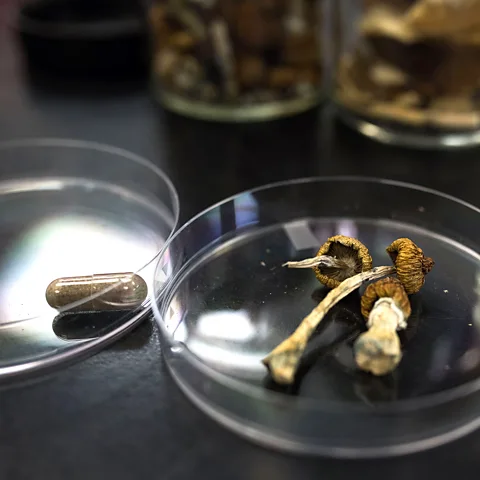
In the latest study, Johnson and his colleagues recruited 82 participants and randomly assigned them to receive either a high dose of psilocybin – a capsule with about 30mg of the drug according to body weight – or a nicotine patch to wear for several weeks. During the trip, some people reflected on their smoking habits, while others didn't. All of the participants also then received 10 sessions of cognitive behavioural therapy spread over 13 weeks, each about a week apart, in which they talked to a therapist about quitting smoking.
At the six-month mark, 52% of participants in the psilocybin group remained abstinent from cigarettes, compared with 25% in the nicotine patch group.
Dominique Morisano, a clinical psychologist and adjunct professor at the University of Toronto, Canada, who was not involved in the work, says the new findings are "incredibly interesting".
"Smoking cessation is a notoriously challenging outcome to achieve with traditional treatment means," she says. Based on Johnson and his colleagues' findings, she predicts that psilocybin-assisted therapy will become an important means of bringing people relief.
 Getty Images
Piper agrees that the new study's findings are "impressive" and "promising".
She adds, however, that they will need to be replicated with a larger, more diverse sample. "This was a small pilot trial with highly educated, mostly white participants with a history of psychedelic use," she says. "It is not clear if psilocybin would be as effective for all people who smoke."
As a small preliminary study, it is also still unclear whether the percentage of people who quit smoking after taking psilocybin will really kick the habit for good, whether such promising results can be replicated in larger studies, or whether there are risks and side effects that haven't yet emerged, Johnson says.
More like this:
Johnson and his colleagues are currently conducting just such a follow-up study: a large double-blind, randomised trial in several different locations. That study was made possible by nearly $4 million (£2.9 million) in funding from the National Institutes of Health of the US – the first US government grant to be awarded in over 50 years to investigate the therapeutic effects of a psychedelic drug.
Participants in that study will receive two doses of psilocybin, which Johnson suspects will achieve better results for helping people to quit smoking than the single dose given in the most recent experiment.
Johnson and his colleagues are also analysing brain imaging data from the participants to gain insight into patterns that can predict smoking cessation. He suspects, though, that behavioural plasticity is at the heart of the change. "If you've been stuck in a pattern for a long time, this can shake you up," Johnson says. "It's not guaranteed, but it's a potential way out of it."
 Getty Images
Why tripping works
Gül Dölen, a neuroscientist at the University of California, Berkeley, US, says that the new findings are consistent with her and her colleagues' 2023 discovery that psychedelics can reopen "critical periods" in the brain – finite windows of heightened sensitivity and malleability that are usually restricted to childhood, when the individual is primed to learn new things.
In this case, psilocybin is creating "a window of opportunity for learning new habits around smoking, via cognitive behavioural therapy," Dölen says. Ultimately, the durability of the therapeutic response is likely the lasting consequence of reconfiguring old brain patterns.
Morisano similarly suggests that therapists working with patients with psilocybin could take even greater advantage of the drug's induced neuroplastic effects by introducing other coping mechanisms for smoking cessation can enhance and help to maintain the antidepressant benefits. Exercise and grounding practices such as mindfulness and meditation have been shown, for example, to help some people quit smoking. These could be integrated into psychotherapy before, during, and after a patient's psilocybin session, Morisano says.
"Addiction is a complicated outcome that is exacerbated by many factors, and any truly successful treatment will likely need to entail multiple factors as well," Morisano says. "In today's complicated world, we need to be increasingly creative regarding the interventions that we provide to individuals who are struggling."
--
For trusted insights on health and wellbeing, sign up to the Health Fix newsletter by senior health correspondent Melissa Hogenboom who also writes the Live Well For Longer and Six Steps to Calm courses.
