In Okinawa, tourists are helping track endangered sharks

 Jay Clue
Padi's new citizen-science diving programme is turning holidaymakers into ocean researchers as warming seas put reefs, sharks and rays under mounting pressure.
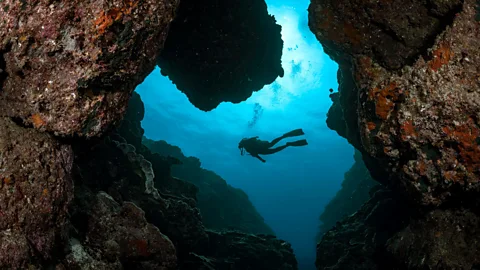
They say that the sea that surrounds Okinawa, Japan, has its own shade of blue, created by a heady mix of clear water and limestone seabeds. Yet from my perch at the top of Cape Manzamo, a lava-stone promontory on Okinawa's main island, I could count at least five stunning pantones. Beneath that prismatic surface, however, the reefs along this archipelago, which stretch south-west from Japan to Taiwan, are under strain.
Now, a new citizen-science initiative is asking divers to do more than admire them. Padi's Shark & Ray Conservation Specialty Course turns ordinary recreational dives into data-gathering missions designed to help protect Okinawa's sharks, rays and reefs.
It's how I found myself, several days earlier, in Ishigaki, south-west of Okinawa's main island, joining the programme's first wave of divers.
Every dive counts
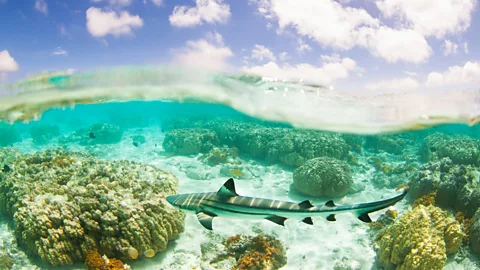
According to Padi, sharks and rays are key indicator species that are in rapid decline due to a combination of targeted fishing (Asia prizes shark fins for soup and manta ray's gill plates for traditional medicine) and bycatch (where they are unintentionally caught in huge "set nets" used by Japanese fisheries to catch other fish for food).
 Getty Images
"That's why we have launched the Global Shark and Ray Census in tandem with the new speciality course," explained Samantha Pearson, Global PR Director at Padi, "and why we decided to launch it here in Japan."
Following the two-day certification, every diver will be trained to collect and upload photographs, along with data about the dive location, date and time, to an international database on the free-to-use Padi Aware app. The data will be collated by students at James Cook University in Queensland, Australia, and made available to NGOs to help shape conservation policy around the world.
Get involved
The Padi Shark & Ray Conservation Specialty Course is available to certified divers (not complete beginners) at several dive locations in Japan, as well as a growing number of dive shops globally, from £140. Locations can be found at padi.com. The Padi Aware app (free to download) is where you can view your logged data. The census is now live and will remain so indefinitely.
"We're lucky here," said Benjamin Lubrano, manager of Eurodivers ClubMed Kabira in Ishigaki – one of the first places in the world to offer the new certification. "We are located close to a predictable manta aggregation spot, not even 10 minutes away by boat, so it's an ideal place to learn how to collect data effectively."
Turning dives into data
My pre-trip training involved a short e-learning module (which I completed on my flight over from Tokyo), covering the lifecycle of sharks and rays, the threats they face and the role divers can play in documenting them. I also learned several mind-blowing facts about the species – including that the Greenland shark can live for more than 400 years, and that divers spend an average of $314 million (£234.5 million) each year on shark diving, supporting around 10,000 jobs globally.
By the time I arrived, I was ready to dive. In my first of the certification's two required 45-minute underwater adventures, I was on a shark-style hunt… for data. Knowing my sightings would be contributing to something that could help protect the species I love so much added another dimension to the sport. GoPro in hand, I spotted and photographed a huge stingray trying to camouflage itself in the sand at the bottom of a 25m (82ft) wall. Then inside a small overhang I managed to glimpse the tail of a small shark that swam away before I could even hum a line of the Jaws theme tune.
"It doesn't matter whether or not you get a photo or even see one at all," said Lubrano as we surfaced, "everything is valuable data that can be used."
 Getty Images
Reading a manta's fingerprints
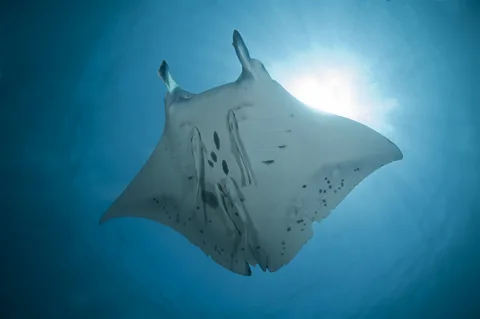
Before our second dive I met Rika Ozaki, founder of the Japan Manta Project. Her mission is to build a photo identification database of manta rays to mitigate the species' local decline. Ozaki told me about the threats facing the rays and how to best photograph them at our next location: Manta Scramble, a renowned manta ray dive site off Ishigaki.
"Mantas' spots on their underside are as unique as fingerprints, so try and get a clear view of that," she said, "along with any distinguishing features, such as mating bites or injuries."
Within minutes of going underwater we were photo bombed by a train of three mantas – a female being pursued by two males. I dutifully took my photos but then allowed myself time to put the camera away and simply watch their effortless dance.
Once back on land it was time to complete perhaps my most important task: log my sightings on the app. Within minutes I had contributed to global data, and though my part seemed small, Ozaki assured me it had massive capabilities for species protection.
And just like that I was certified, meaning every dive going forwards could be a data catch exercise.
A coral catastrophe
The need for better data on Okinawa's reef systems became clearer when I moved from Ishigaki to Okinawa's main island.
My destination was Japan's first eco-dive resort, ANA Intercontinental Manza Bay. The property is located in Onna Village, which declared itself a "coral village" – a community dedicated to reef restoration and conservation – as part of its Sustainable City programme in 2018, with the goal of becoming the most coral-friendly community in the world. It's also renowned for sightings of shy, white-tipped reef sharks.
 Jay Clue
Yet as I found out while chatting to my dive instructor Jymi Cardume – after we'd completed my first post-certification dives amid walls of bright fan corals and pointed staghorn, but had seen no sharks on either one – this area has not managed to escape the impact of climate change.
"In 1998, coral bleaching wiped out 90% of corals here," he explained while we loaded the dive boat. "So the fishermen and divers decided to act – and work together."
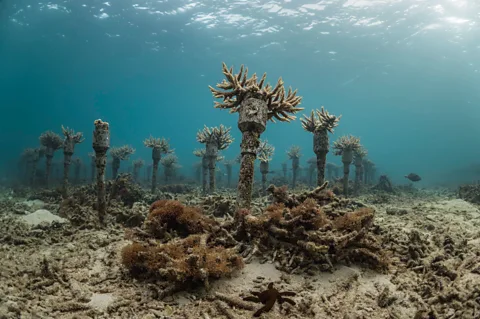
It's a partnership not often seen; fisheries tend to see divers as poachers and an annoyance rather than allies. But here, both fishermen and divers set to work collecting surviving coral and creating a huge underwater garden in which to regrow it. The result meant a boon for marine life.
"If you'd have come here three years ago, you'd have seen how beautiful it was," Cardume said. "We regularly saw sharks who hunt around the limestone caverns and reefs."
The area's annual typhoons normally help mix warm surface water with cooler water below, creating conditions in which coral can thrive. But in 2024, the typhoon never came. Without that churn, sea temperatures reached 34C, causing catastrophic bleaching. As the coral degraded, the reef's sharks lost food sources and shelter, driving them away from habitats they had long frequented.
 Jay Clue
Small signs of renewal
Across my six dives, I managed to spot just one shark: a small, white-tipped specimen resting beneath a ledge, apparently unbothered by a curious diver with a camera. I logged the sighting afterwards, buoyed by the fact that even a single shark counted.
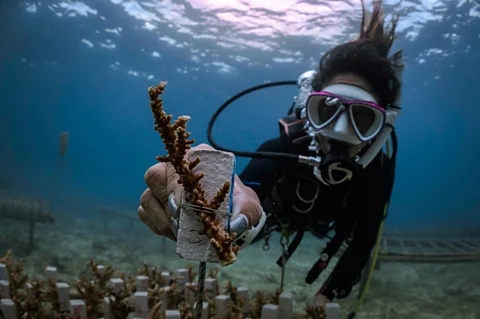
On the way back to shore, we stopped to snorkel among the remains of the coral garden. Beneath the waves, the poles that once held festoons of coral were now rusting after much of it had bleached and died in the heat. Then, amid the wreckage, I spotted a small sign of renewal: three blue-tipped prongs of staghorn coral, catching the diffused sunlight.
Attached to the growing blocks were wishes written in Japanese by volunteers, who return several times a year to help replant the coral.
One simply said: "The ocean starts here". To which I mentally added: "And it starts with us."
--
If you liked this story, sign up for The Essential List newsletter – a handpicked selection of features, videos and can't-miss news, delivered to your inbox twice a week.
