Free food and compassion: Inside the Sri Lankan tradition of dansal

 Zinara Rathnayake
Rooted in Buddhist teachings, Sri Lanka's roadside dansal offer free food and drinks to strangers – and this year, amid rising costs and extreme heat, the tradition feels especially relevant.
When I was a little girl growing up in Sri Lanka, I always looked forward to the month of May. That was when my father and I would decorate octagon bamboo lanterns to celebrate Vesak – the sacred day marking the birth, enlightenment and death of the Buddha – and when the first dansal of the season would appear on the streets.
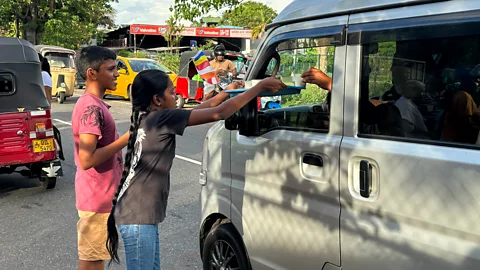
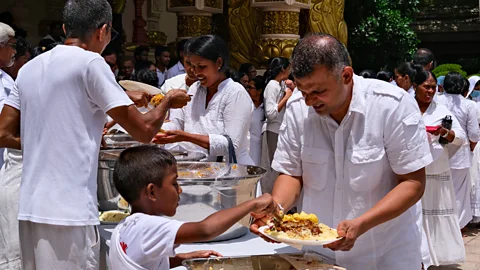
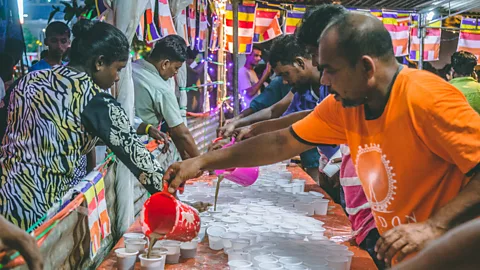
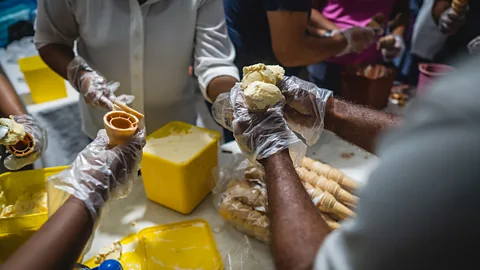
Dansal are Sri Lanka's roadside generosity stalls: makeshift kiosks and improvised counters where people offer food, drinks and other essentials to passersby, free of charge. Rooted in the Buddhist practice of dana – giving without expecting anything in return – they pop up during poya, the island's monthly full-Moon holidays, most typically during the festival season from May to July.
The dansal of my childhood are etched in my memory: men and women dressed in white queuing for boiled cassava; children waving large flags to stop passing vehicles; and tiny cups of sweet passionfruit drinks being passed around when public buses crawled to a stop.
But this year, the tradition feels particularly resonant.
 Nathan Mahendra
In recent months, temperatures across parts of Sri Lanka have climbed as high as 39C, while long dry spells have strained water supplies in some urban areas. At the same time, fuel, electricity and food costs have risen sharply following energy price hikes earlier this year, making daily life harder for many Sri Lankans.
How to experience dansal in 2026
Vesak Week (27 May-2 June 2026): Vesak is one of the best times to see dansal. In Colombo, stalls often appear around major Vesak zones, including the Gangaramaya Temple area and Bauddhaloka Mawatha thoroughfare.
Poson (29 June 2026): Poson celebrates the arrival of Buddhism to Sri Lanka. Mihintale and nearby Anuradhapura are major religious centres, with dansal often set up along pilgrim routes.
Esala (29 July 2026): During the Esala full moon day that honours Buddha’s first sermon, travellers can experience dansal in Kandy and Kataragama, where sacred religious processions take place.
Against that backdrop, even small acts of public generosity carry new weight. As more people have been forced to walk or rely on public transport just as Colombo's sweltering March temperatures arrived, businesses across the capital tapped into the spirit of dansal by setting up free drinking-water stalls for passersby. Just before the Sinhala and Tamil New Year in April – one of the country's biggest festivals where families gather for week-long celebrations – biscuit company Munchee distributed 25,000 train tickets at Colombo's railway station to ease the financial burden of holiday travel.
"You'll see more practical dansal [now], like handing out rice and vegetables," says Joanne Louise, a British traveller who spends several months of the year in Sri Lanka with her Sri Lankan husband. "Since the heat wave, people now feel it is more important to look after each other." During Vesak this year, local communities are also offering free notebooks for students and handing out dry rations for pregnant women.
 Nazly Ahmed
For Dr Rita Langer, senior lecturer in Buddhist Studies at the University of Bristol, who has been visiting Sri Lanka for more than 35 years, that immediate responsiveness is of little surprise.
"Sri Lankans are very much aware of the people around them and what they need, more than [in the West] where we outsource that to charities," she says. "Sometimes you get an eye optician doing free eye tests all night, a hairdresser giving free haircuts or people giving sanitary pads to a nunnery."
Tip:
While dansal are free and open to anyone, visitors should be respectful, joining the queue and accepting only what they need.
During Sri Lanka's economic crisis in 2022, people handed out snacks and drinks to those waiting hours in fuel queues. And the selflessness doesn't only happen on home soil: earlier this year, Sri Lanka's consulate in Mumbai served chilled drinks to people struggling through the city's extreme summer heat.
"Dansal are a manifestation of the spirit of generosity that comes from a society like ours, which is about the wider community. It ties to our non-individualistic way of living," says social researcher Amalini De Sayrah.
Giving without expectations
According to Sri Lanka's historical chronicle Mahavamsa, the tradition goes back as far as the 1st Century BCE. It became more formalised during Sri Lanka's Buddhist reformist movement in the 19th and 20th Centuries, when wealthy Buddhist families and temple communities set up rest houses and food stalls for pilgrims travelling to holy shrines, offering meals, drinks and shelter as an act of dana. Over time, that ritualised giving shifted from pilgrimage routes into neighbourhoods, streets and train stations, becoming one of Sri Lanka's most recognisable forms of public generosity.
 Nazly Ahmed
"In Buddhism, we learn that dana during difficult times is the most valued, because it means that your compassion is not confined to the abundance you have," says Neluwe Gnanawimala Thero at the Mahamevnawa Buddhist Monastery near Ella, which hosts a daily dansala with the help of young volunteers that's often visited by visitors who come for the temple's meditation sessions.
Today, that spirit cuts across ethnic and religious lines. Muslims and Christians also host stalls during Vesak, while similar traditions of communal giving appear during Hindu festivals. The offerings vary widely, from tea and biscuit stalls to full-blown bath (rice and curry) dansal, and many people go "dansal sightseeing", hopping from one stall to another with friends and family.
More like this:
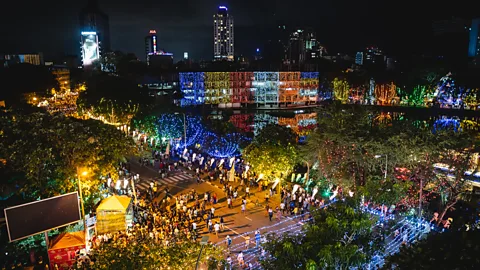
During the holiday season, visitors will find dansal near temples, along pilgrimage sites and at railway stations, typically serving snacks and refreshments throughout the day and full meals during lunch and dinner. In Colombo, they may cluster around week-long Vesak zones and illuminated thorana (pandals that depict stories of Buddha's past lives); elsewhere, they can be as simple as a table outside someone's home or a little kiosk offering meticulously packed takeway lunch parcels.
 Nazly Ahmed
During Poson full Moon holiday in June, there are similar festive zones in and around the sacred city Anuradhapura, nearly a four-hour train journey north of Colombo. Outside the Ruwanweli Maha Seya stupa, a dome-shaped monument where Buddha's relics are enshrined, the Isipathana bath dansala serves lunch every day. Devotees also turn up with fresh flowers and fragrant incense to share with others at holy shrines.
When I was stopped by a group of young children this past Labour Day (1 May) and handed a cup of sago porridge, I was reminded how even the smallest act of giving can bring strangers together.
"If you visit Sri Lanka about the time of dansal, you are part of it," says Langer. "It's the spirit that nobody should go hungry."
--
If you liked this story, sign up for The Essential List newsletter – a handpicked selection of features, videos and can't-miss news, delivered to your inbox twice a week.
