Hot weather and holidays impacting blood donor supply

 BBC
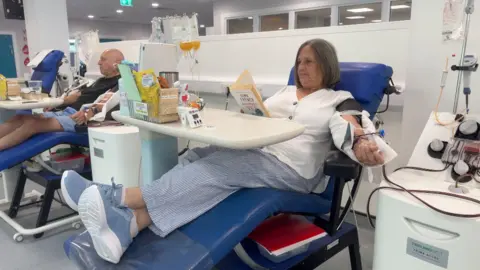
BBCA blood donation centre is urging people to come forward to donate, saying that the hot weather and school holidays are impacting supplies.
Southampton Donor Centre, based in Chandlers Ford, Hampshire, says the increased heat means people are often dehydrated, not feeling well or busy enjoying the sun.
Nationally, stocks of certain blood groups are currently at only half of what the NHS aims for, including just over three days' supply of O negative and B negative, compared to the usual six-day target.
The centre is urging people to drink lots of water and eat well ahead of donating to avoid being turned away.
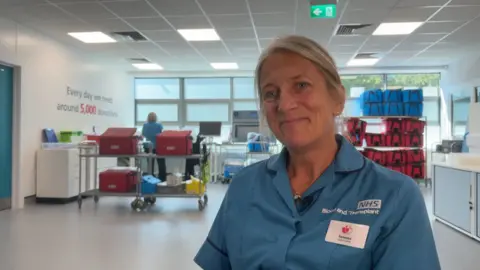
Vanessa Barrow, donor carer, said school holidays often impacted the amount of blood donations.
She said: "We do see it every time summer holidays because not only are people going on holiday, they have children to look after, so they maybe can't come because they've got childcare issues."
However, she added the increased hot weather was impacting supplies further.
She said: "They want to go out and have fun in the sun rather than come and donate blood, which is understandable. But also problems with their blood.
"Dehydration's the biggest problem because once they're dehydrated it's difficult for us to find veins sometimes and we can't take donations then."
The clinic currently is not fully booked, meaning the amount of blood they can take is down.
Barrow added: "Blood wise, we can take up to 75 donations a day.
"Currently, we're probably running at about 50 to 60. Some days it's lower than that. Obviously, if we have to turn people away, then donations slip down."
Barrow added there were a few ways people could ensure they felt well before and after donating.
She said: "Make sure you are well hydrated before you come to donate blood, that you have had a really good meal beforehand, and that meal involves some carbohydrates.
"No massive exercise or going to the gym. And then just mainly looking after yourself and making sure before your donation that you haven't got a cold, you're well in yourself."
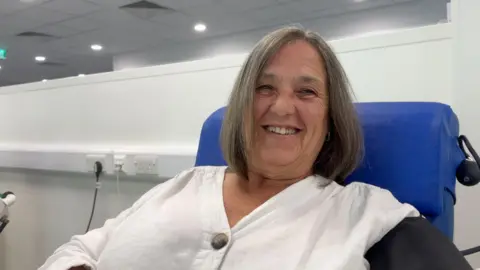
Sue Pownall, from Southampton, began donating blood as soon as she could when she turned 17.
She said: "I'm a regular donator. I've done 114.
"I donated whole blood up until 100, which we're allowed to do three times a year.
"I've changed to platelets, which we can do every other month."
When asked why it was important people donated, she added: "Because it's nice to help, isn't it?
"I think, unfortunately, people only tend to think about when they need it, when a member of the family needs some blood. So it would be nice if everybody came, just even once a year or twice a year."
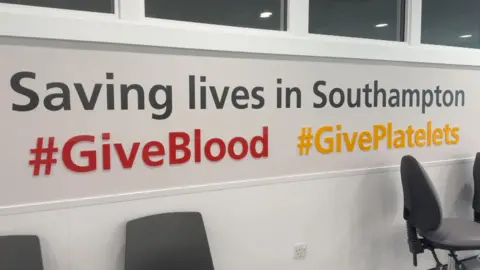
NHS Blood and Transplant has 28 permanent donation centres across England.
The centres work with mobile teams, which collect blood at community venues.
The service supports trauma patients, people undergoing cancer treatment, mothers and babies during childbirth, and those living with long‑term conditions.
However, donated blood has a shelf life of 35 days, so regular donations are needed.
Anyone wishing to donate blood can sign up on the NHS Blood Donation website or use the app to register and book an appointment.
You can follow BBC Hampshire & Isle of Wight on Facebook, X (Twitter), or Instagram.
