Coroner's concern over 19-hour delay in treatment

 BBC
BBCA coroner has raised concerns about a 19-hour delay in "time-critical" treatment being administered following a woman's death.
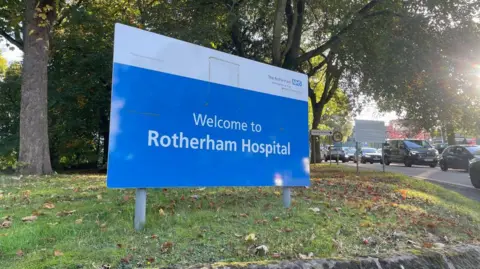
Barbara Cope, 75, was admitted to Rotherham Hospital on 11 June 2025 and, following an inquest, the area's assistant coroner has issued a Prevention of Future Deaths report.
Louise Slater said Cope died of multiple organ failure, acute liver failure and inadvertent paracetamol toxicity, but despite test results showing a high level of paracetamol, she was not given medication to treat this until the next day.
The Rotherham NHS Foundation Trust said it was "committed to ensuring that the learning arising from this matter is fully considered and acted upon".
Slater said in the report that Cope had presented at the hospital with decreased consciousness levels, slurred speech and reduced oral intake.
After a stroke was ruled out, a blood test was carried out on 12 June at 16:06 BST to check for an unintentional staggered paracetamol overdose.
The tests confirmed a high level of paracetamol.
The coroner noted that although a blood sample was collected and tested in a "timely manner", "despite clinical deterioration and two medical reviews overnight", the blood tests were not reviewed or acted upon until 10:00 BST on 13 June.
This delayed the administration of the medication N-Acetylcysteine (NAC) until 12:30 BST, about 19 hours after the results were available.
Cope's death was ruled an accident but Slater said: "Paracetamol excess requires time-critical management to prevent further and irreversible damage to the liver."
During the course of her hospital stay, Cope was transferred from the emergency department to the care of surgery, when the blood tests were requested, but "not followed up on for 17 hours".
The coroner said: "There needs to be clear communication, understanding and record keeping of who is responsible for the patient and the ongoing follow up and care in these circumstances."
'Actions taken'
Responding to the coroner's report, a spokesperson for the Rotherham NHS Foundation Trust said measures put in place since Cope's death included reviewing and updating procedures for managing "critically abnormal pathology results in clinical areas".
The trust would also "imminently" launch a pilot within the Urgent and Emergency Care Centre of the use of the "alertive bleep" system to flag critical blood results, the spokesperson said.
They said they hoped the response would "provide clear assurance regarding actions taken, further work under way, and the governance arrangements in place to oversee delivery and sustained improvement".
Listen to highlights from South Yorkshire on BBC Sounds, catch up with the latest episode of Look North.
