Appeal to plant flowers to help rare bumblebee

 Dave Carlisle
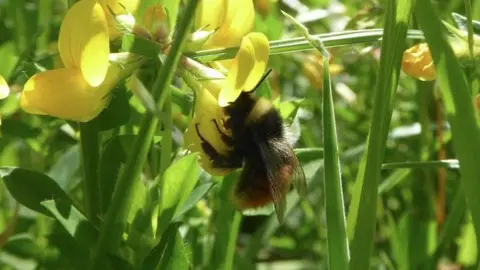
A community group is appealing for people to plant more flowers in their gardens to help save a rare type of bee.
Bilberry bumblebees are found in Buxton due to the Derbyshire town's high altitude, which creates the cooler conditions they prefer.
Friends of Buxton Station created wildlife areas for bees and a walking trail to spot the insects, but its members fear they could become extinct as they have noticed numbers appear to be falling.
New data released this week by the Bumblebee Conservation Trust shows that since 2022, the number of bees in Britain has fallen by more than a third, which it has put down to heatwaves.
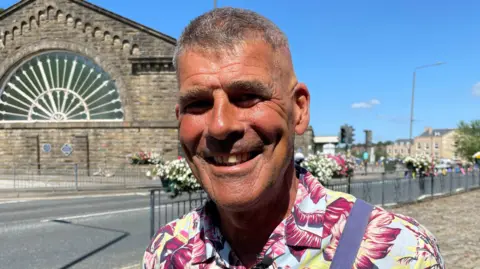
Sue Mellor, from the Friends of Buxton Station, said: "It's very important (saving the species).
"No bees, no crops, no people."
The species traditionally fed off the bilberry, a small berry that grows on moorland, but the group wants people in Buxton to plant flowers in their gardens and in pots to give it more food options.
"Think about the types of flowers that you plant," she added.
"[Bilberry bumblebees] have got a very short tongue so you have to think about not the big trumpet flowers, but the smaller flower heads that the bees can get into."
She added that bees like flowers that are blue.
The Bumblebee Conservation Trust said common species of bee had fallen by 35% in the last four years.
It has pointed out that the creatures struggle to cope in hot weather and temperatures have risen above 30C regularly during the last few summers.
Bees do not like hotter weather because their furry bodies are designed to retain heat and their flight muscles generate extra heat.
So when it temperatures rise, bees struggle to feed effectively, which is why Friends of Buxton Station wants to make it easier for them.
Mellor's husband, Dave Carlisle, chairman of Friends of Buxton Station, said it was important action was taken to help the Bilberry Bumblebee.
"They're flying into town looking for food and kind people hopefully have put flowers out for them so they can refuel and find their way back on to the moors," he added.
"But if they don't find these flowers unfortunately they die along the way.
"I've been out a couple of times already looking for them and I've not seen any so I think we are reflecting the national trend (of the reduction in numbers)."
Follow BBC Derby on Facebook, on X, or on Instagram. Send your story ideas to eastmidsnews@bbc.co.uk or via WhatsApp on 0808 100 2210.
