I was in a coma after septic shock - now I'm running the London Marathon

 Katie Bain
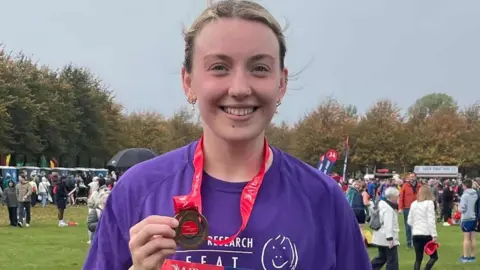
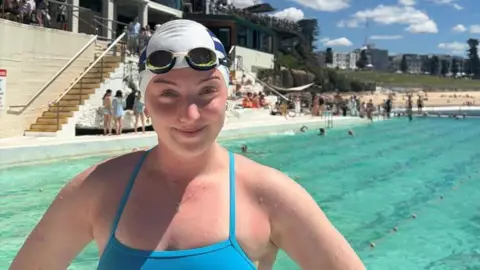
Less than two years ago Katie Bain almost died when she went in septic shock after her appendix ruptured.
The swimmer, who was just 24 at the time, spent three weeks in an induced coma as doctors fought to save her life.
After three attempts to finally bring her out of the coma, she had to relearn how to walk - but this weekend Katie is tackling the London Marathon.
She is dedicating her run to other sepsis survivors and loved ones of those who lost their lives to the illness.
 Katie Bain
Sepsis is a devastating condition which kills more than 4,000 people in Scotland every year.
It occurs when the body's response to an infection spirals rapidly out of control, injuring its own tissues and organs, which can result in multiple-organ failure and death.
Katie, originally from Shetland, was on a visit to her boyfriend's family in Aberdeen in September 2024 when severe stomach ache sparked a visit to A&E.
She was examined and sent home with sickness tablets but the next morning her partner Ben saw that Katie's nose had gone necrotic, turning black and purple.
"My pain was just absolutely unbearable," she says.
"I really did feel like I was dying."
 Katie Bain
They immediately returned to Aberdeen A&E where Katie's blood pressure was found to be extremely low, meaning her blood was not pumping around the body correctly.
Hospital staff discovered that Katie's appendix had ruptured and she needed emergency surgery but by this point she was already was in septic shock.
This is the most severe stage of sepsis where, due to persistent low pressure, the body's organs don't receive enough blood supply and cells begin to die.
Only 50% of people survive it.
A previously healthy person can die within hours of multiple organ failure.
 Katie Bain
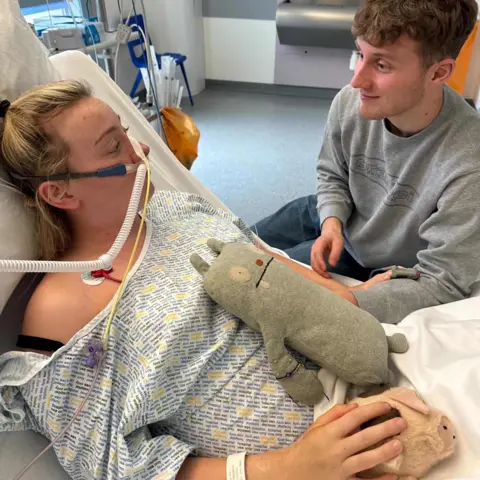
As a top-class athlete and nutritionist, Katie was in a great health before the illness but due to the septic shock her bowel had perforated and her lungs started to shut down as she struggled to take in enough oxygen to survive.
In a bid to help her survive, Katie was attached to ventilators and induced into coma for three weeks.
It was "the best decision", she now says.
When Katie's physical state stabilised, clinicians tried to wake her up from coma.
This took two failed attempts due to her damaged organs and mental state.
Each time Katie was revived she started feeling panic and anxiety caused by the sepsis experience which had caused hypoxia - a critical condition defined as low oxygen levels in body tissues.
During the final attempt, hospital staff placed a tracheostomy into Katie's neck, allowing her maintain consciousness while still being on a ventilator.
This helped Katie transition and mentally recover.
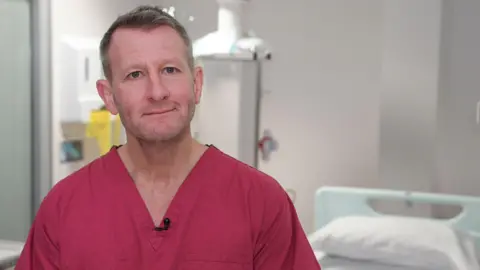
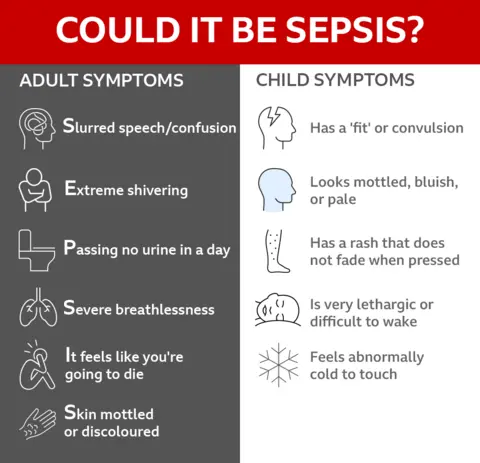
Dr Ron Daniels, a leading expert on sepsis and the founder of the UK Sepsis Trust, says a person should immediately go to A&E if they experience symptoms of sepsis.
While around 80% of people overcome the illness, Dr Daniels says: "It takes between about six and 18 months to get back to anything like the person's baseline level of function.
"The experiences they suffer include psychological after-effects and cognitive after-effects.
"Invisible disabilities, including those in the cognitive and psychological spaces, can be equally disabling."
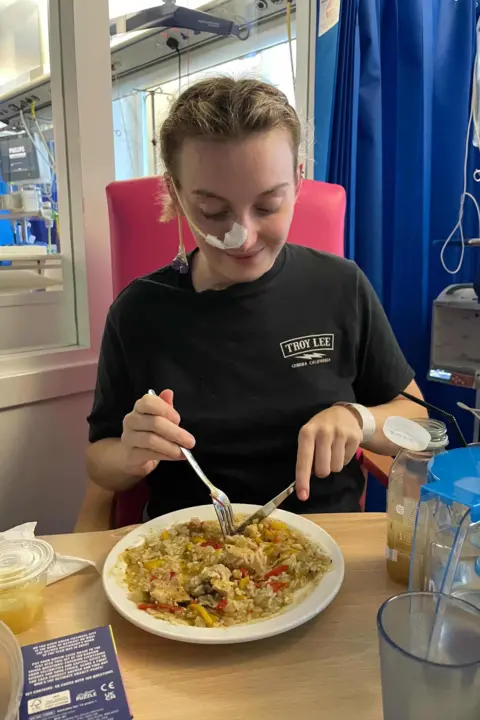 Katie Bain
Katie says the experience traumatised her but the support from loved ones kept her from a "dark headspace".
The athlete needed to relearn how to walk and do everyday things.
She was told that she would either never return to where she was physically or it would take at least a year.
"I think I almost took that on as a bit of a challenge to myself, how quickly can I recover and how can I get back to where I want to be?" Katie says.
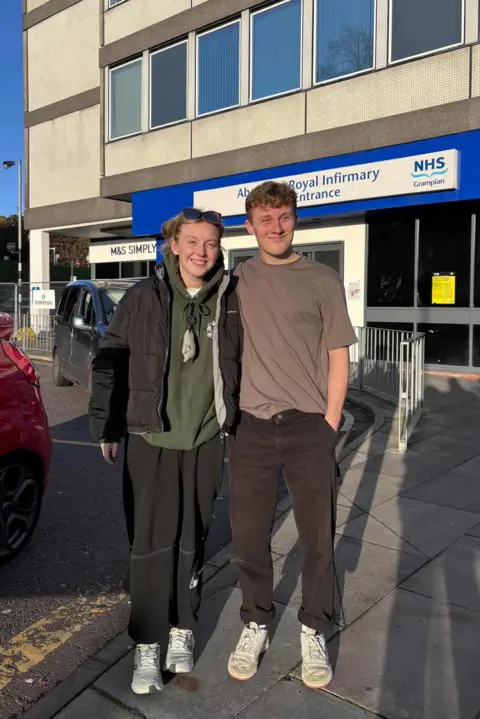 Katie Bain
Returning to sport became a goal, which kept her going.
Katie was discharged from Aberdeen Royal Infirmary in mid-October 2024, a week after waking from her coma.
A month later, just after her tracheostomy scar closed, she was back in the swimming pool.
"It came so naturally," she says.
"I took each day, one at a time, and very much just pushed myself to get better."
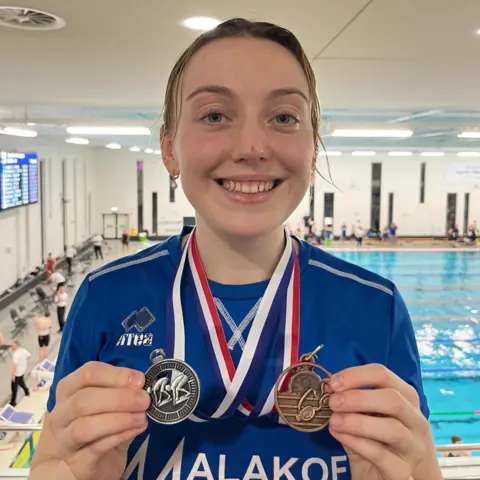 Katie Bain
Three months after leaving the hospital she swam in a 100m competition held in Aberdeen and earned two medals.
This spurred her on more and Katie says she was determined to make the most of her functioning body.
She challenged herself to run the Glasgow Half Marathon in October last year, just 12 months after her illness.
Now she is set to run 26 miles (42 km) in the 2026 London Marathon.
 Katie Bain
Katie says: "It's a celebration of my health, being able to go out and do such an insane challenge.
"A marathon is obviously a bit ridiculous, a bit insane.
"But I think the point is almost to push my fitness, push my health, make the most of being alive and being healthy."
Katie, who now lives in Glasgow, is running to raise money for UK Sepsis Trust.
She has been preparing by doing three runs a week on top of her full-time swimming training.
Katie says the Scottish weather made it a "tough" task but she has held on to her mental motivation.
"I'm just excited to get it done, to take it all in and just enjoy it on the day," she says.
