Holocaust survivor Tomi Reichental dies aged 90

 PA Media
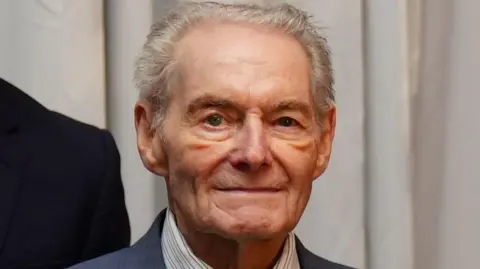
Holocaust survivor Tomi Reichental, who later moved and settled in Dublin, has died at the age of 90.
Born to Jewish farmers in Czechoslovakia in 1935, Reichental and his family were deported to the Bergen-Belsen concentration camp in Germany in 1944.
Reichental lost 35 close family members in the Holocaust and later dedicated much of his life to ensuring that future generations would never forget that dark chapter in history.
Irish President Catherine Connolly led tributes to Reichental, whom she said made an "exceptional contribution to Irish society, bringing his personal experience of Bergen-Belsen and of his family's suffering in the Holocaust to public attention".
About 70,000 people died in Belsen, including one of the world's most famous diarists, Anne Frank.
Reichental moved to the Republic of Ireland in 1959 and lived with his family in Dublin.
Speaking previously to BBC News NI, Reichental said despite the deep personal tragedy he experienced, he wanted to tell his story to audiences, because he feared people were beginning to forget the lessons of a dark chapter in human history.
"I started to speak because I thought I owed it to the victims and that their memory is not forgotten," he said.
In 2011, he published his autobiography 'I Was a Boy in Belsen' and was also the subject of two documentaries on his experiences in the Bergen-Belsen concentration camp during 1944 and 1945.
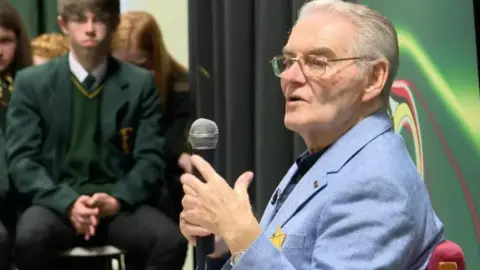
In 2019 he spent two weeks in Northern Ireland speaking to school children and various groups about his experience ahead of Holocaust Memorial Day.
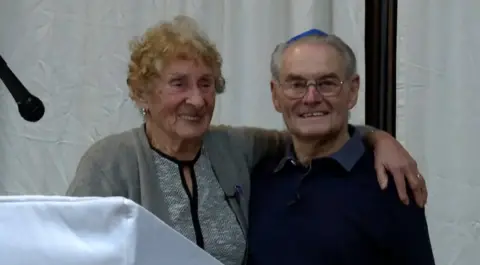
Hundreds of students heard the personal accounts from Reichental and fellow survivor Susan Pollock about their treatment during the Holocaust.
What was the Holocaust?
The Holocaust was a period in history at the time of World War Two (1939-1945), when millions of Jewish people and others were killed in Nazi concentration camps across Europe.
Jews were the main target of the Nazis, and the greatest number of victims were Jewish. Nearly seven out of every 10 Jews in Europe were murdered because of their identity.
Bergen-Belsen, in northern Germany, started out as a camp for Allied prisoners of war. In 1943, it became a Nazi concentration camp.
It was liberated by British troops in April 1945. They found 60,000 prisoners when they entered the gates, suffering from malnutrition, disease and the brutal treatment they had endured.
'Leaves a lasting legacy'
Taoiseach (Irish Prime Minister) Micheál Martin has said he was "deeply saddened" to learn of the passing of Reichental.
Martin said Reichental was someone who dedicated his life to teaching new generations about the evil of The Holocaust.
"As a cherished member of Ireland's Jewish community, Tomi leaves a lasting legacy of dignity, courage and enlightenment of others about the dangers of hatred and antisemitism," Martin said.
In a statement, the Jewish Representative Council (JRC) of Ireland said it was deeply saddened by the passing of Reichental.
The JRC described him as one of Ireland's "most remarkable voices of remembrance, education, and humanity".
"Having survived the horrors of Bergen-Belsen as a child, he dedicated much of his later life to ensuring that future generations would learn from the Holocaust and understand the dangers of hatred, prejudice, and indifference," the JRC said.
