They're part of British culture, but how safe are flight shows?

 PA Media
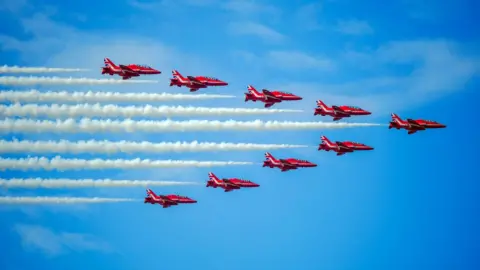
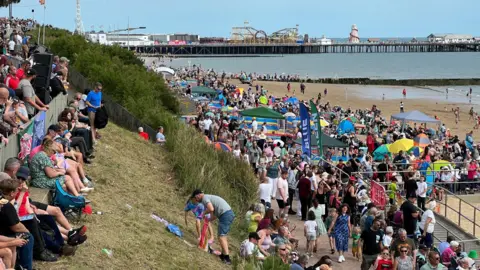
Every year, millions of Britons gather to watch aircraft - from warbirds to stunt planes - take to the skies at flight displays.
But as one of the nation's most popular outdoor attractions, how safe are they? Two accidents in two days have raised the question.
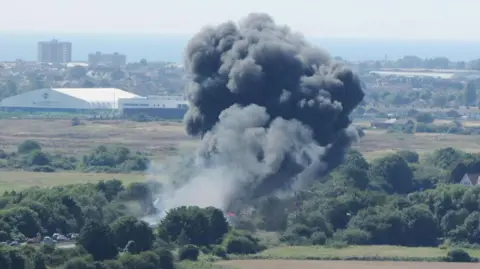
At Stow Maries Great War Aerodrome, near Maldon in Essex, a pilot suffered life-changing injuries during an incident on Sunday.
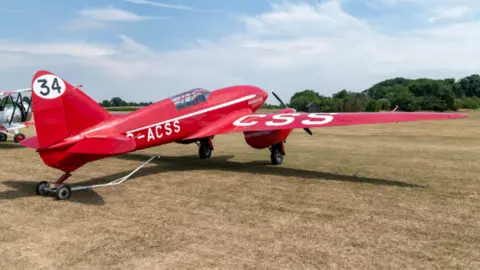
Just a day earlier, a vintage de Havilland DH.88 Comet crashed during a display at Shuttleworth, near Biggleswade, Bedfordshire.
With the return of Clacton Airshow on 27 August - a show which drew 200,000 people in 2025 - what is done to keep everyone safe?
The regulatory landscape for air displays changed dramatically after the Shoreham Airshow disaster in August 2015.
A Hawker Hunter jet crashed onto the A27 in West Sussex, killing 11 people on the ground and injuring 13 others.
A review of air show regulation identified 29 improvements that could be made after Shoreham, including skill and health requirements for pilots.
Dave Walton, the flying display director of Clacton Airshow, said "massive" changes were made to safety planning in response.
"The whole process for an air show is a year's worth of planning," he explained.
"It starts off with bidding for military aircraft and securing the airspace, before sorting the details right down to crowd placement and their safety.
"We now spend a lot of time making sure the displays don't affect third parties who are not watching or involved."
 PA Media
Events must be meticulously planned by both an accredited display director and an event organiser, and feature pilots operating at a UK Civil Aviation Authority level of competence.
Crowds must be at least 230m (754ft) away from the display, although this can be reduced to 150m (492ft) for helicopters and light aircraft.
There is no minimum height for display pilots - who are responsible for their routine - as a variety of factors are considered, including location.
 Dave Walton
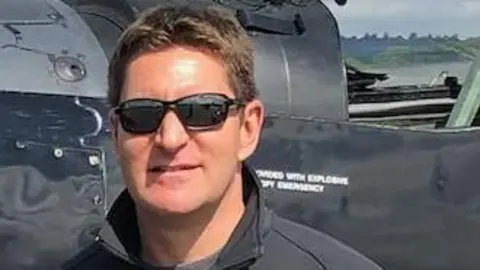
Walton described the displays as a uniquely accessible form of entertainment.
"It's great entertainment with a wide variety of aeroplanes, from low-level performances very close up to the crowd, to warbirds," he said.
"These are mostly all free shows that draw in a big crowd. In Clacton, you've got planes over the water - it's a real amphitheatre environment."
Critics, however, would point to the recent accidents. Could the next one lead to a spectator being hurt?
There have also been arguments about the safety of using vintage aircraft, some of which date back to World War One.
On Wednesday, the Turbulent Team pulled out of the Clacton Airshow in light of the incident at Stow Maries, which involved one of its planes.
 Shuttleworth
However, for Walton, Britain's display circuit plays a vital role in preserving and showcasing these planes.
"As we move further away from the Second World War, it is important these stories are still told," he argued.
"These aircraft are vintage but they are fitted with modern systems, so they're brought up to date as much as they can be.
"It means they're safe to be brought out for crowds to enjoy and for these stories to live on."
Investigators have finished their on-site inquiries at Stow Maries and are now piecing together how the crash happened.
They have also been exploring the circumstances of the Shuttleworth incident and are due to publish their findings at a later date.
Do you have a story suggestion? Contact us below.
Follow East of England news on X, Instagram and Facebook: BBC Beds, Herts & Bucks, BBC Cambridgeshire, BBC Essex, BBC Norfolk, BBC Northamptonshire or BBC Suffolk.
