Summer jobs drought hitting young people

 BBC
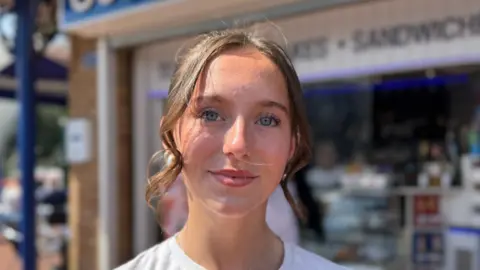
BBCIt is a roasting hot Saturday in Skegness and 15-year-old Maisy is busily serving and clearing tables at the Seafood Cafe close to the seafront.
Maisy says she counts herself lucky. She says she loves her summer job and is very aware many of her friends are at home and longing to be able to work.
"Some have found it really hard to get jobs at places like ice cream places," she says.
Business leaders in Lincolnshire say rising costs and red tape is stopping firms from taking on young people for summer jobs.
And UK-wide analysis suggests the number of advertisements for summer jobs in the UK has fallen by almost a third over the past year.
Maisy says finding her job "was easy due to family friends".
But she adds: "Other people don't have those connections and there's not much availability for teenagers."

The government says it is "creating real opportunities for young people".
At the same time, labour market analysis by recruitment agency Indeed found the number of advertisements for summer jobs fell by 31% between May 2025 and May this year, and was 71% lower than in May 2023.
In Lincolnshire, the debate over the cause of those figures is ongoing.
Maisy's boss, Dave Charles, says: "The rising costs of minimum wage and National Insurance and all the other rising costs means that a lot of people I know that would normally take on four or five under-16s are this year taking on two or three."
Katrina Pierce, from the Federation of Small Businesses in Lincolnshire, says it is more about the "policies, safeguarding and insurance costs" plus the new Employment Rights Act.
The Act includes new rights to request flexible working from day one, as well as improved rights to guaranteed hours, reasonable notice for shifts, and payment for cancelled or curtailed shifts.
"The Act has landed in earnest and so this is happening across the workforce, but you will see that concentrated in temporary or summer roles," Pierce said.

Children can do limited, part-time work from the age of 13 but the employer must apply for a special permit and carry out a risk assessment.
They can work part-time from the age of 14, and full-time from 16 - but no more than 40 hours a week. When someone reaches 18, adult employment rights and rules apply.
Faye, 15, from Lincoln, has been looking for a Saturday job for six months and has also struggled to get placements for unpaid work experience in charity shops and cafes.
"A lot won't take you unless you're over the age of 16 for some and 18 for others because of the health and safety and the paperwork," she said.
"It's really difficult to find any kind of work to do, paid or unpaid, but I do see where the companies are coming from, especially smaller businesses."
Zach, 15, from Lincoln, says he has spent weeks "looking online, putting posts on social media, going into cafes and businesses" but says "most tell me to come back when I'm 16".
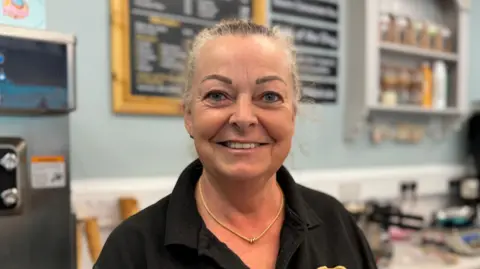
In Woodhall Spa, business owner Tracy Walters has another view.
She co-owns Sweet Emporium where she is busy serving customers sweets and ice creams in the hot weather.
She says she is not considering hiring any young people to help her behind the counter "because of the cost", but also because, in her experience, "they're too unreliable".
"They have boyfriend problems and other problems. Sometimes they don't turn up on time and it's hard to get rid of them if they're unreliable," she said.
Earlier this year, a government review by former minister Alan Milburn found one in eight young people aged 16 to 24 in the UK are not in education, employment or training.
"We are at risk of a lost generation," he warned.
Victoria Atkins, Conservative MP for Louth and Horncastle, says she blames "the increase in taxes on businesses".
"I find it heartbreaking that businesses cannot afford to give young people the chances and opportunities we took for granted 10 and 15 years ago," she said.
The government vowed to act on the findings of Milburn's report and the Department for Work and Pensions said job vacancies "continue to grow, with active job postings up 9.2% in June and up 11.4% year-on-year".
It added: "Businesses already receive significant tax breaks for hiring young people through the National Insurance exemption for under-21s, and our £2.5bn youth employment package will support almost one million young people into work."
Back in Skegness, Dave Charles says he will continue to hire young people and that "if you recruit the right young people they are great".
But he is concerned for those missing out.
"We've all been that age and people should get a chance and, in their formative years, their start into the workplace should be a really good experience and that is what we try to create," he said.
Listen to highlights fromLincolnshire on BBC Sounds, watch thelatest episode of Look North.
Download the BBC News app from the App Storefor iPhone and iPad orGoogle Play for Android devices
