Richmond-upon-Thames: The borough with no opposition

 Getty Images
Much of the focus in London after this month's local elections was on the successes of the Greens and Reform, as well as Labour's struggles.
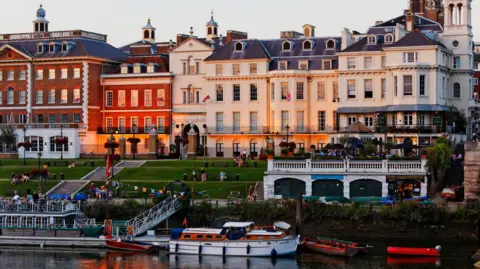
But in one leafy west London borough, a very different story unfolded, with the Liberal Democrats winning every seat in every ward at the latest local elections.
The party secured a complete sweep on 7 May 2026, retaining control of Richmond‑upon‑Thames Council, leaving the chamber without formal opposition.
The Lib Dems now hold 54 seats (+6), with the Greens losing all five of their previous seats and the Conservatives losing their only seat.
Such a decisive result has brought both praise and unease, with the party saying it is evidence of strong local backing, while also prompting questions about scrutiny, accountability and how effectively different voices are heard in what is now a one‑party borough.
In 2022, both Lewisham and Barking and Dagenham were one-party boroughs under Labour control.
Council leader Gareth Roberts says local voters backed the Liberal Democrats because of their record in power.
He told BBC London Politics: "People like us as a council. They like the fact that we deliver good quality services for them and that we make sure that we have this relentless drive for good quality.
"They also like the fact that they see us all year round and not just this election time and that really matters to a lot of people."
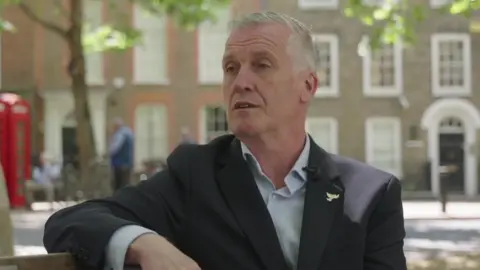
With no opposition councillors in the chamber, questions have been raised about how the council will be held to account.
When asked how residents can be sure the council is going to be held accountable, he said they would "try and incorporate as many of the voices that we possibly can".
"We will consult, consult, consult, on everything we do," he said.
Critics say the absence of opposition risks weakening scrutiny.
The local Green party, which lost five seats, said the result was bad for democracy, warning that alternative views could be lost.
In a statement on 8 May, the Richmond and Twickenham Green party said: "The Lib Dems now have a monopoly on this council, which is not a healthy position for our residents as there is nobody to stand up for them if the administration is going in a direction they don't want.
"A monopoly means that the voices of residents aren't heard as effectively and alternative perspectives either get sidelined or go missing entirely.
"Time and again on the doorsteps we heard many residents telling us about how much they didn't want a one-party borough."
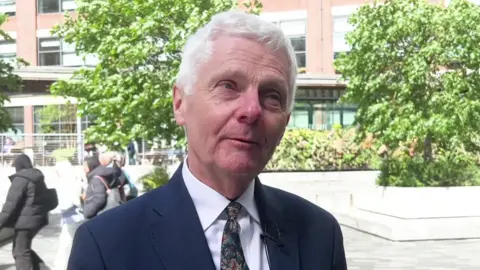
Professor Tony Travers from the London School of Economics said the system normally depended on competing parties to provide public challenge.
"It's not great for democracy because our system as a whole relies on the idea of a majority party and another party who hold them to account, or more than one party who hold them to account," he said.
"It doesn't mean there's no opposition, it will just be contained inside the majority group.
"What you lack is anybody publicly making those opposing views.
"But having said that, there's still the media, there are still other commentators who can bear down on the council."
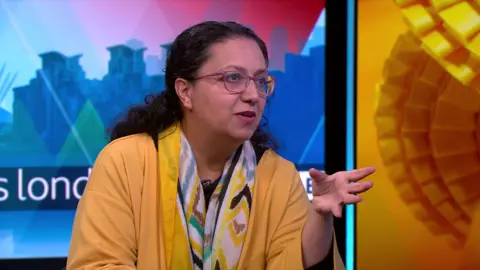
Hina Bokhari, leader of the Liberal Democrats group on the London Assembly, said the party was confident about how the council would be run in Richmond.
She told BBC London Politics: "We've won 100% of the seats but we do still support proportional representation and we want to make sure that every vote counts."
Bokhari added: "It's interesting that when Labour was running councils with 100% Labour councillors nobody was talking about that issue then."
Listen to the best of BBC Radio London on Sounds and follow BBC London on Facebook, X and Instagram. Send your story ideas to hello.bbclondon@bbc.co.uk
