WW2 prefab homes demolished after 80 years

 BBC
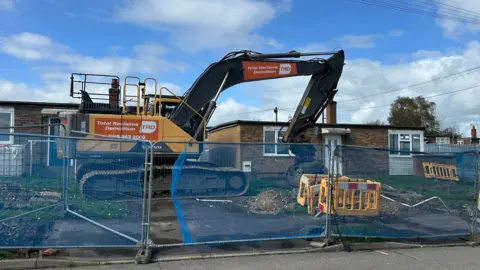
BBCBungalows built shortly after World War Two to ease a housing crisis are being demolished.
The major redevelopment scheme in Stonebroom, Derbyshire, is under way and will see the bungalows make way for 74 modern, energy-efficient homes.
Each of the new two-bedroom properties will include a private garden, a parking space, an air source heat pump, and an electric vehicle charging point.
Work to revamp the site should be completed by September 2028, according to the developers.
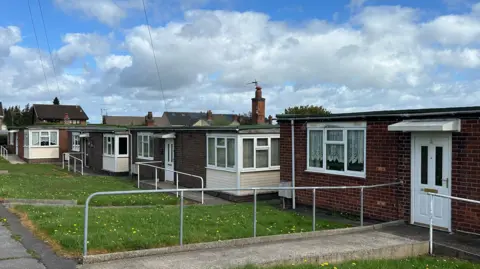
The redevelopment is part of a wider programme which consists of three schemes - a new community hall, new bungalows on the former garage site at Byron Grove, and the replacement of the 50 post-war prefabricated bungalows - known as prefabs - off Brierly Road.
The total cost of the scheme, funded by a Homes England grant and North East Derbyshire District Council, is just over £20m, with the main bungalow site costing £18.4m.
Rykneld Homes, which manages the council's housing, has made improvements to the bungalows over time, but officials said replacement was necessary to meet current energy efficiency and housing standards.
Niall Clark, managing director of Rykneld Homes, said: "The old bungalows are a wooden building with a brick skin.
"To get them up to modern standards is far too expensive, so replacing them was the best option."

Terry and Yvonne Parkes had rented one of the bungalows off Brierly Road for 10 years.
In March, they moved into their new-build bungalow just around the corner from the old one.
Yvonne said: "We didn't really want to leave, we have a lot of memories there. But this one is nice, it's cosy."
Terry, a local historian, added: "It'll be sad to see the old one demolished.
"I'll go and take lots of photos if I get the chance."
 Supplied
Dr Jordan Kauffman, a lecturer in architectural history at the University of Nottingham, said the prefab homes were only meant to have a lifespan of 10 to 15 years.
He said the houses were needed to accommodate returning servicemen from the war and their families, while providing a home for working-class people whose properties were destroyed by air raids.
"There was a shortage of skilled labour and so there was a need to develop something that could be assembled by people with little to no skill in the construction industry," Dr Kauffman added.
"There were supposed to be 500,000 of them built. Only just over 156,000 of them were built."
Dr Kauffman said despite there not being a central list of how many prefabs survived today, estimates suggest about 8,000 remain.
Listen to BBC Radio Derby on Sounds and follow BBC Derby on Facebook, on X, or on Instagram. Send your story ideas to [email protected] or via WhatsApp on 0808 100 2210.
