Bison moved to estate in effort to restore habitat

 Victoria Ward
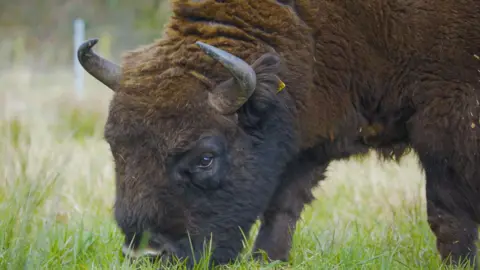
Bison have been established at an estate in northern England in a scheme to create a breeding group and improve the local habitat.
Five animals from the Blean Bison Project have settled into a large contained enclosure at Castletown Estate as part of the Solway Wild Lands project in Cumbria.
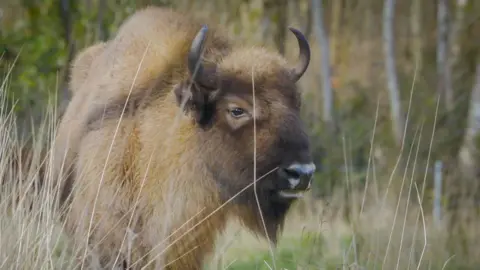
The original Blean herd based near Canterbury in Kent was split into two groups, with the bull, two adult females and their two calves moving north to an area near Rockcliffe in early spring.
Wildwood Trust, which owns the free-roaming herd, said it was "incredibly encouraging" to see the bison "thriving", adding the herd would help open up dense woodland, improve soils and create space for wildlife.
The animals previously lived in West Blean and Thornden Woods and form part of a a wider effort to reintroduce bison to the UK landscape
 Victoria Ward
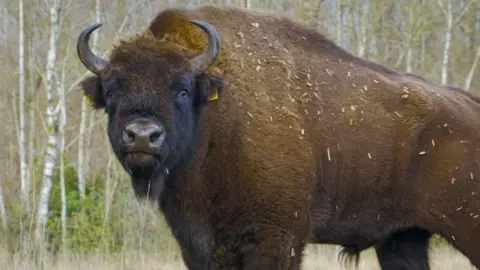
Kent Wildlife Trust and Wildwood Trust said the animals act like ecosystem engineers, naturally reshaping and restoring woodland.
Through grazing, felling trees, eating bark and taking dust baths, bison promote woodland regeneration and create new spaces for other wildlife.
Paul Hadaway, from Kent Wildlife Trust, said herds created "habitat complexity through their natural behaviour".
Toby Mounsey-Heysham, from Castletown Estate which owns the land, added the project was about "allowing natural processes to do the work" and "creating a living landscape".
 Victoria Ward
Paul Whitfield, director general at Wildwood Trust, said: "To now see bison from that founding herd established and thriving in Cumbria is incredibly encouraging.
"It shows that this approach works and can be adapted and applied in very different landscapes."
