'Serious buyer' for council's £3.1m marble bust

 Highland Council
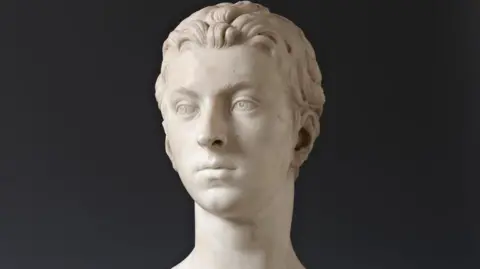
Highland Council says it has accepted a "serious offer" for a valuable 18th Century marble bust of Highland landowner Sir John Gordon.
The local authority, which looks after the sculpture, has proposed selling it to raise funds for the community of Invergordon, a town named after the Gordon family.
Auctioneers have recommended selling it for £3.1m but the council has not disclosed how much they have been offered.
Invergordon Naval Museum and Heritage Centre has told BBC Scotland News that it is behind the bid.
Invergordon Town Council bought the sculpture for £5 in 1930, but it was later placed in storage at an industrial estate and its value was not widely appreciated until recent years.
Highland Council confirmed it had received a serious offer, but that due to a confidentiality agreement it could not name the prospective buyer.
It said the buyer had five months to raise the necessary funds.
 Getty Images
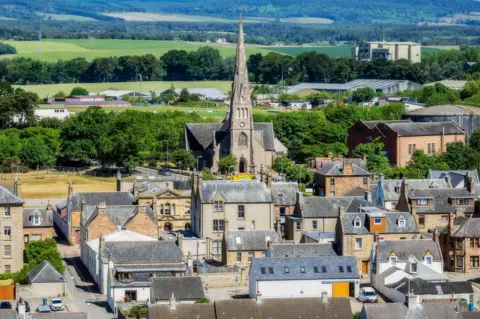
The son of a banker, Sir John Gordon's family owned large areas of land in Sutherland and Ross-shire and established the town of Invergordon on the Cromarty Firth.
Gordon was a young man travelling through continental Europe when he met the renowned artist Edmé Bouchardon in Rome in 1728 and the sculpture was made.
Gordon became an MP in 1742.
For years the bust was a feature of the Gordon family's Invergordon Castle, and survived a fire at the property in the 19th Century.
The local town council bought the artwork for £5 at an auction in Kindeace, near Invergordon, in 1930.
It is understood the bust was to be put on display in Invergordon Town Hall, before it was later moved to storage and almost forgotten.
Records relating to the piece are thought to have been disposed of during local government reorganisation in the 1970s and 90s, according Rob Gibson, speaking to BBC Scotland News in 2014 when he was a local MSP.
Maxine Smith, a Highland councillor, said she rediscovered the bust in 1998.
She said it was found propping open a door in a Highland Council unit on an industrial estate in Balintore, about 14 miles from Invergordon.
Highland Council describes the sculpture as a community asset belonging to Invergordon Common Good Fund.
In Scotland, common good funds go back to the 15th Century and involve land, investments and property that exist under law for the benefit of burgh residents.
