Cylists test medical kit on Austria bike ride

 Keep Me Breathing
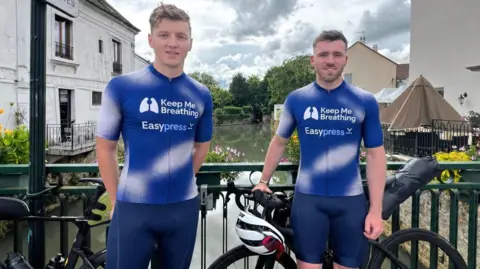
Two cyclists are testing medical equipment for patients with breathing problems while riding from England to Austria.
James Howell and Max Edginton set off from Arundel, West Sussex, on Saturday on the 1,000-mile (1,609km) trip that will take in the Grossglockner High Alpine Road.
The road is a 13.1-mile climb, which gains more than 5,741ft (1,750m) in elevation.
Edginton and Howell will be riding in support of Hove-based charity Keep Me Breathing.
 Keep Me Breathing
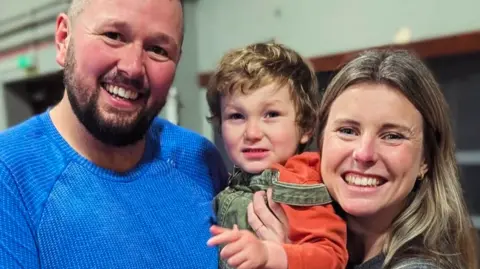
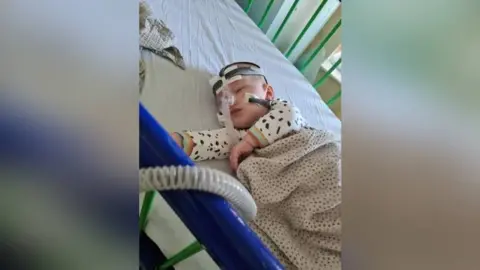
The charity's James Oakley, from Hove, East Sussex, has a son named Casper who has congenital central hypoventilation syndrome.
The rare neurological condition means he cannot breathe properly while asleep without mechanical ventilation.
On the journey, dubbed Ride for Rare, the riders will test a wearable carbon dioxide monitor called Vento.
The device has been developed by Keep Me Breathing, where Howell is Vento project chief, to continuously monitor breathing by tracking carbon dioxide levels.
The idea is that it will help people with respiratory conditions by detecting deterioration earlier.
 Keep Me Breathing
Oakley said: "Ride for Rare isn't just about cycling from Arundel to Austria.
"Every mile helps us move closer to technology that could transform the lives of people who rely on respiratory support.
"At the same time, we're gathering invaluable data to help validate Vento in real-world conditions. It's a challenge with a purpose."
University of Portsmouth researchers will use data from the challenge to further evaluate the Vento's performance.
It has already undergone testing in simulated altitude, heat and other demanding environmental conditions.
