Firefighters tackle Aberdeen grass fire as 'extreme' wildfire warning issued

 Fubar News
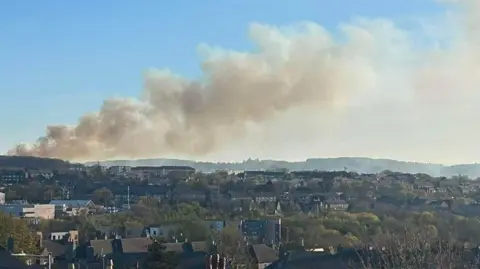
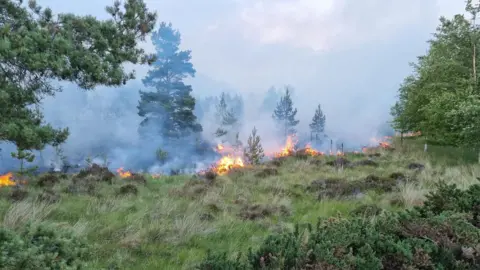
Firefighters have been sent to a large grass fire in Aberdeen just hours after a series of wildfire warnings were issued for Scotland.
Six appliances and specialist vehicles were sent to the blaze at Kincorth Hill, a popular nature reserve known locally as "The Gramps", on Thursday evening.
Earlier the Scottish Fire and Rescue Service (SFRS) and Scottish Wildfire Forum (SWF) said there was a "very high" risk of incidents in western parts of the country
They said the level would increase to "extreme" from Friday to Sunday and would also cover central and eastern areas.
Wildfires are usually sparked by human activity such from the setting of camp fires or dropped cigarettes, and the first warnings of the season were issued in late March for north and north-east Scotland.
The latest warnings have come during a spell of dry and windy weather, and when there is still older, dead vegetation on hillsides, woodlands and other outdoor spaces.
BBC Scotland weather presenter Gillian Smart said conditions were prime for wildfires this week.
"The current dry spell - combined with strong sunshine at this time of year, and the brisk winds we've had at times this week - make for a dangerous mix in terms of wildfire risk," she said.
"All of these factors can really dry out vegetation."
She added: "Spring generally presents ideal conditions for wildfires, with the combination of new growth and typically drier ground.
"And with high pressure remaining in charge into next week, and very little rain in the forecast, the risk will be ongoing."
 Carrbridge Community Fire Station
Last month, the Scottish government warned that Scotland was facing a serious and escalating threat from wildfires.
And earlier this month, a ban on camp fires and barbecues was introduced to the Cairngorms National Park in a bid to reduce the risk of wildfires.
Scottish ministers approved the new by-law and it will be in force until 30 September every year. Offenders could be fined £500.
Parts of the national park were badly damaged last summer by what landowners described as the biggest wildfire in Scottish history.
SFRS head of prevention, Deputy Assistant Chief Officer Kenny Barbour, said wildfires had the potential to destroy property, landscapes and wildlife.
He said: "People living in the impacted areas should avoid lighting outdoor fires and be mindful that one spark can spread causing a large amount of damage.
"Remember, there's no such thing as a harmless fire."
The officer urged people to share the warning with their families, friends and visitors.
He added: "And if anyone spots a large outdoor fire, please report it immediately by calling 999, providing your location, and any other relevant information so we can respond quickly."
What causes wildfires?
SFRS classifies wildfires as large, uncontrolled outdoor fires exceeding 1,000 sq m of burned area.
It says these fires are unplanned, uncontrolled and unpredictable, and occur in areas with combustible vegetation that can fuel rapid spread.
Human activity is often to blame with fires started by barbecues, glass bottles magnifying sunlight on dry vegetation and discarded cigarettes.
One of the reasons fires continued to burn on moorland was because of its peaty soil which fuels the flames.
Jim Downie, the ranger service manager at Loch Lomond and the Trossachs National Park Authority, urged everyone to act responsibly this weekend.
He asked visitors to avoid using naked flames including disposable barbecues and to ensure cigarettes were properly disposed of.
He said: ""Last year alone, wildfires destroyed thousands of hectares of peatland, woodland and moorland habitats.
"They disrupted lives and livelihoods, released vast amounts of carbon into the atmosphere, and destroyed in moments what nature had taken centuries to create."
