NHS patients sent home 'without proper support'

 Martin Giles/BBC
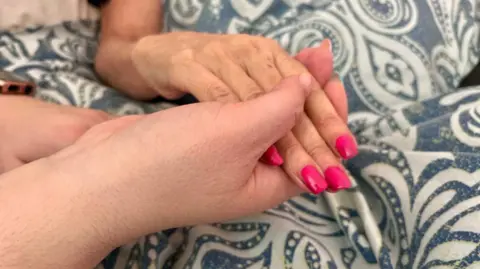
Some hospital patients in Suffolk are being discharged from hospital without proper support in place, care providers have told the BBC.
Examples of poor practice they highlighted included a woman being "plonked" in her home without any gas, electricity or food; an elderly man being sent home with the wrong discharge letter and a patient being discharged with the wrong medication.
Carers also said they had to be especially vigilant before agreeing to care for patients leaving hospital on a Friday because many key services were closed at weekends.
A Department of Health and Social Care spokesperson said: "We are working directly with the most challenged organisations to improve discharge processes."
Why is this happening?
 Martin Giles/BBC
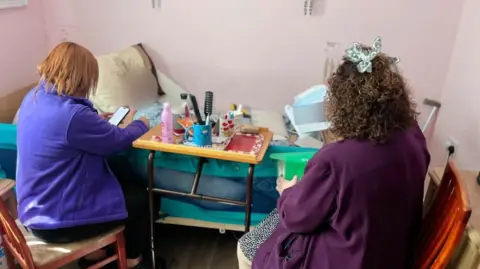
With the county council responsible for the adult social care budget, how it is managed is a local election issue.
The BBC reviewed NHS data for intermediate care settings, such as community beds, used for "rehabilitation, reablement and recovery".
It revealed that, on an average day across the East of England last month, 90% of patients were not discharged when they were medically ready to leave.
In some cases, this was because a suitable home care package, or space in a care or nursing home, was not available.
The care packages, if the patient is eligible, are paid for by the county council, which uses private providers.
These providers have been telling the BBC they face increasing issues with hospital discharges.
What happens when things go wrong?
 Martin Giles/BBC
May, a vulnerable adult, spent weeks in hospital due to a fall before she was sent back to her home, near Sudbury.
She had been mobile before her fall but now lives in her bed.
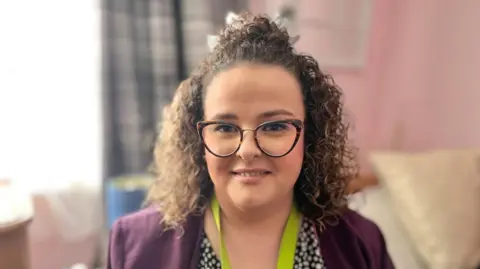
Rhiannon Reed is a manager at 1 Oak Home Care, which provides two carers four times a day for May.
She said May was just "plonked" in her house with no prior assessment.
Reed said: "There wasn't any equipment in place. There wasn't anything in place. Her freezer food and fridge food had all gone off, and there was no gas and electric."
Reed and her team of carers spent nine hours clearing and cleaning the house, ordering a new hospital-style bed and mattress and issuing a plea on social media for bedding and furniture.
Reed said: "Yes, this was above and beyond but I could never have left knowing that this was the state that she was in. I just couldn't have done it."
May said of Reed: "She's very special. She has done a lot for me since my husband died."
What is the problem on a Friday?
 Martin Giles/BBC
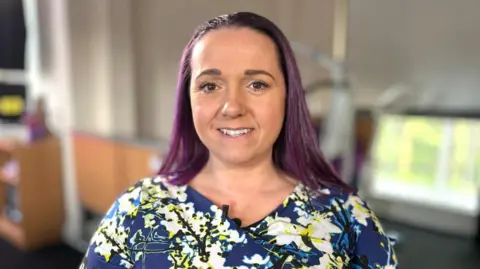
Angel Clark founded 1 Oak Home Care nearly 10 years ago. It has three home care agencies in Colchester, Sudbury and Bury St Edmunds, as well as a day care centre.
It provides care for 200 people with 60 staff.
Clark said discharge from hospitals could be "a problem" on Fridays.
She said: "They're expecting more people in hospital, which means they need the beds.
"So those that maybe aren't quite fully ready to come home, we find that they generally send them home on a Friday. "
This, Clark said, could lead to mistakes, meaning that any discharge on a Friday required "more questions" and careful consideration.
"We had an 86-year-old gent come home from hospital with the discharge letter for a 23-year-old female with a gymnast injury," she said.
"We've also had a patient sent home with the wrong medication. We ended up having to drive to London to collect medication because the hospital pharmacy was closed. There was no support."
For Clark, the most difficult situation to manage is when care needs are assessed incorrectly.
She said: "We are told that they need one carer twice a day. It is quite clear they need two carers four times a day, and they end up going straight back to hospital by the Saturday morning."
What support is available for carers?
 Martin Giles/BBC
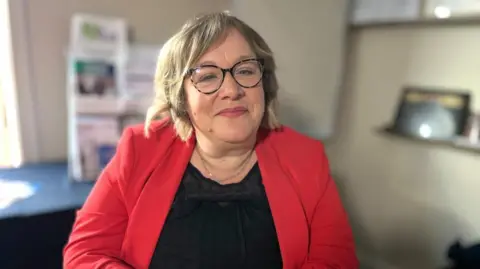
Suffolk Care Association represents independent care providers, including care homes and domiciliary care, in the county.
Chief executive Jo Reeder said others had reported similar problems to Clark at 1 Oak Home Care.
She said: "I know of some dom (domiciliary) care providers that won't take discharges on a Friday afternoon because of those reasons, because the support mechanisms are not necessarily going to be in place and nobody wants to have a failed discharge on their hands."
Adult social care facts and figures
 Martin Giles/BBC
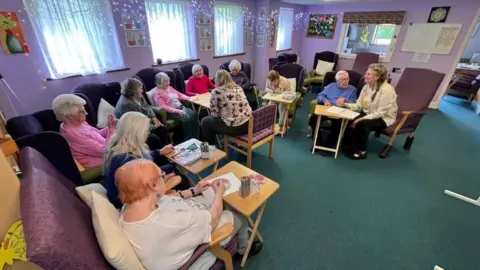
Adult social care is for anyone over 18 who needs support due to disability or illness.
This can be practical support, such as adjustments to their home, or care in the home so they can live independently. It also includes care homes or supported living.
The number of people using adult social care services in Suffolk has increased by 23% from 18,363 in 2023-24 to 22,559 in the current financial year.
The budget for adult social care is also rising. It has gone up by 8% from £354m in 2023-24 to a planned £382m in the current financial year.
The total budget for Suffolk County Council this year is £850m.
What do the health authorities say?
A spokesperson for NHS Norfolk and Suffolk Integrated Care Board (ICB) said: "We recognise that there can sometimes be concerns around the timing and preparation for discharge and we are committed to continuing to work collaboratively across health and care partners to ensure the best possible coordination between services and safe outcomes for patients."
A Department of Health and Social Care spokesperson said: "Clinicians must use their professional judgement to decide when patients are ready to be discharged and make sure no one leaves hospital unless it is safe and the right support is in place."
A spokesperson for the Local Government Association (LGA) said: "A chronically underfunded social care system not only adds pressure to other public services, but more importantly, has a profound impact on people who draw on care."
What do the political parties say?
The local elections are on 7 May, and here is how the local political parties say they would manage the adult social care budget.
The local Conservatives said: "This is not only a statutory duty, it is a moral one. We are pioneers in digital care and over 1,600 carers have now moved to our online self-assessment, while our new digital inclusion project is helping carers use technology to make their lives easier."
The Green Party said it would harness the strength of Suffolk village and town communities and make more use of local, small-scale, care provider businesses and voluntary groups. "This would not only cut the soaring cost burden of a high reliance on residential care but also deliver a better outcome for those in need," it added.
Labour's position is that the service needs to be redesigned to allow early intervention. "At the moment, it's not set up to deal with problems quickly as they arise, leading to more costs – and worse outcomes for those receiving care – than a more robust client-based approach," it said.
The Liberal Democrats said they would not be able to fix the pressures on the National Health Service and the burgeoning demand for adult social care, either at home or in care homes, unless they joined up mental, physical and social health care in a holistic way.
Reform UK's proposals for social care, particularly aimed at relieving pressures on local authorities and county councils, are focused on reducing dependency on state-funded residential care, promoting community-based solutions, and shifting focus toward efficiency, technology and preventative care.
A full list of candidates can be found here.
Do you have a story suggestion for Suffolk? Contact us below.
Follow Suffolk news on BBC Sounds, Facebook, Instagram and X.
