GP walk-in clinics see low attendance leading to accusations of failure

 Getty Images
A series of walk-in GP clinics which the Scottish government said would end the "8am rush" for appointments have seen low attendance rates, first figures show.
Public Health Scotland data records that just over 2,000 patients were seen across six centres last month.
GP leaders in Scotland, who previously argued that money would be better spent on core services, urged ministers to accept the scheme was failing.
Health Secretary Angela Constance said she was encouraged by the "developments we have made thus far", stressing that the pilot programme was still "in the early stages".
The Scottish government plans to establish 30 walk-in clinics to ease pressures on GP surgeries.
Announcing the plans at the SNP conference last October, First Minister John Swinney said they would eventually deliver "over one million additional GP and nurse appointments" per year.
At the end of June nine centres were open, of which six had been operational for the full month of June and able to provide data on attendance levels.
In total just under 7,000 patients had been seen between the opening of the first centre on 10 February 2026 and the end of June 2026.
The figures show the Edinburgh walk-in clinic in Wester Hailes was the busiest in June seeing almost 850 patients - around 28 patients each day, followed by Stranraer with just over 730, and Lerwick with just over 220.
Hawick, which had to close earlier this month due to "temporary staffing pressures", saw fewer than 180 patients in June, while Lochee and Benecula both saw fewer than 100 patients each.
Most clinics are only open to patients registered to nearby doctors surgeries and there are limits on the services they can provide. Centres also have different opening hours and patient criteria.
The attendance data is measured by "cases" - a patient's single encounter with the walk-in centre service - and "consultations", which is an interaction between the patient and a healthcare professional.
A patient can have more than one case at a centre in a month and potentially have more than one consultation on the same visit to a centre within the same case.
Figures are available for six walk-in clinics and can be viewed in the chart below.
Dr Iain Morrison, chairman of the BMA's Scottish GPs committee, said doctors had expressed reservations about the walk-in clinics when they were first announced - and it now looked like a case of "I told you so".
He told BBC Radio Scotland Breakfast (RSB): "In terms of any pilot it's important to learn to fail fast.
"My concern is that we're not going to learn to close this down when all the evidence suggests that it's not working.
"It's going to continue to be worked upon, potentially expanded, despite evidence crying out that it's not having the impact that's desired."
He said it would appear the scheme was more about politics rather than practicality.
He added: "The way you improve capacity, to provide as many appointments as are required, is to invest into core services. It's not to put in additional money into separate services that fail to alleviate the core problem"
'Failure' to learn lessons
Morrison said ministers should have learned lessons from a similar scheme introduced in England nearly 20 years ago which, he said, had failed to relieve pressure on other NHS services.
Many of those walk-in centres were subsequently either shut down or repurposed into other services such as emergency care centres.
He said studies of the English scheme found that 20% of people who used the services would not have sought medical help if the centres had not existed, which suggested they had increased demand on finite NHS resources.
The medic accepted that low take-up might in part be due to the new centres not being well publicised but even if that were fixed, he said there were still problems.
He explained: "There's limitations on the people they will agree to see, they are not open to the whole of the community, some of them only act within certain GP clusters or are available to a certain number of GP practices locally whereas the vast majority of the people of Scotland have no access at all to these walk-in centres."
His concerns were echoed by Glasgow GP Dr Victoria Shotton, who said there were more cost-effective ways of improving services.
"They don't cover chronic diseases or the things that really matter, the ongoing health issues that patients have and struggle to get seen," she told the programme.
She said that there were already alternative services such as the Pharmacy First scheme which offer on-the-day treatment for things like infections.
"This is a very expensive service which has been set up without consultation," she said.
She said the walk-in clinics service cost a relatively large amount of money per patient when they could be "seen far cheaper in practices already set up and their community pharmacist".
'Positive for patients'
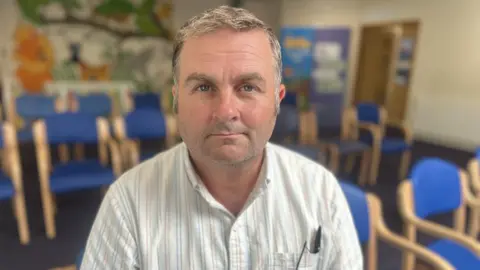
Dr Dan Goodare, a GP partner at Waverley Medical Centre in Stranraer, told BBC Scotland patients were happy having the new walk-in centre available to them.
"It's been very positive for the patients here in Stranraer," he said. ''Obviously it's an area that's often been difficult to recruit to - there's been a lot of pressures on NHS in this area, people are very pleased.
"I can tell you every day I meet somebody who's just delighted that we've got the walk-in centre.
"The walk-in centre starts at 12:00, it's open every day, seven days a week and I think people knowing that they will be seen does take a lot of their anxiety away from that eight o'clock rush."
Karen McMillan praised the ease of being able to see a GP at the clinic.
She said: "Because I stay out in the country I'm limited to buses, so to know that if I'm in the town anyway, I can just pop up and come in and get seen, it's really good.
"It's made another difference."
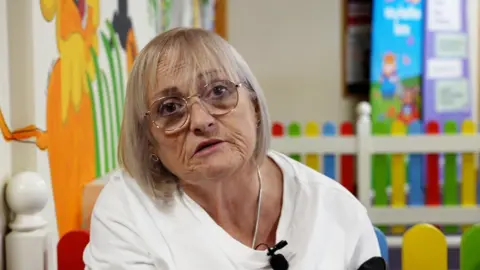
'We're still in the early stages'
Health Secretary Angela Constance told RSB she was encouraged by the "developments we have made thus far" since the first centre opened five months ago in Edinburgh.
She added: "It's important to emphasise that this is a pilot programme, we're still in the early stages."
The aim was to complement existing GP practices, said Constance.
She accepted some people who would prefer to see their regular family doctor, but for others the convenience of accessing a GP quickly was a better fit for their lifestyle.
Constance stressed that as part of the pilot, different models of care were being trialled.
In the Western Isles, for instance, the scheme is focused on temporary residents in order to free up GP services for locals, while in the Lochee area of Dundee the walk-in centre is based in an existing GP practice.

There is nothing worse than needing to see a doctor but finding there are no appointments after spending an hour hanging on the phone.
But are walk-in clinics really the solution?
Firstly, they are limited to certain groups of patients who must be registered to a cluster of practices near the walk-in centre. So the majority of people in Scotland cannot use them.
Secondly, there are only certain conditions staff can treat so no use if you need so see a doctor about a long term condition or for a repeat prescription. They are really for people who want help on the day for something urgent but not an emergency.
The health secretary, Angela Constance is now talking about how the clinics "complement" the work of GPs and about people benefiting from "appointment-free care" but she still says this is part of the governments commitment to end the "8am rush" to see a doctor.
